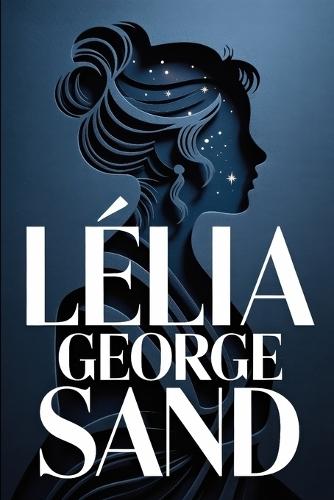
Overview
Lélia cannot love. Not because she has never tried -- she has, with the totality that her nature demands -- but because she has passed through the aspiration for the absolute and found, on the other side of it, only the permanent confirmation of its impossibility. She cannot be reached by Sténio, the young poet who loves her with a completeness that is destroying him. She cannot be consoled by Trenmor, the former gambler who has survived his own degradation and found in renunciation a stoic peace. She cannot be saved by Magnus, the fanatical priest whose religious obsession with her mirrors and parodies the desire she cannot return. And she cannot become her sister Pulchérie, the courtesan who has found contentment in the sensual life that Lélia's idealism has permanently foreclosed. George Sand published Lélia in 1833 -- the same year as Leone Leoni, in the third consecutive year of the creative intensity that had begun with Indiana -- and then returned to it in 1839 for a substantial revision that altered the work's philosophical conclusions as well as its ending. It is not a novel in the conventional sense: it has no plot organized toward resolution, no dramatic architecture of the kind that fiction of the period provided as a default. It is closer to a philosophical dramatic poem -- a work organized around voices and positions, structured by argument and lyrical intensity, asking in the most direct form Sand ever chose what it means that the aspiration for absolute fulfillment is real and that the world cannot satisfy it. The novel's most celebrated scene is the one in which Pulchérie tells Sténio the truth: that the night he believed he had finally possessed Lélia, the woman in his arms was her sister. The absolute separation of the physical and the spiritual, which the entire novel has been demonstrating, is here made literal and irreversible. Sand was twenty-nine. She was writing from inside the experience the novel maps, and past it simultaneously -- thinking through it with the precision of a philosopher who has found in her own disillusionment the evidence for an argument that claims wider applicability. Lélia is that argument, made in the only form equal to it. The most radical and the most demanding of Sand's early works -- and, for the reader willing to meet it on its own terms, the most extraordinary.
Full Product Details
Author: Eugene Dufrit ,
George Sand
Publisher: Independently Published
Imprint: Independently Published
Dimensions:
Width: 15.20cm
, Height: 1.90cm
, Length: 22.90cm
Weight: 0.440kg
ISBN: 9798250603041
Pages: 328
Publication Date: 03 March 2026
Audience:
General/trade
,
General
Format: Paperback
Publisher's Status: Active
Availability: Available To Order

We have confirmation that this item is in stock with the supplier. It will be ordered in for you and dispatched immediately.