Overview
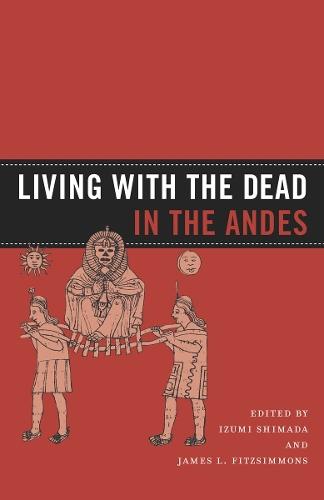
The Andean idea of death differs markedly from the Western view. In the Central Andes, particularly the highlands, death is not conceptually separated from life, nor is it viewed as a permanent state. People, animals, and plants simply transition from a soft, juicy, dynamic life to drier, more lasting states, like dry corn husks or mummified ancestors. Death is seen as an extension of vitality. Living with the Dead in the Andes considers recent research by archaeologists, bioarchaeologists, ethnographers, and ethnohistorians whose work reveals the diversity and complexity of the dead-living interaction. The book's contributors reap the salient results of this new research to illuminate various conceptions and treatments of the dead: 'bad' and 'good' dead, mummified and preserved, the body represented by art or effigies, and personhood in material and symbolic terms. Death does not end or erase the emotional bonds established in life, and a comprehensive understanding of death requires consideration of the corpse, the soul, and the mourners. Lingering sentiment and memory of the departed seems as universal as death itself, yet often it is economic, social, and political agendas that influence the interactions between the dead and the living. Nine chapters written by scholars from diverse countries and fields offer data-rich case studies and innovative methodologies and approaches. Chapters include discussions on the archaeology of memory, archaeothanatology (analysis of the transformation of the entire corpse and associated remains), a historical analysis of postmortem ritual activities, and ethnosemantic-iconographic analysis of the living-dead relationship. This insightful book focuses on the broader concerns of life and death.
Full Product Details
Author: Izumi Shimada ,
James L. Fitzsimmons
Publisher: University of Arizona Press
Imprint: University of Arizona Press
Weight: 0.454kg
ISBN: 9780816555444
ISBN 10: 0816555443
Pages: 368
Publication Date: 22 April 2025
Audience:
Professional and scholarly
,
Professional & Vocational
Format: Paperback
Publisher's Status: Active
Availability: Available To Order

We have confirmation that this item is in stock with the supplier. It will be ordered in for you and dispatched immediately.
Reviews
""A well-crafted volume that builds on the theoretical and methodological discussions in sociocultural anthropology, social archaeology and bio archaeology over the last three decades.""--Antiquity ""A welcome addition to addressing the living-dead interaction in prehistory. . . . The book is organized with an eye toward variety, with some data-heavy chapters and others focusing on theoretical concerns, which offer substantial food for thought on the living-dead interaction in the Andes.""--Journal of Anthropological Research ""The book benefits not only from the contributions of scholars active in different regions of the central and northern Andes but also from interpretive analyses and increasing awareness among field archaeologists about anthropological theory.""--Hispanic American Historical Review ""There are no other books that explore prehistoric Andean mortuary ritual from the theoretical approach.""--Gordon F. M. Rakita, author of Ancestors and Elites: Emergent Complexity and Ritual Practices in the Casas Grandes Polity ""A particular significance of the contributions in this volume is the extent to which the contributions are informed by general anthropological theory. The extensive bibliography alone is an important contribution.""--Jeffrey R. Parsons, author of The Last Pescadores of Chimalhuacan, Mexico: An Archaeological Ethnography
Author Information
Izumi Shimada is a professor of anthropology and distinguished scholar at Southern Illinois University, Carbondale. He founded the National Sicá n Museum in Ferreñ afe, Peru. He is the editor of a dozen books, including Inka Empire: A Multidisciplinary Approach. James L. Fitzsimmons is an associate professor of anthropology at Middlebury College in Vermont. He is an anthropological archaeologist whose research interests include the anthropology of death, Maya epigraphy, and archaeological method and theory.