Awards
- "Winner of A 1998 Choice Magazine ""Outstanding Academic Title."
- Winner of A 1998 Choice Magazine Outstanding Academic Title.
- Winner of A 1998 Choice Magazine ""Outstanding Academic Title.
Overview
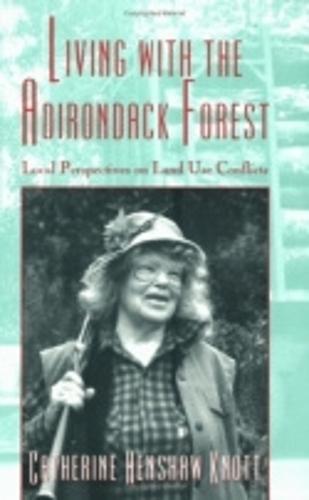
""While locals are inherently integral to land use decisions, their story is seldom coherently placed within the context of competing interests. Knott effectively places local perspectives in the Adirondack land use conflict to illustrate the need for participatory approaches to decision-making.""-Valerie A. Luzadis, SUNY College of Environmental Science and ForestryAttitudes about land use, Catherine Henshaw Knott suggests, may reflect profound differences in class, religion, and life experience, pitting urban Americans who see nature at risk against rural Americans whose lives are dominated by nature's forces. She documents the thoughts and feelings of people whose lives are intimately connected to the forest, including loggers, trappers, craftspeople, and guides, as well as tree farmers and maple syrup producers. After describing the key players in the conflict and chronicling battles and bridge-building between stake-holders, Knott concludes that the participation of local people in decision making is the only process that can shift an increasingly hostile cycle toward resolution.
Full Product Details
Author: Catherine Henshaw Knott
Publisher: Cornell University Press
Imprint: Cornell University Press
Dimensions:
Width: 15.20cm
, Height: 2.20cm
, Length: 22.90cm
Weight: 0.907kg
ISBN: 9780801485008
ISBN 10: 0801485002
Pages: 320
Publication Date: 17 March 1998
Audience:
College/higher education
,
Professional and scholarly
,
Undergraduate
,
Postgraduate, Research & Scholarly
Format: Paperback
Publisher's Status: Active
Availability: In Print

This item will be ordered in for you from one of our suppliers. Upon receipt, we will promptly dispatch it out to you. For in store availability, please contact us.
Reviews
Knott's first-hand reportage from the dramatic public hearings held in the Park on the Commission's report is riveting, an example of the value of participant observation. Blueline.
"""Knott's excellent overview of the issues and perspectives of management and uses of the Adirondack forest draws upon this forest to frame the wider land-use debate taking place across the nation, especially in the Northwest... This book also contributes to the emerging concepts within ecosystem management, using the critical lessons learned in the Adirondack forest as an example. Excellent bibliography; good illustrations; thorough index. General readers; upper-division undergraduates through professionals.""-Choice ""An interesting read for those studying American land use conflicts and those with regional interests in the North Country. Though it has a particular philosophical perspective, it is straightforward about its perspective and intelligently portrays the complexities of the Adirondack situation.""-Stephen J. Stadler, Oklahoma State University, Journal of Cultural Geography. Spring/Summer 1998. ""Knott's first-hand reportage from the dramatic public hearings held in the Park on the Commission's report is riveting, an example of the value of participant observation.""-Blueline. ""While locals are inherently integral to land use decisions, their story is seldom coherently placed within the context of competing interests. Knott effectively places local perspectives in the Adirondack land use conflict to illustrate the need for participatory approaches to decision-making.""-Valerie A. Luzadis, SUNY College of Environmental Science and Forestry"
Knott's first-hand reportage from the dramatic public hearings held in the Park on the Commission's report is riveting, an example of the value of participant observation. -Blueline.
Author Information
Catherine Henshaw Knott is Director of Women in International Development and Adjunct Assistant Professor of Anthropology at Oregon State University.