Overview
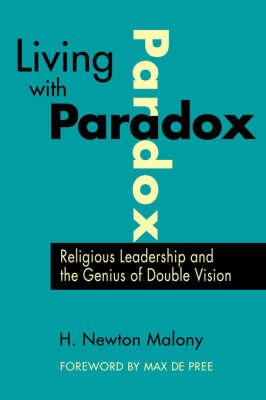
Individuals who are in religious leadership positions will immediately recognize the dilemmas or paradoxes described in this book. The good news is that Malony offers sound practical advice on how to deal with them. This book is accurately descriptive and helpfully prescriptive. --Douglas Lewis, Wesley Theological Seminary Malony suggests ways to turn destructive conflict into creative tension. A helpful guide for every religious leader struggling to make sense out of the colliding interests that buffet many congregations and other not-for-profit institutions. --William E. Hull, Samford University As a leader you must also challenge individuals to make uncomfortable choices in the service of doing God's work in the world. Maloney identifies eight central paradoxes that all religious leaders--both lay and ordained--must confront. The author shows how these paradoxes, when viewed as either/or choices or struggled against, can whipsaw the leader, tearing the ministry apart. However, embracing paradox and accepting it as a gift allows religious leaders to deal successfully with conflict in their roles, and in so doing, break through to a more powerful connection with those to whom they minister. H. Newton Malony is senior professor of psychology at Fuller Theological Seminary, a licensed psychologist, and an ordained United Methodist minister.
Full Product Details
Author: H. Newton Malony
Publisher: John Wiley & Sons Inc
Imprint: Jossey-Bass Inc.,U.S.
Dimensions:
Width: 16.10cm
, Height: 1.60cm
, Length: 24.50cm
Weight: 0.342kg
ISBN: 9780787940577
ISBN 10: 0787940577
Pages: 160
Publication Date: 24 April 1998
Audience:
General/trade
,
Professional and scholarly
,
General
,
Professional & Vocational
Format: Paperback
Publisher's Status: Active
Availability: Out of stock

The supplier is temporarily out of stock of this item. It will be ordered for you on backorder and shipped when it becomes available.
Reviews
Individuals who are in religious leadership positions will immediately recognize the dilemmas or paradoxes described in this book. The good news is that Malony offers sound practical advice on how to deal with them. This book is accurately descriptive and helpfully prescriptive. (Douglas Lewis, Wesley Theological Seminary) <br> Malony suggests ways to turn destructive conflict into creative tension. A helpful guide for every religious leader struggling to make sense out of the colliding interests that buffet many congregations and other not-for-profit institutions. (William E. Hull, Samford University) <br> Dr. Malony presents a helpful analysis using insights from psychology, theology, management theory, conflict resolution, practical experience, love of Church, and an ironic spirit. Anyone reading this study will no longer see conflict as an interruption of the Church mission, but an opportunity to be in ministry. (Mark Trotter, First United Methodist Church, San Diego, Cal
Individuals who are in religious leadership positions will immediately recognize the dilemmas or paradoxes described in this book. The good news is that Malony offers sound practical advice on how to deal with them. This book is accurately descriptive and helpfully prescriptive. (Douglas Lewis, Wesley Theological Seminary) Malony suggests ways to turn destructive conflict into creative tension. A helpful guide for every religious leader struggling to make sense out of the colliding interests that buffet many congregations and other not-for-profit institutions. (William E. Hull, Samford University) Dr. Malony presents a helpful analysis using insights from psychology, theology, management theory, conflict resolution, practical experience, love of Church, and an ironic spirit. Anyone reading this study will no longer see conflict as an interruption of the Church mission, but an opportunity to be in ministry. (Mark Trotter, First United Methodist Church, San Diego, California)
"""Individuals who are in religious leadership positions will immediately recognize the dilemmas or paradoxes described in this book. The good news is that Malony offers sound practical advice on how to deal with them. This book is accurately descriptive and helpfully prescriptive."" (Douglas Lewis, Wesley Theological Seminary) ""Malony suggests ways to turn destructive conflict into creative tension. A helpful guide for every religious leader struggling to make sense out of the colliding interests that buffet many congregations and other not-for-profit institutions."" (William E. Hull, Samford University) ""Dr. Malony presents a helpful analysis using insights from psychology, theology, management theory, conflict resolution, practical experience, love of Church, and an ironic spirit. Anyone reading this study will no longer see conflict as an interruption of the Church mission, but an opportunity to be in ministry."" (Mark Trotter, First United Methodist Church, San Diego, California)"
Individuals who are in religious leadership positions will immediately recognize the dilemmas or paradoxes described in this book. The good news is that Malony offers sound practical advice on how to deal with them. This book is accurately descriptive and helpfully prescriptive. (Douglas Lewis, Wesley Theological Seminary) <br> Malony suggests ways to turn destructive conflict into creative tension. A helpful guide for every religious leader struggling to make sense out of the colliding interests that buffet many congregations and other not-for-profit institutions. (William E. Hull, Samford University) <br> Dr. Malony presents a helpful analysis using insights from psychology, theology, management theory, conflict resolution, practical experience, love of Church, and an ironic spirit. Anyone reading this study will no longer see conflict as an interruption of the Church mission, but an opportunity to be in ministry. (Mark Trotter, First United Methodist Church, San Diego,
Author Information
NEWTON MALONY is senior professor of psychology at Fuller Theological Seminary, a licensed psychologist, and an ordained United Methodist minister. He earned his Masters of Divinity degree at Yale Divinity School, and he received his Ph.D. degree from George Peobody College at Vanderbilt University. Malony has written numerous books on psychology and religion, including Win-Win Relationships and the Psychology of Religion for Ministry. He and his wife live in Pasadena, California.