Full Product Details
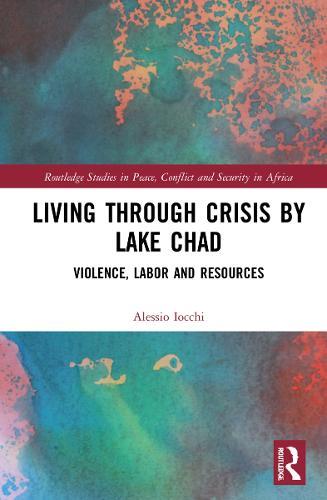
Author: Alessio Iocchi
Publisher: Taylor & Francis Ltd
Imprint: Routledge
Weight: 0.453kg
ISBN: 9781032155296
ISBN 10: 1032155299
Pages: 224
Publication Date: 13 July 2022
Audience:
College/higher education
,
Professional and scholarly
,
Tertiary & Higher Education
,
Professional & Vocational
Format: Hardback
Publisher's Status: Active
Availability: In Print

This item will be ordered in for you from one of our suppliers. Upon receipt, we will promptly dispatch it out to you. For in store availability, please contact us.
Reviews
A plethora of literature exists on the Boko Haram crisis in the Lake Chad region of Africa but their contents are based on secondary evidence and focus disproportionally on the Nigerian dimension of the problem with emphasis on the origins, evolution and potential trajectories of the jihadists. The present book looks at the phenomena multidimensionally covering Chad, Cameroun, Niger and Nigeria particularly focusing on the question of what happens when what is perceived by outsiders as crisis is treated as normal by local communities. The author tells the stories of Lake Chad in a refreshing manner that links the past and present of the physical, social, economic and environmental security challenges faced by the people and how the local communities build resilient capacity around them. Three things stand the book out: (i) the new array of information about the crisis in the Lake Chad as perceived by the people as different from what outsiders see, feel and think; (ii) the author's ability to tell worrisome human angle stories in such a witty manner that keeps the reader glued to the book pages, and (iii) a robust research design and execution that takes the reader beyond what is taught in classes of research methods. The work is particularly rich in lessons on how to plan and do dangerous fieldwork in terms of personal safety in violently divided communities; structural disparities and trust issues between researcher and respondents; and new insights on how the term crisis could be interpreted differently by a researcher and local communities. To this extent, the work stands out as a significant contribution to the fields of strategic studies, security studies, peace and conflict studies, political science, cultural anthropology, strategic communication as well as pragramtic field methods. Those getting prepared for cross border humanitarian work (including peacekeeping operations) would find the work a good resource material on what to expect and how to understand and gain the trust of community members. Isaac Olawale Albert, Professor, Institute for Peace and Strategic Studies, University of Ibadan, Nigeria
A plethora of literature exists on the Boko Haram crisis in the Lake Chad region of Africa but their contents are based on secondary evidence and focus disproportionally on the Nigerian dimension of the problem with emphasis on the origins, evolution and potential trajectories of the jihadists. The present book looks at the phenomena multidimensionally covering Chad, Cameroun, Niger and Nigeria particularly focusing on the question of what happens when what is perceived by outsiders as crisis is treated as normal by local communities. The author tells the stories of Lake Chad in a refreshing manner that links the past and present of the physical, social, economic and environmental security challenges faced by the people and how the local communities build resilient capacity around them. Three things stand the book out: (i) the new array of information about the crisis in the Lake Chad as perceived by the people as different from what outsiders see, feel and think; (ii) the author's ability to tell worrisome human angle stories in such a witty manner that keeps the reader glued to the book pages, and (iii) a robust research design and execution that takes the reader beyond what is taught in classes of research methods. The work is particularly rich in lessons on how to plan and do dangerous fieldwork in terms of personal safety in violently divided communities; structural disparities and trust issues between researcher and respondents; and new insights on how the term crisis could be interpreted differently by a researcher and local communities. To this extent, the work stands out as a significant contribution to the fields of strategic studies, security studies, peace and conflict studies, political science, cultural anthropology, strategic communication as well as pragramtic field methods. Those getting prepared for cross border humanitarian work (including peacekeeping operations) would find the work a good resource material on what to expect and how to understand and gain the trust of community members. Isaac Olawale Albert, Professor, Institute for Peace and Strategic Studies, University of Ibadan, Nigeria
Author Information
Alessio Iocchi is a Senior Research Fellow at the Norwegian Institute of International Affairs, Norway, and Research Fellow at the Department of Asia, Africa and the Mediterranean at University of Naples L'Orientale, Italy.