Overview
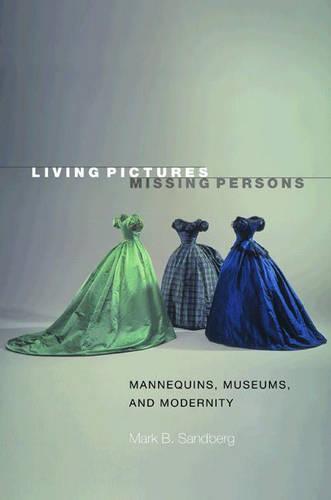
In the late-19th century, Scandinavian urban dwellers developed a passion for a new, modern sort of visual spectacle: objects and effigies brought to life in detailed, realistic scenes. The period 1880-1910 was the popular high point of mannequin display in Europe. This text explores the phenomenon as it unfolded with the rise of was museums and folk museums in the largest cities of Denmark, Sweden and Norway. Mark Sandberg asks: Why did modernity generate a cultural fascination with the idea of effigy? He shows that the idea of effigy is also a portal to understanding other aspects of visual entertainment in that period, including the widespread interest in illusionistic scenes and tableaux, in the ""portability"" of sights, spaces, and entire milieus. Sandberg investigates this transformation of visual culture outside the usual test cases of the largest European metropolises. He argues that Scandinavian spectators desired an unusual degree of authenticity - a cultural preference for naturalism that made its way beyond theatre to popular forms of museum display. The Scandinavian wax museums and folk-ethnographic displays of the era helped pre-cinematic spectators work out the social
Full Product Details
Author: Mark B. Sandberg
Publisher: Princeton University Press
Imprint: Princeton University Press
Dimensions:
Width: 15.20cm
, Height: 2.50cm
, Length: 23.50cm
Weight: 0.624kg
ISBN: 9780691050737
ISBN 10: 0691050732
Pages: 352
Publication Date: 15 December 2002
Audience:
Professional and scholarly
,
College/higher education
,
Professional & Vocational
,
Tertiary & Higher Education
Replaced By: 9780691050744
Format: Hardback
Publisher's Status: Out of Print
Availability: Out of stock
 Language:
 English
Reviews
Living Pictures, Missing Persons is a pioneering work. It gives the first thorough description of the early history of wax museums and folk museums in Scandinavia and it is at the same time a highly interesting analysis of different forms of museum display in light of theories on spectatorship. It is well written, often elegantly combining vivid anecdotal details with theoretical reflection. -Martin Zerlang, University of Copenhagen This book stands on its own as the first comprehensive institutional study of wax and folk museums in any national context, and one that, because of the exhaustive nature of the research and the theoretical awareness of the author, succeeds in presenting their multiple forms and roles in ways that go beyond many conventional studies of the era's museums and spectacles. -Anthony Vidler, University of California, Los Angeles
This book stands on its own as the first comprehensive institutional study of wax and folk museums in any national context, and one that, because of the exhaustive nature of the research and the theoretical awareness of the author, succeeds in presenting their multiple forms and roles in ways that go beyond many conventional studies of the era's museums and spectacles. -Anthony Vidler, University of California, Los Angeles Living Pictures, Missing Persons is a pioneering work. It gives the first thorough description of the early history of wax museums and folk museums in Scandinavia and it is at the same time a highly interesting analysis of different forms of museum display in light of theories on spectatorship. It is well written, often elegantly combining vivid anecdotal details with theoretical reflection. -Martin Zerlang, University of Copenhagen
Author Information
Mark B. Sandberg is Associate Professor of Scandinavian and Film Studies at the University of California, Berkeley.