Overview
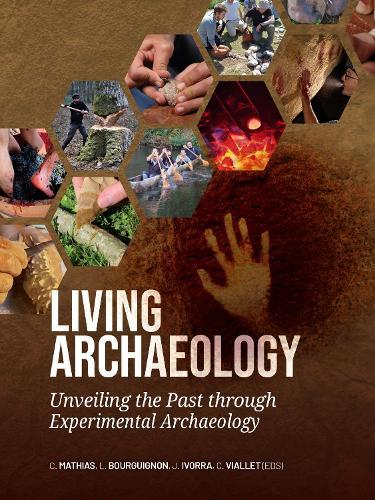
Despite the wealth of material remains uncovered by archaeology, our understanding of how people in the past lived, worked, and thought remains fragmentary, especially fort he most ancient times. Many aspects of ancient technologies and daily practicesare poorly documented in the archaeological record. Experimental archaeology connects theory with practice by recreating past techniques and technologies. By reconstructing ancient techniques, tools, and lifeways under controlled and replicable conditions, it allows researchers to test hypotheses, evaluate functional assumptions, and build data reference collections. This volume presents the proceedings of the 6th International Congress of Experimental Archaeology (CONEXP), held in Pézenas, France in 2022, hosted in collaboration with EXARC and leading European institutions. The book brings together over 33 contributions from different resarchers using experimental archaeology to interpret the archaeological record and past human behaviors. The contributions reflect the remarkable diversity within the experimental archaeology community, showcasing its vibrancy and interdisciplinary reach. From taphonomy to technology, ceramics to lithics and bone work, and from metallurgy to traceology, ritual practices, art, and subsistence strategies—this volume spans an impressive range of themes. Readers will find case-studies stretching from the Lower Palaeolithic to modern times, with examples drawn from across the globe.
Full Product Details
Author: Cyrielle Mathias , Laurence Bourguignon , Jérôme Ivorra , Cyril Viallet
Publisher: Sidestone Press
Imprint: Sidestone Press
ISBN: 9789464264357
ISBN 10: 9464264357
Pages: 360
Publication Date: 16 April 2026
Audience:
Professional and scholarly
,
College/higher education
,
Professional & Vocational
,
Postgraduate, Research & Scholarly
Format: Paperback
Publisher's Status: Forthcoming
Availability: Not yet available 
This item is yet to be released. You can pre-order this item and we will dispatch it to you upon its release.
Table of Contents
Preface J. Baena Preysler Introduction C. Mathias, L. Bourguignon, J. Ivorra, C. Viallet PART 1: Taphonomy Déplacement et enfouissement des vestiges lithiques en contexte tempéré de plein air : premiers résultats après 5 ans d’expérimentation à Villard-de-Lans (massif du Vercors) M. Rué, L. Chesnaux, P. Fernandes, B. Kaufmann, R. Marciau, J. Robbe, A. Taylor Trampling experimentation: impact on the breakage of small mammals’ skeletal elements L. Lebreton Silex y fuego en cueva Prado Vargas: Programa experimental para determinar alteraciones macroscópicas y cambios de coloración R. Alonso-Alcalde, C. González Sacristán, M. Navazo Ruiz, A. Benito-Calvo Análisis térmico experimental de las rocas que fueron utilizadas para la combustión en la Prehistoria de las cuevas del Reclau (Serinyà, Girona) J. Fernández-Ruiz, J. Maroto PART 2: Techniques Savez-vous casser des os ? Approche de l’efficacité de la fracturation en fonction des percuteurs et de l’expérience des opérateurs L. Justiniany, P. Magniez, C. Viallet, D. Vettese, C. Mathias, L. De Weyer, L. Bourguignon, J. Ivorra, A.-M. Moigne, J.-Ph. Brugal Realization of a reference system dedicated to bifacial manufacture with tangential percussion on Senonian flint (Upper Cretaceous) L. Vanuxem, F. Le Mene, A. Lamotte Traces et morphologies : que reste-t-il d’un cycle de réaffûtage sur un racloir Quina ? A. Vincent-Pennec, L. Bourguignon, M. Massoulié, S. Soriano ¿Intencionalidad o accidente? Aproximación experimental a la producción de retocadores óseos en el nivel 4 de Prado Vargas (Burgos, España) H. De la Fuente Ruez, P. Alonso-García, M. Navazo Ruiz The role of bipolar technology on quartz in the Robberg of Umhlatuzana Rock Shelter (South Africa) V. C. Schmid, M. Roussel, T. Abruzzese, I. Sifogeorgaki, G. L. Dusseldorp Variabilité des techniques de retouches abruptes sur les pointes et les lamelles à dos : état d’avancement d’un protocole expérimental E. Cormarèche, G. Ricci Different paths for a common destination: Experimental comparative study between direct and indirect percussion techniques in bifacial production M. J. García Natale, J. Baena Preysler Looking for the perfect tree? Selecting and felling a Neolithic logboat tree P. Bacoup, V. Bernard, E. Guerton, P. Guillonnet, J. Meslin, M. Philippe, B. Poissonnier Approach to the Prehistoric Production of Arsenic-Containing Copper: Experimental Results A. Lackinger, M. Murillo-Barroso, I. Montero-Ruiz, S. Rovira Lloréns Maya Late Postclassic Technical Ceramics from Mayapán: An Experimental Approach to their Technological Features S. Mercier, E. Caron The Replication of Iberian Stelae and the Oldest Iron Chisel from the Iberian Peninsula R. Araque Gonzalez, B.Asmus, G. Vintrici, A. Richter, V. Clamote, M. Osório, P. Paniego, P. Baptista, R. Ferreiro Mählmann Experimental casting of Iberian Late Bronze Age high-leaded palstaves: first results A. Lackinger, B. Comendador, M. G. Faro, X.-L. Armada De Sardes à Castel-Minier : expériences autour de 2000 ans d’affinage de l’argent F. Téreygeol, F. Maqueda, J. Gauthier Drillong tools used in ship carpentry from the 5th c. BCE to the 11th c. A.D.: An experimental approach M. Berenguel PART 3: Cultural behaviours ¿Tekné or Telos? Chaîne opératoire of Upper Palaeolithic hand stencils V. Fernández Navarro, O. Spaey, A. J. Torres Riesgo, D. Garate Opening an underground silo while grain is stored! Some results of archaeological experiments performed from 2016 to 2019 in Mediterranean France C. Dominguez, E. Yebdri, J.-M. Savoie, F. Fleurat-Lessard, T. Wibaut, J. Ros « Patina in patinam – 2018 » : vers une approche sensible de la cuisine romaine C. Batigne, N. Garnier Ancient Roman cheese-making: the challenge of experimental archaeology D. Frere Breaking objects like Pompeians. The FragEx project and the Porta Nocera necropolis F. Fouriaux, A. Malignas Tasting Iberian wine: an interdisciplinary experimental archaeology project J. Diloli Fons, F. Zamora Marín, P. Cabanillas Amboades, I. Cots Serret, C. Portillo Guisado, S. Sardà Seuma, L. Bricio Segura, J. M. Canals Bosch Sound as a means of communication and protection, an application in limes from the Ibero-Roman period M. Genera i Monells, J. Ballester Gibert, F. Lavega Serra, M. Garcia Barberà PART 4: Utilisation Y a-t-il un lien entre la performance d’un tranchant et sa matière première ? Présentation d’un protocole expérimental C. Viallet, M. Blin, L. De Weyer, C. Mathias, T. Minet, L. Bourguignon, R. Capdevila, P. Fernandes, J. Ivorra, J.-C. Sangleboeuf Modes de fonctionnement des pièces bifaciales du Paléolithique inférieur : constitution d’un référentiel expérimental de macrotraces J. Guibert—Cardin, E. Nicoud, S. Beyries Underestimated witnesses: A new experimental reference collection for understanding the use of pebbles during Middle Paleolithic T. Burcet Gesture variation and expertise in the use of Palaeolithic bulb-retouchers. Application to the late Acheulean site of Jaljulia (Israel) C. Mathias, S. Sánchez-Dehesa Galán, C. Lemorini, F. Marinelli, M. Shemer, R. Barkai Searching for the function of the manuports carried by Neanderthals in the Middle Palaeolithic site of Jarama VI (Guadalajara, Spain) M. Terradillos-Bernal, I. Clemente-Conte, C. Díez Fernández-Lomana, J. Molina Salido, J.-F. Jordá Pardo Des expérimentations à la croisée de l’ethnohistoire, de l’ethnographie et de l’iconographie. L’analyse fonctionnelle des outils lithiques du site maya de Cancuén (Guatemala, 652-800 d.n.è.) N. Cadalen, S. Vassilieff, C. Andrieu, S. Beyries An experimental protocol to trace woodworking activities by aboriginal populations of the Canary Islands (2nd – 15th century CE) P. Vidal-Matutano, A. Palomo, D. Wojtczak, A. Rodríguez, S. Pardo-Gordó, J. Carballo-Pérez, I. Brito-Abrante, K. Ortega PART 5: Scientific dissemination Birchbark tar in the Paleolithic: how to do it? Or how archaeology questions our society? J. Robbe
Reviews
Author Information
Cyrielle Mathias is a postdoctoral researcher (HNHP–ComE and CRFJ laboratories) specialising in the early Middle Palaeolithic industries of the Mediterranean and Near East. She has developed specific experimental programs focused on recycling practices – particularly recycled percussion materials and cores-on-flakes – as well as the production and use of small tools. Laurence Bourguignon is a research engineer at INRAP and a member of the ArScAn–AnTET laboratory. Her work focuses on Lower and Middle Palaeolithic sites in southern France. As an expert flintknapper, she has a particular interest in Quina debitage and retouch strategies, as well as basalt knapping. Jérôme Ivorra, M.A., is a geologist affiliated with the GREPAM. He is part of the team excavating and studying the Lower Pleistocene site of Bois-de-Riquet (southern France). His research focuses on raw material procurement, and he has participated in numerous flintknapping experiments. Cyril Viallet is a CNRS researcher (ArScAn–AnTET laboratory) working on Middle Pleistocene sites in the Mediterranean region. He has developed a particular interest in experimenting with the production and use of Large Cutting Tools (LCTs), as well as investigating differences in raw materials efficiency.
Tab Content 6
Author Website:
Countries Available
All regions
|