Overview
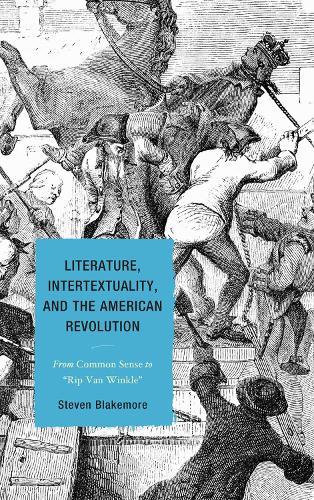
Dealing with Thomas Paine's Common Sense (1776), John Trumbull's M'Fingal (1776–82), Philip Freneau's ""The British-Prison Ship"" (1781), J. Hector St. John de Crèvecoeur's Letters from an American Farmer (1782), and Washington Irving's ""Rip Van Winkle"" (1819–20), Steven Blakemore breaks new ground in assessing the strategies of subversion and intertextuality used during the American Revolution. Blakemore also crystallizes the historical contexts that link these works together – contexts that have been missed or overlooked by critics and scholars. The five works additionally illuminate issues of history (The Norman Conquest, the English Civil War, and the French Revolution) and gender as they impinge on American-revolutionary discourse. The result is five new readings of significant revolutionary-era works that suggest fruitful entries into other literatures of the Revolution. Blakemore demonstrates the nexus between literature and history in the revolutionary era and how it created an intertextual dialogue in the formation of the first postcolonial critiques of the British Empire.
Full Product Details
Author: Steven Blakemore
Publisher: Associated University Presses
Imprint: Fairleigh Dickinson University Press
Dimensions:
Width: 15.40cm
, Height: 1.20cm
, Length: 23.10cm
Weight: 0.254kg
ISBN: 9781611476965
ISBN 10: 1611476968
Pages: 160
Publication Date: 12 March 2014
Audience:
Professional and scholarly
,
Professional & Vocational
Format: Paperback
Publisher's Status: Active
Availability: In Print

This item will be ordered in for you from one of our suppliers. Upon receipt, we will promptly dispatch it out to you. For in store availability, please contact us.
Reviews
Blakemore asserts that the American Revolution was waged intertextually across and through voluminous tissues of allusions to shared modes of Anglo-American history and cultural representation-a common frame now largely neglected. He resuscitates the historical contexts and the common representational strategies from within which US writers wrested their political and aesthetic independence, focusing on five key works from the Revolutionary and early national eras: Paine's Common Sense, Trumbull's M'Fingal, Freneau's 'The British Prison-Ship,' Crevecoeur's Letters from an American Farmer, and Irving's Rip Van Winkle. Although Blakemore identifies these works as similar in their self-conscious and subversive responsiveness to context, he focuses his efforts on individual chapters dedicated to the distinct modes, techniques, and targets through which each author articulated his vision of American independence. Scholars of American literary history are likely familiar with the works by Irving, Crevecoeur, and Paine, but Blakemore's skillful new readings of them, along with his inclusion of Trumbull's and Freneau's often-overlooked poems, richly reward the reader. In the current climate of transatlantic and comparative cultural studies, Blakemore's study offers a model of insightful scholarship and attention to contextual particularity. Summing Up: Highly recommended. Upper-division undergraduates through faculty. * CHOICE *
Blakemore asserts that the American Revolution was waged intertextually across and through voluminous tissues of allusions to shared modes of Anglo-American history and cultural representation-a common frame now largely neglected. He resuscitates the historical contexts and the common representational strategies from within which US writers wrested their political and aesthetic independence, focusing on five key works from the Revolutionary and early national eras: Paine's Common Sense, Trumbull's M'Fingal, Freneau's 'The British Prison-Ship,' Crevecoeur's Letters from an American Farmer, and Irving's Rip Van Winkle. Although Blakemore identifies these works as similar in their self-conscious and subversive responsiveness to context, he focuses his efforts on individual chapters dedicated to the distinct modes, techniques, and targets through which each author articulated his vision of American independence. Scholars of American literary history are likely familiar with the works by Irving, Crevecoeur, and Paine, but Blakemore's skillful new readings of them, along with his inclusion of Trumbull's and Freneau's often-overlooked poems, richly reward the reader. In the current climate of transatlantic and comparative cultural studies, Blakemore's study offers a model of insightful scholarship and attention to contextual particularity. Summing Up: Highly recommended. Upper-division undergraduates through faculty. CHOICE
Blakemore asserts that the American Revolution was waged intertextually across and through voluminous tissues of allusions to shared modes of Anglo-American history and cultural representation--a common frame now largely neglected. He resuscitates the historical contexts and the common representational strategies from within which US writers wrested their political and aesthetic independence, focusing on five key works from the Revolutionary and early national eras: Paine's Common Sense, Trumbull's M'Fingal, Freneau's The British Prison-Ship, Crevecoeur's Letters from an American Farmer, and Irving's Rip Van Winkle. Although Blakemore identifies these works as similar in their self-conscious and subversive responsiveness to context, he focuses his efforts on individual chapters dedicated to the distinct modes, techniques, and targets through which each author articulated his vision of American independence. Scholars of American literary history are likely familiar with the works by Irving, Crevecoeur, and Paine, but Blakemore's skillful new readings of them, along with his inclusion of Trumbull's and Freneau's often-overlooked poems, richly reward the reader. In the current climate of transatlantic and comparative cultural studies, Blakemore's study offers a model of insightful scholarship and attention to contextual particularity. Summing Up: Highly recommended. Upper-division undergraduates through faculty. CHOICE
"Blakemore asserts that the American Revolution was waged intertextually across and through ""voluminous tissues of allusions"" to shared modes of Anglo-American history and cultural representation—a common frame now largely neglected. He resuscitates the historical contexts and the common representational strategies from within which US writers wrested their political and aesthetic independence, focusing on five key works from the Revolutionary and early national eras: Paine's Common Sense, Trumbull's M'Fingal, Freneau's 'The British Prison-Ship,' Crévecoeur's Letters from an American Farmer, and Irving's Rip Van Winkle. Although Blakemore identifies these works as similar in their self-conscious and subversive responsiveness to context, he focuses his efforts on individual chapters dedicated to the distinct modes, techniques, and targets through which each author articulated his vision of American independence. Scholars of American literary history are likely familiar with the works by Irving, Crévecoeur, and Paine, but Blakemore's skillful new readings of them, along with his inclusion of Trumbull's and Freneau's often-overlooked poems, richly reward the reader. In the current climate of transatlantic and comparative cultural studies, Blakemore's study offers a model of insightful scholarship and attention to contextual particularity. Summing Up: Highly recommended. Upper-division undergraduates through faculty. * CHOICE *"
Author Information
Steven Blakemore is a professor of English at Florida Atlantic University. He has published on a variety of topics in British and American literature and is the author of three recent books dealing with the Anglo-American debate on the French Revolution.