Overview
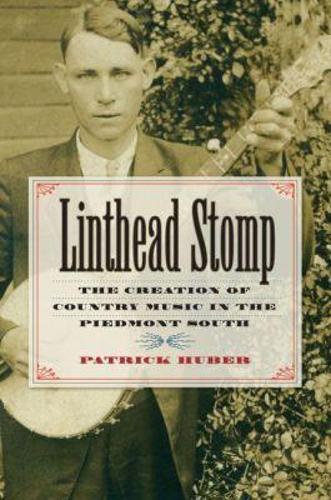
Contrary to popular belief, the roots of American country music do not lie solely on southern farms or in mountain hollows. Rather, much of this music recorded before World War II emerged from the bustling cities and towns of the Piedmont South. No group contributed more to the commercialization of early country music than southern factory workers. In Linthead Stomp, Patrick Huber explores the origins and development of this music in the Piedmont's mill villages. Huber offers vivid portraits of a colorful cast of Piedmont millhand musicians, including Fiddlin' John Carson, Charlie Poole, Dave McCarn, and the Dixon Brothers, and considers the impact that urban living, industrial work, and mass culture had on their lives and music. Drawing on a broad range of sources, including rare 78-rpm recordings and unpublished interviews, Huber reveals how the country music recorded between 1922 and 1942 was just as modern as the jazz music of the same era. Linthead Stomp celebrates the Piedmont millhand fiddlers, guitarists, and banjo pickers who combined the collective memories of the rural countryside with the upheavals of urban-industrial life to create a distinctive American music that spoke to the changing realities of the twentieth-century South.
Full Product Details
Author: Patrick Huber
Publisher: The University of North Carolina Press
Imprint: The University of North Carolina Press
Dimensions:
Width: 15.50cm
, Height: 2.40cm
, Length: 23.30cm
Weight: 0.676kg
ISBN: 9781469621913
ISBN 10: 1469621916
Pages: 440
Publication Date: 01 December 2014
Audience:
College/higher education
,
Postgraduate, Research & Scholarly
Format: Paperback
Publisher's Status: Active
Availability: Manufactured on demand

We will order this item for you from a manufactured on demand supplier.
Reviews
For lovers of music and its history--especially our homegrown Southern sound--the more we know, the more we want to know. . . . An enthralling tuneful journey into the birth and influence of a heretofore undervalued contribution to the genre. Guaranteed to set readers' toes tapping and then tramping out to track down the recordings included in the Linthead Stomp discography. -- Tennessee Advocate
[A] splendid book . . . one of its principle achievements, due to its author's subtle but insistent writing, is to encourage the seeking out of [the performers'] work. Huber provides a very useful discography, rightly flagging up the sterling work done b
Based on an interdisciplinary approach that utilizes perspectives prominent in history, sociology, literary criticism, folklore, and popular music scholarship, Linthead Stomp provides a sensitive and invaluable assessment of working-class adaptation to social change. -- Georgia Historical Quarterly
For lovers of music and its history--especially our homegrown Southern sound--the more we know, the more we want to know. . . . An enthralling tuneful journey into the birth and influence of a heretofore undervalued contribution to the genre. Guaranteed
Compelling. . . . An excellent first foray into an important but often overlooked chapter in the history of American popular music.--Studies in American Culture <p/>
Author Information
Patrick Huber is professor of history at Missouri University of Science and Technology, USA, and the author or editor of five books, including The Hank Williams Reader.