Overview
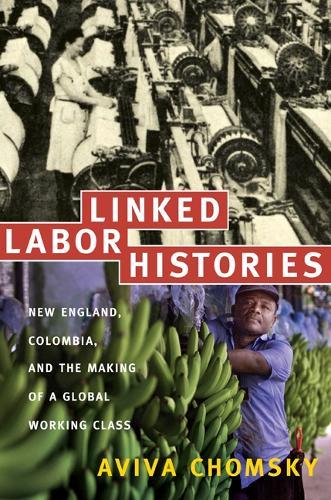
Exploring globalization from a labour history perspective, Aviva Chomsky provides historically grounded analyses of migration, labour-management collaboration, and the mobility of capital. She illuminates these dynamics through case studies set mostly in New England and Colombia. Taken together, the case studies offer an intricate portrait of two regions, their industries, their workers, and the myriad links between them over the long twentieth century, as well as a new way to conceptualize globalization as a long-term process. Chomsky examines labour and management at two early-twentieth-century Massachusetts factories: one that transformed the global textile industry by exporting looms around the world, and another that was the site of a model programme of labour-management collaboration in the 1920s. She follows the path of the textile industry from New England, first to the U.S. South, and then to Puerto Rico, Japan, Mexico, Central America and the Caribbean, and Colombia. She considers how towns in Rhode Island and Massachusetts began to import Colombian workers as they struggled to keep their last textile factories going.Most of the workers eventually landed in service jobs: cleaning houses, caring for elders, washing dishes. Focusing on Colombia between the 1960s and the present, Chomsky looks at the Uraba banana export region, where violence against organized labour has been particularly acute, and she explores the thorny question of U.S. union involvement in foreign policy through a discussion of the AFL-CIO's activities in Colombia. In the 1980s, two U.S. coal mining companies began to shift their operations to Colombia, where they opened two of the largest open-pit coal mines in the world. Chomsky assesses how different groups, especially labour unions in both countries, were affected. Linked Labor Histories suggests that economic integration among regions often exacerbates regional inequalities rather than ameliorating them.
Full Product Details
Author: Aviva Chomsky
Publisher: Duke University Press
Imprint: Duke University Press
Dimensions:
Width: 15.60cm
, Height: 2.40cm
, Length: 23.50cm
Weight: 0.581kg
ISBN: 9780822341901
ISBN 10: 0822341905
Pages: 416
Publication Date: 01 April 2008
Audience:
Professional and scholarly
,
Professional & Vocational
Format: Paperback
Publisher's Status: Active
Availability: In Print

This item will be ordered in for you from one of our suppliers. Upon receipt, we will promptly dispatch it out to you. For in store availability, please contact us.
Reviews
""By looking at globalization from the perspective of labor history, and labor history through the lens of globalization, Aviva Chomsky transforms our understanding of both. In Chomsky's hands, global labor history becomes a compelling tool for understanding and challenging the social inequalities that capitalism creates and depends on. The result is not only a wonderfully rich and detailed look at particular places and times, but a pathbreaking study that forces us to rethink how we understand the Americas as a whole. Students, scholars, labor leaders, and activists should all read this magnificent book.""--Steve Striffler, author of In the Shadows of State and Capital: The United Fruit Company, Popular Struggle, and Agrarian Restructuring in Ecuador, 1900-1995 ""The early-twentieth-century export of Draper looms from Hopedale, Massachusetts, to Medellin's domestic textile industry sets the stage for a remarkably creative transnational study, documenting the eerie connection between the fates of both American and Colombian working people. Aviva Chomsky jumps skillfully across time and space to link capital flight and the early globalization of the New England textile industry to patterns of low-wage international immigration, even as she dissects the role of the United States (at times aided by American trade unions) in the suppression of Colombian labor radicalism.""--Leon Fink, author of The Maya of Morganton: Work and Community in the Nuevo New South
By looking at globalization from the perspective of labor history, and labor history through the lens of globalization, Aviva Chomsky transforms our understanding of both. In Chomsky's hands, global labor history becomes a compelling tool for understanding and challenging the social inequalities that capitalism creates and depends on. The result is not only a wonderfully rich and detailed look at particular places and times, but a pathbreaking study that forces us to rethink how we understand the Americas as a whole. Students, scholars, labor leaders, and activists should all read this magnificent book. --Steve Striffler, author of In the Shadows of State and Capital: The United Fruit Company, Popular Struggle, and Agrarian Restructuring in Ecuador, 1900-1995 The early-twentieth-century export of Draper looms from Hopedale, Massachusetts, to Medellin's domestic textile industry sets the stage for a remarkably creative transnational study, documenting the eerie connection between the fates of both American and Colombian working people. Aviva Chomsky jumps skillfully across time and space to link capital flight and the early globalization of the New England textile industry to patterns of low-wage international immigration, even as she dissects the role of the United States (at times aided by American trade unions) in the suppression of Colombian labor radicalism. --Leon Fink, author of The Maya of Morganton: Work and Community in the Nuevo New South
Linked Labor Histories clearly establishes Chomsky as one of the foremost innovative labour historians of America-North and South. - David C. Carlson, Canadian Journal of History Linked Labor Histories is a book with a story that scholars can certainly learn from, but it has an even more important message to concerned citizens and labour activists about the necessity of building a movement that confronts globalisation with global strategies. - James P. Brennan, Journal of Latin American Studies [A] valuable contribution in the movement to revive (and revise) analytical tools that shed light on the past in order to illuminate the paths we walk today. - Louis Segal, A Contracorriente What in many text books easily turns into a dry account becomes in Chomsky's skilful narrative a fascinating and lively story, where the personal is never far from the general. In particular, I like the way in which each of the seven chapters ends with snippets of life histories from workers and unionists, whose personal experiences reflect the more abstract development of global capitalism. It is this putting flesh on social history that makes Linked Labor Histories such a captivating read... Linked Labor Histories is a tremendous achievement and a fascinating read. - Ulrich Oslender, Bulletin of Latin American Research Linked Labor Histories is an informative, thought-provoking explanation of how workers' struggles within the imperialist centers are linked to those in countries dominated by imperialism. - Ted Zuur, Socialism and Democracy Chomsky challenges readers to rethink their assumptions about regional and global power relations, as well as the parts played by governments, workers, and their unions in capital's continual search for cheap, controllable labor... Aviva Chomsky has written an exciting book about globalization and how the creation and maintenance of global inequalities over time have empowered capital over labor... Chomsky's work explores new avenues of inquiry. She pushes readers to engage with the long history of the global South, and consider the strategies workers, unions, corporations, consumers, and governments have used to shape its development in the past, and the ways they could do so in the future. - Beth English, Labor By looking at globalization from the perspective of labor history, and labor history through the lens of globalization, Aviva Chomsky transforms our understanding of both. In Chomsky's hands, global labor history becomes a compelling tool for understanding and challenging the social inequalities that capitalism creates and depends on. The result is not only a wonderfully rich and detailed look at particular places and times, but a pathbreaking study that forces us to rethink how we understand the Americas as a whole. Students, scholars, labor leaders, and activists should all read this magnificent book. -Steve Striffler, author of In the Shadows of State and Capital: The United Fruit Company, Popular Struggle, and Agrarian Restructuring in Ecuador, 1900-1995 The early-twentieth-century export of Draper looms from Hopedale, Massachusetts, to Medellin's domestic textile industry sets the stage for a remarkably creative transnational study, documenting the eerie connection between the fates of both American and Colombian working people. Aviva Chomsky jumps skillfully across time and space to link capital flight and the early globalization of the New England textile industry to patterns of low-wage international immigration, even as she dissects the role of the United States (at times aided by American trade unions) in the suppression of Colombian labor radicalism. -Leon Fink, author of The Maya of Morganton: Work and Community in the Nuevo New South Linked Labor Histories clearly establishes Chomsky as one of the foremost innovative labour historians of America-North and South. -- David C. Carlson Canadian Journal of History Linked Labor Histories is a book with a story that scholars can certainly learn from, but it has an even more important message to concerned citizens and labour activists about the necessity of building a movement that confronts globalisation with global strategies. -- James P. Brennan Journal of Latin American Studies Linked Labor Histories is an informative, thought-provoking explanation of how workers' struggles within the imperialist centers are linked to those in countries dominated by imperialism. -- Ted Zuur Socialism and Democracy [A] valuable contribution in the movement to revive (and revise) analytical tools that shed light on the past in order to illuminate the paths we walk today. -- Louis Segal A Contracorriente Chomsky challenges readers to rethink their assumptions about regional and global power relations, as well as the parts played by governments, workers, and their unions in capital's continual search for cheap, controllable labor... Aviva Chomsky has written an exciting book about globalization and how the creation and maintenance of global inequalities over time have empowered capital over labor... Chomsky's work explores new avenues of inquiry. She pushes readers to engage with the long history of the global South, and consider the strategies workers, unions, corporations, consumers, and governments have used to shape its development in the past, and the ways they could do so in the future. -- Beth English Labor What in many text books easily turns into a dry account becomes in Chomsky's skilful narrative a fascinating and lively story, where the personal is never far from the general. In particular, I like the way in which each of the seven chapters ends with snippets of life histories from workers and unionists, whose personal experiences reflect the more abstract development of global capitalism. It is this putting flesh on social history that makes Linked Labor Histories such a captivating read... Linked Labor Histories is a tremendous achievement and a fascinating read. -- Ulrich Oslender Bulletin of Latin American Research
"""By looking at globalization from the perspective of labor history, and labor history through the lens of globalization, Aviva Chomsky transforms our understanding of both. In Chomsky's hands, global labor history becomes a compelling tool for understanding and challenging the social inequalities that capitalism creates and depends on. The result is not only a wonderfully rich and detailed look at particular places and times, but a pathbreaking study that forces us to rethink how we understand the Americas as a whole. Students, scholars, labor leaders, and activists should all read this magnificent book.""--Steve Striffler, author of In the Shadows of State and Capital: The United Fruit Company, Popular Struggle, and Agrarian Restructuring in Ecuador, 1900-1995 ""The early-twentieth-century export of Draper looms from Hopedale, Massachusetts, to Medellin's domestic textile industry sets the stage for a remarkably creative transnational study, documenting the eerie connection between the fates of both American and Colombian working people. Aviva Chomsky jumps skillfully across time and space to link capital flight and the early globalization of the New England textile industry to patterns of low-wage international immigration, even as she dissects the role of the United States (at times aided by American trade unions) in the suppression of Colombian labor radicalism.""--Leon Fink, author of The Maya of Morganton: Work and Community in the Nuevo New South"
Author Information
Aviva Chomsky is Professor of History and Coordinator of Latin American Studies at Salem State College in Salem, Massachusetts. She is the author of “They Take Our Jobs!”: And 20 Other Myths about Immigration and West Indian Workers and the United Fruit Company in Costa Rica, 1870–1940; editor of The People behind Colombian Coal; and a coeditor of The Cuba Reader and Identity and Struggle at the Margins of the Nation-State, both also published by Duke University Press.