Overview
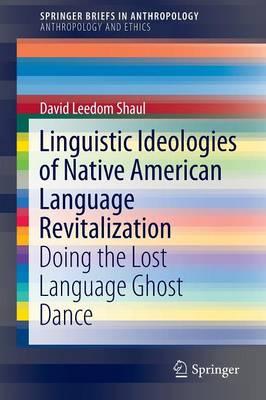
The concept of this volume is that the paradigm of European national languages (official orthography; language standardization; full use of language in most everyday contexts) is imposed in cookie-cutter fashion on most language revitalization efforts of Native American languages. While this model fits the sovereign status of many Native American groups, it does not meet the linguistic ideology of Native American communities, and creates projects and products that do not engage the communities which they are intended to serve. The concern over heritage language loss has generated since 1990 enormous activity that is supposed to restore full private and public function of heritage languages in Native American speech communities. The thinking goes: if you do what the volume terms the ""Lost Language Ghost Dance,"" your heritage language will flourish once more. Yet the heritage language only flourishes on paper, and not in any meaningful way for the community it is trying to help. Instead, this volume proposes a model of Native American language revitalization that is different from the national/official language model, one that respects and incorporates language variation, and entertains variable outcomes. This is because it is based on Native American linguistic ideologies. This volume argues that the cookie-cutter application of the official language ideology is unethical because it undermines the intent of language revitalization itself: the continued daily, meaningful use of a heritage language in its speech community.
Full Product Details
Author: David Leedom Shaul
Publisher: Springer International Publishing AG
Imprint: Springer International Publishing AG
Edition: 2014 ed.
Dimensions:
Width: 15.50cm
, Height: 0.40cm
, Length: 23.50cm
Weight: 1.299kg
ISBN: 9783319052922
ISBN 10: 3319052926
Pages: 62
Publication Date: 10 April 2014
Audience:
Professional and scholarly
,
Professional & Vocational
Format: Paperback
Publisher's Status: Active
Availability: Manufactured on demand

We will order this item for you from a manufactured on demand supplier.
Author Information
David Leedom Shaul is an anthropological linguist who works with languages of the central coast of California (Costanoan/Ohlonean: Mutsun, Rumsen, Ausaima, Chalon; Salinan; Esselen; and Northern Chumash). He is also one of the world's leading experts on the Uto-Aztecan language family. He has worked with Native American languages for over 30 years in the areas of language documentation and revitalization. Currently, Dr. Shaul is a Research Linguist on a Documenting Endangered Languages project (National Science Foundation) at the University of Wyoming. The project is to create a dictionary database of Eastern Shoshone, which is spoken on the Wind River Reservation in central Wyoming. There are four different varieties in the Wind River Shoshone speech community. The dictionary database and associated grammar are based on archival and published information about Eastern Shoshone. The results of the project will be a working dictionary of Eastern Shoshone, with a companion survey of Eastern Shoshone grammar (with indications of where research is needed). Both products will be in pdf format. Dr. Shaul recently completed a book manuscript, Chasing the Uto-Aztecans. This work chronicles the prehistory of western North America by using data from the Uto-Aztecan language family to document prehistoric interactions between Uto-Aztecan speech communities and speakers of other languages.