Overview
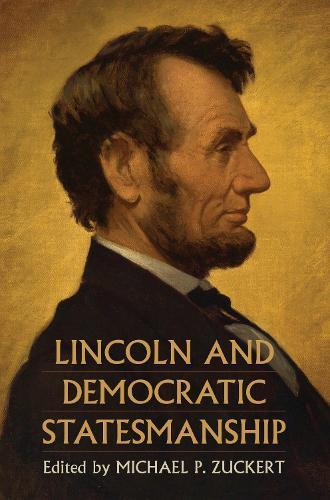
Our ideas of statesmanship are fraught with seeming contradictions: The democratic statesman is true to the people's wishes and views - but also capable of standing against popular opinion when necessary. The statesman rises above conflicts and seeks compromise between parties - but also stands firmly for what is right. Abraham Lincoln, perhaps more than any other political figure in US history, affords us an opportunity to evaluate the philosophical, political, and practical implications of these paradoxical propositions. Asking whether and how Lincoln acted in a statesmanly manner at critical moments, the authors of this volume aim to clarify what precisely statesmanship might be; their work illuminates important themes and events in Lincoln's career even as it broadens and sharpens our understanding of the general nature of statesmanship. One of Lincoln's abiding themes was foreshadowed in his Lyceum Address, delivered when he was not yet thirty: the call for the prevalence of a sort of public opinion that he characterized as a political religion. As it relates to democratic statesmanship, what does Lincoln's political religion have to do with religion per se? How, in his role as statesman as a master of democratic speech, did Lincoln handle the two major issues he faced as a political leader: slavery and the war? In attempting to meet the demand that he use acceptable means to achieve his ends, did Lincoln - can any statesman - keep his hands clean? Are there inevitable transgressions that a statesman must commit? These are among the topics the authors take on as they consider Lincoln's democratic and rhetorical statesmanship, on occasion drawing comparisons with his contemporaries Henry Clay and Stephen Douglas or even such a distant forerunner as Pericles. Finally, framing statesmanship in terms of three factors - knowledge of the political good of a community, circumstance, and the best possible action in light of these two - this volume renders a nuanced, deeply informed judgment on what distinguishes Lincoln as a statesman, and what distinguishes a statesman from a (mere) politician.
Full Product Details
Author: Michael P. Zuckert
Publisher: University Press of Kansas
Imprint: University Press of Kansas
Dimensions:
Width: 15.70cm
, Height: 2.50cm
, Length: 23.30cm
Weight: 0.615kg
ISBN: 9780700629381
ISBN 10: 0700629386
Pages: 312
Publication Date: 05 May 2020
Audience:
Professional and scholarly
,
Professional & Vocational
Format: Hardback
Publisher's Status: Active
Availability: Temporarily unavailable

The supplier advises that this item is temporarily unavailable. It will be ordered for you and placed on backorder. Once it does come back in stock, we will ship it out to you.
Reviews
"Michael Zuckert has assembled a remarkable group of scholars whose grasp of Lincoln's principles and practices is matched by their deft understanding of ancient and modern conceptions of statesmanship. These insightful essays restore both the notion of democratic statesmanship to its proper place and Lincoln's status as a statesman. This collection is a must-read for students of American political thought and serves as a reminder that democracies can produce leaders who appeal to the better angels of our nature."" - Stephen F. Knott, author of The Lost Soul of the American Presidency: The Decline into Demagoguery and the Prospects for Renewal ""This collection of original essays provides new insights and perspectives on Lincoln's moral and democratic principles, often contrasting these with prominent contemporaries like Stephen Douglas and Henry Clay. In a thoughtful introduction, Professor Zuckert defines the qualities that constitute statesmanship. The essays in the book demonstrate that only Lincoln passed the test of true statesmanship."" - William C. Harris, author of Lincoln's Rise to the Presidency and Lincoln and the Border States: Preserving the Union ""This is a valuable, learned, and timely exploration of the often nebulous concept of statesmanship and its application to Abraham Lincoln's life and career. These essays represent an impressive cross-section of scholarship and research, carefully and deftly exploring themes ranging from his ideas about the Union and slavery to his conception of battlefield death. Michael Zuckert and his fellow contributors have performed a vital service; Lincoln and Democratic Statesmanship is an impressive contribution to Lincoln studies and American political history generally."" - Brian R. Dirck, author of Abraham Lincoln and White America"
Michael Zuckert has assembled a remarkable group of scholars whose grasp of Lincoln's principles and practices is matched by their deft understanding of ancient and modern conceptions of statesmanship. These insightful essays restore both the notion of democratic statesmanship to its proper place and Lincoln's status as a statesman. This collection is a must-read for students of American political thought and serves as a reminder that democracies can produce leaders who appeal to the better angels of our nature. --Stephen F. Knott, author of The Lost Soul of the American Presidency: The Decline into Demagoguery and the Prospects for Renewal This collection of original essays provides new insights and perspectives on Lincoln's moral and democratic principles, often contrasting these with prominent contemporaries like Stephen Douglas and Henry Clay. In a thoughtful introduction, Professor Zuckert defines the qualities that constitute statesmanship. The essays in the book demonstrate that only Lincoln passed the test of true statesmanship. --William C. Harris, author of Lincoln's Rise to the Presidency and Lincoln and the Border States: Preserving the Union This is a valuable, learned, and timely exploration of the often nebulous concept of statesmanship and its application to Abraham Lincoln's life and career. These essays represent an impressive cross-section of scholarship and research, carefully and deftly exploring themes ranging from his ideas about the Union and slavery to his conception of battlefield death. Michael Zuckert and his fellow contributors have performed a vital service; Lincoln and Democratic Statesmanship is an impressive contribution to Lincoln studies and American political history generally. --Brian R. Dirck, author of Abraham Lincoln and White America
Michael Zuckert has assembled a remarkable group of scholars whose grasp of Lincoln's principles and practices is matched by their deft understanding of ancient and modern conceptions of statesmanship. These insightful essays restore both the notion of democratic statesmanship to its proper place and Lincoln's status as a statesman. This collection is a must-read for students of American political thought and serves as a reminder that democracies can produce leaders who appeal to the better angels of our nature. - Stephen F. Knott, author of The Lost Soul of the American Presidency: The Decline into Demagoguery and the Prospects for RenewalA This collection of original essays provides new insights and perspectives on Lincoln's moral and democratic principles, often contrasting these with prominent contemporaries like Stephen Douglas and Henry Clay. In a thoughtful introduction, Professor Zuckert defines the qualities that constitute statesmanship. The essays in the book demonstrate that only Lincoln passed the test of true statesmanship. - William C. Harris, author of Lincoln's Rise to the Presidency and Lincoln and the Border States: Preserving the Union This is a valuable, learned, and timely exploration of the often nebulous concept of statesmanship and its application to Abraham Lincoln's life and career. These essays represent an impressive cross-section of scholarship and research, carefully and deftly exploring themes ranging from his ideas about the Union and slavery to his conception of battlefield death. Michael Zuckert and his fellow contributors have performed a vital service; Lincoln and Democratic Statesmanship is an impressive contribution to Lincoln studies and American political history generally. - Brian R. Dirck, author of Abraham Lincoln and White America
Author Information
Michael P. Zuckert is Nancy R. Dreux Professor of Political Science at the University of Notre Dame. He is the author of several books including Natural Rights and the New Republicanism, The Natural Rights Republic, and, also from Kansas, Launching Liberalism: On Lockean Philosophy.