Overview
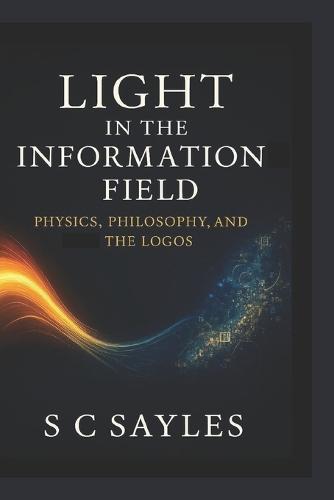
For centuries, humanity has asked: What is light? From the earliest reflections of the ancient Greeks to the revolutionary insights of Newton, Maxwell, and Einstein, light has been our primary key to unlocking the mysteries of the universe. Yet despite monumental progress, the fundamental question remains unresolved: Through what medium does light propagate, and why is it so intelligible? In Light in the Information Field, S.C. Sayles proposes a bold new answer - the Information Field (I∆F). This is not a revival of the discredited mechanical aether, nor a metaphorical flourish, but a rigorous ontological hypothesis: reality itself is undergirded by a universal informational substrate, created and sustained by the Logos. This ground-breaking work integrates physics, philosophy, and theology to provide a coherent framework for understanding light and the laws of the cosmos. Key Themes 1. The Problem of Light Ancient and classical thinkers saw light as a mystery linking heaven and earth. Modern physics, from relativity to quantum theory, has explained light's behavior but not its ontological basis. The question persists: how does light propagate without a mechanical medium? 2. The Information Field (I∆F) Defined as a universal substrate of informational encoding, not material substance. Instantiates photons, wave-particle duality, and constants of nature as decrees of order. Provides the missing link between relativity, quantum mechanics, and cosmology. 3. Scientific Evidence Consistent with I∆F Tidal anomalies: persistent timing mismatches unexplained by gravitational models. Quantum entanglement: instantaneous coherence across space without local signals. Casimir effect: measurable vacuum forces that reveal informational fullness. Cosmological constant problem: the largest mismatch in physics, resolved as an informational decree. 4. Philosophical and Theological Foundations Logos Cosmology: ""In Him all things hold together"" (Col. 1:17). Augustine & Aquinas: Creation as continuously sustained by divine reason. Calvin & Schaeffer: Science is possible because the universe is rational and personal. Modern thinkers (Shannon, Gitt, Hoffman): Information as measurable, ontological, and interface-mediated. 5. Addressing Historical Objections Why the luminiferous aether failed - and why I∆F is not the aether. Distinguishing between physical detectability and ontological necessity. Occam's Razor: I∆F as the simpler, more coherent explanation than dark matter, dark energy, or multiverse speculation. 6. Implications for Physics and Cosmology Gravity, electromagnetism, and quantum mechanics united under an informational ontology. Dark matter and dark energy reinterpreted as informational constructs, not exotic substances. Cosmic expansion explained as decree of I∆F, not phantom forces. 7. Implications for Human Understanding Why scientific laws are stable and intelligible. Human reason as participant in the Field, reflecting the Logos. The epistemological battle: materialism vs. information ontology.
Full Product Details
Author: S C Sayles
Publisher: Independently Published
Imprint: Independently Published
Dimensions:
Width: 15.20cm
, Height: 1.70cm
, Length: 22.90cm
Weight: 0.422kg
ISBN: 9798296366597
Pages: 316
Publication Date: 03 August 2025
Audience:
General/trade
,
General
Format: Paperback
Publisher's Status: Active
Availability: Available To Order

We have confirmation that this item is in stock with the supplier. It will be ordered in for you and dispatched immediately.