Overview
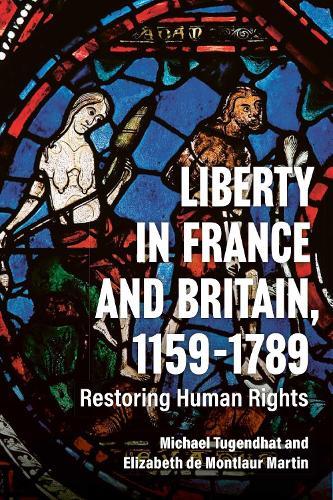
Documents the influence Britain and France had on the ideas of liberty and human rights from the twelfth century to the French Revolution. This book innovatively challenges the widely held perception that the idea of Human Rights and their protection was invented in the long eighteenth century. Liberty, Equality, Fraternity, the motto of the French Republic, encapsulates the 1789 Declaration of the Rights of Man. The authors trace the history of each article in that Declaration to the twelfth to the sixteenth centuries. In that period French-speaking Norman rulers in England introduced the common law based on reason and natural rights, government by limited monarchy and habeas corpus; and in both France and England the right to a fair trial or due process replaced trials by ordeal and battle, chattel slavery disappeared, and the rule of law and republican government were developed. The authors show that the ideas the French and British shared in that period were deployed to justify the rebellions and revolutions in the Netherlands and Britain in the sixteenth and seventeenth centuries, and in France and America in the eighteenth century. These ideas inspired human rights declarations, treaties and national laws in the twentieth century. The authors draw on the Policraticus (1159) of John of Salisbury and (among others) Thomas More's Utopia (1516), Jean Bodin's Six Books of the Republic (1576), John Locke's Treatises on Government (c.1689), Montesquieu's Spirit of the Laws (1748) and William Blackstone's Commentaries on the Laws of England (1765-69).
Full Product Details
Author: Sir Michael Tugendhat ,
Elizabeth de Montlaur Martin
Publisher: Boydell & Brewer Ltd
Imprint: Boydell & Brewer
ISBN: 9781837653294
ISBN 10: 1837653291
Pages: 524
Publication Date: 10 March 2026
Audience:
Professional and scholarly
,
College/higher education
,
Professional & Vocational
,
Postgraduate, Research & Scholarly
Format: Hardback
Publisher's Status: Active
Availability: In Print

This item will be ordered in for you from one of our suppliers. Upon receipt, we will promptly dispatch it out to you. For in store availability, please contact us.
Reviews
This impressive and fascinating volume provides practitioners as well as academics teaching human rights with a wealth of valuable and original material. A historic tour-de-force by the authors that is of great relevance to the world today. * Amal Clooney, Barrister at Doughty Street Chambers and Professor of Practice in International Law at Oxford University. * This enormously timely and important book presents a comprehensive history of the origins of the concept of human rights. Many people think 'human rights' were invented in 1789 with the French Revolution; for some they came into being as a universal declaration only at the United Nations in 1948. Michael Tugendhat and Elizabeth de Montlaur Martin, distinguished lawyers respectively from London and Paris, show point by point how the concept of universal rights goes back centuries before modernity. Freedom today is on everyone's lips, with each side of the political spectrum claiming that the other is threatening to take theirs away. Politicians, charlatans and influencers abuse the word at every turn. Anyone who wants to understand the meaning of personal liberty, slavery, property, privacy, security, toleration, religion, conscience, or just the right to be left alone, needs to read this book. * Professor Brian Cummings, FBA * Meticulous and timely, a most significant and captivating contribution to our understanding of the historic origins of our liberties and rights, of the power of comparative analysis, and of the vital place that the rule of law and basic human rights can and must play in our lives. * Professor Philippe Sands, KC * From an English perspective, the book is a timely - and, politically, much-needed - reminder that human rights are integral to English heritage. Tugendhat and de Montlaur Martin demonstrate that the English understanding of such rights is given to us by the institutional fabric of the common law, by which values such as autonomy and human dignity became entrenched within our unwritten constitution. The level of analysis that the book provides is apparent in terms of the sophistication of the structure, the depth of intellectual probing, and the scrutiny with which historical texts and sources are treated. Although much has been written on the itemised topics, such as the US declaration, the French revolution, the history of the English common law, etc, there is nothing of real comparison that offers a distilled and sustained argument that makes the connections between all of these events in the ways offered by this work which, in its obvious originality, has great value to the academic world. The book has a significance that transcends its obvious appeal as an academic text. * Paul Wragg, Professor of Media Law *
This impressive and fascinating volume provides practitioners as well as academics teaching human rights with a wealth of valuable and original material. A historic tour-de-force by the authors that is of great relevance to the world today. * Amal Clooney, Barrister at Doughty Street Chambers and Professor of Practice in International Law at Oxford University. * This enormously timely and important book presents a comprehensive history of the origins of the concept of human rights. Many people think 'human rights' were invented in 1789 with the French Revolution; for some they came into being as a universal declaration only at the United Nations in 1948. Michael Tugendhat and Elizabeth de Montlaur Martin, distinguished lawyers respectively from London and Paris, show point by point how the concept of universal rights goes back centuries before modernity. Freedom today is on everyone's lips, with each side of the political spectrum claiming that the other is threatening to take theirs away. Politicians, charlatans and influencers abuse the word at every turn. Anyone who wants to understand the meaning of personal liberty, slavery, property, privacy, security, toleration, religion, conscience, or just the right to be left alone, needs to read this book. * Professor Brian Cummings, FBA * Meticulous and timely, a most significant and captivating contribution to our understanding of the historic origins of our liberties and rights, of the power of comparative analysis, and of the vital place that the rule of law and basic human rights can and must play in our lives. * Professor Philippe Sands, KC * From an English perspective, the book is a timely - and, politically, much-needed - reminder that human rights are integral to English heritage. Tugendhat and de Montlaur Martin demonstrate that the English understanding of such rights is given to us by the institutional fabric of the common law, by which values such as autonomy and human dignity became entrenched within our unwritten constitution. The level of analysis that the book provides is apparent in terms of the sophistication of the structure, the depth of intellectual probing, and the scrutiny with which historical texts and sources are treated. Although much has been written on the itemised topics, such as the US declaration, the French revolution, the history of the English common law, etc, there is nothing of real comparison that offers a distilled and sustained argument that makes the connections between all of these events in the ways offered by this work which, in its obvious originality, has great value to the academic world. The book has a significance that transcends its obvious appeal as an academic text. * Paul Wragg, Professor of Media Law * On its face, this is a book about the 1789 French Declaration of the Rights of Man and of Citizens in the form of an article-by-article commentary on that Declaration. However, Sir Michael Tugendhat and Maître Elizabeth de Montlaur Martin demonstrate - using a very accessible style of writing - how the authors of that Declaration, as well as those of other contemporaneous and later (constitutional) charters in Europe and America, were able to draw heavily on the work of lawyers and philosophers going back centuries. * Sir Tim Eicke, KCMG KC *
Author Information
SIR MICHAEL TUGENDHAT is a former judge of the High Court of England and Wales and the Courts of Appeal of Jersey and Guernsey, and an honorary professor at the University of Leicester. ELIZABETH DE MONTLAUR MARTIN is a former member of the Paris Bar.