Overview
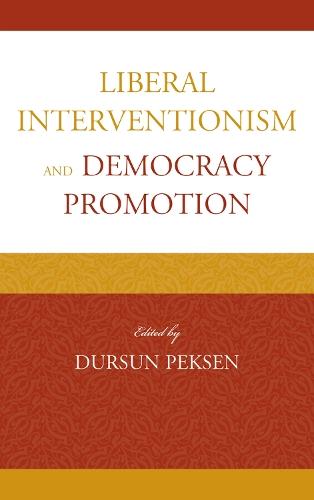
Despite growing interest in democracy promotion, the nature and extent of external factors’ impact on democratic transitions to date remains understudied. The question of what works under what circumstances is still intensely contested among academics, policy-makers, and practitioners. Liberal Interventionism and Democracy Promotion, edited by Dursun Peksen, contributes to the study of international democracy promotion, exploring the extent to which various forms of foreign interventions and policy actors that advocate political liberalization affect the spread of democracy. The contributors in this study specifically address issues highly relevant to the academic research and policymaking, including the evaluation of the efficacy of four major tools—economic sanctions, foreign aid, external armed interventions, and soft power—that are often used to advance political liberalization in authoritarian regimes. The book also assesses the performance of four major non-state actors—the International Monetary Fund, the United Nations, the European Union, and transnational human rights organizations—that have become increasingly influential in advocating the spread of civil liberties and political rights. Liberal Interventionism and Democracy Promotion’s comprehensive assessment of the efficacy of major policy instruments and actors that advocate political liberalization offers a greater understanding of what works best and when in the practice of democracy promotion. This collection is an essential contribution to the study of democracy promotion and international relations.
Full Product Details
Author: Dursun Peksen
Publisher: Bloomsbury Publishing Plc
Imprint: Lexington Books
Dimensions:
Width: 15.40cm
, Height: 2.00cm
, Length: 23.10cm
Weight: 0.381kg
ISBN: 9780739188095
ISBN 10: 0739188097
Pages: 248
Publication Date: 08 October 2013
Audience:
Professional and scholarly
,
Professional & Vocational
Format: Paperback
Publisher's Status: Active
Availability: In Print

This item will be ordered in for you from one of our suppliers. Upon receipt, we will promptly dispatch it out to you. For in store availability, please contact us.
Reviews
Liberal Interventionism and Democracy Promotion is empirically rich collection of well-researched studies that illuminates how various external actors-states, international organizations such as the UN, IMF, and EU, and transnational non-governmental organizations-can further democratization in targeted countries. It addresses some key questions in the vast literature on democratization, offering in many respects an optimistic and occasionally provocative take on the ability of outside actors to promote democracy. It deserves a wide audience among both academics and policy-makers. -- Paul Kubicek, Oakland University This is a welcome, finely wrought volume about the oft-misunderstood problem of liberal interventionism. Peksen and his analysts have offered an empirical analysis with a broad sweep that reveals some surprising answers to conventional wisdom. This sophisticated treatment sheds light on enduring questions, and opens a variety of new ones. -- KC Morrison, Mississippi State University This edited volume is different from the plethora of studies devoted to democratic transition in many ways. First, it sheds new light on the importance of adding international dimension to the analysis of democratization, a dimension that has been nonchalantly shoved to the margin by many scholars in the field. Second, the contributors take a systematic approach in examining all external influences and effectiveness of foreign policy tools on democratization. The bulk of the discussion centers on two main issues. The first issue is the efficacy of foreign policy tools (i.e., 'economic aid, economic sanctions, foreign military intervention, and soft power') in advancing democratization. The second issue is the pervasiveness of EU, the IMF, the UN, and transnational human rights groups in promoting and defending democratic processes and institutions. It is a must read for those interested in understanding the whole processes of democratization, especially in the developing world. Summing Up: Highly recommended. Upper-division undergraduates and above. CHOICE The broad approach taken by Peksen is an obvious strength of this book, which is supported by a combination of case studies and a whole range of quantitative data from such sources around the world as USAID, Freedom House, and Polity IV...Liberal Interventionism and Democracy Promotion is a well-researched book that deserves scholarly attention. The book's provocative findings stand in sharp contrast to the preponderance of current scholarship on the topic. International Social Science Review
Liberal Interventionism and Democracy Promotion is empirically rich collection of well-researched studies that illuminates how various external actors-states, international organizations such as the UN, IMF, and EU, and transnational non-governmental organizations-can further democratization in targeted countries. It addresses some key questions in the vast literature on democratization, offering in many respects an optimistic and occasionally provocative take on the ability of outside actors to promote democracy. It deserves a wide audience among both academics and policy-makers. -- Paul Kubicek, Oakland University This is a welcome, finely wrought volume about the oft-misunderstood problem of liberal interventionism. Peksen and his analysts have offered an empirical analysis with a broad sweep that reveals some surprising answers to conventional wisdom. This sophisticated treatment sheds light on enduring questions, and opens a variety of new ones. -- KC Morrison, Mississippi State University This edited volume is different from the plethora of studies devoted to democratic transition in many ways. First, it sheds new light on the importance of adding international dimension to the analysis of democratization, a dimension that has been nonchalantly shoved to the margin by many scholars in the field. Second, the contributors take a systematic approach in examining all external influences and effectiveness of foreign policy tools on democratization. The bulk of the discussion centers on two main issues. The first issue is the efficacy of foreign policy tools (i.e., 'economic aid, economic sanctions, foreign military intervention, and soft power') in advancing democratization. The second issue is the pervasiveness of EU, the IMF, the UN, and transnational human rights groups in promoting and defending democratic processes and institutions. It is a must read for those interested in understanding the whole processes of democratization, especially in the developing world. Summing Up: Highly recommended. Upper-division undergraduates and above. CHOICE
Liberal Interventionism and Democracy Promotion is empirically rich collection of well-researched studies that illuminates how various external actors-states, international organizations such as the UN, IMF, and EU, and transnational non-governmental organizations-can further democratization in targeted countries. It addresses some key questions in the vast literature on democratization, offering in many respects an optimistic and occasionally provocative take on the ability of outside actors to promote democracy. It deserves a wide audience among both academics and policy-makers. -- Paul Kubicek, Oakland University This is a welcome, finely wrought volume about the oft-misunderstood problem of liberal interventionism. Peksen and his analysts have offered an empirical analysis with a broad sweep that reveals some surprising answers to conventional wisdom. This sophisticated treatment sheds light on enduring questions, and opens a variety of new ones. -- KC Morrison, Mississippi State University This edited volume is different from the plethora of studies devoted to democratic transition in many ways. First, it sheds new light on the importance of adding international dimension to the analysis of democratization, a dimension that has been nonchalantly shoved to the margin by many scholars in the field. Second, the contributors take a systematic approach in examining all external influences and effectiveness of foreign policy tools on democratization. The bulk of the discussion centers on two main issues. The first issue is the efficacy of foreign policy tools (i.e., 'economic aid, economic sanctions, foreign military intervention, and soft power') in advancing democratization. The second issue is the pervasiveness of EU, the IMF, the UN, and transnational human rights groups in promoting and defending democratic processes and institutions. It is a must read for those interested in understanding the whole processes of democratization, especially in the developing world. Summing Up: Highly recommended. Upper-division undergraduates and above. * CHOICE * The broad approach taken by Peksen is an obvious strength of this book, which is supported by a combination of case studies and a whole range of quantitative data from such sources around the world as USAID, Freedom House, and Polity IV. . . .Liberal Interventionism and Democracy Promotion is a well-researched book that deserves scholarly attention. The book's provocative findings stand in sharp contrast to the preponderance of current scholarship on the topic. * International Social Science Review *
Author Information
Dursun Peksen is assistant professor in the Department of Political Science at East Carolina University.