Overview
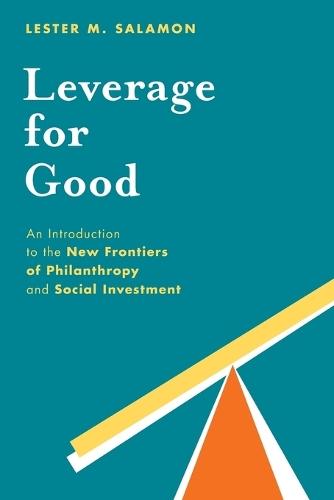
With the resources of both governments and traditional philanthropy barely growing or in decline, yet the problems of poverty, ill-health, and environmental degradation ballooning daily, new models for financing social and environmental objectives are urgently needed. Fortunately, a revolution is underway in the instruments and institutions available to meet this need. Loans, loan guarantees, private equity, barter arrangements, social stock exchanges, bonds, social secondary markets, and investment funds are just some of the actors and tools occupying the new frontiers of philanthropy and social investment. Together they hold the promise of leveraging for social and environmental purposes not just the billions of dollars of charitable grants but the hundreds of billions, indeed trillions, of dollars of private investment capital.While the changes under way are inspiring, they remain largely uncharted. This concise introduction to the topic, and its companion volume, provide the first comprehensive and accessible roadmap to these important advances. In the process, these works will better equip investors, philanthropists, social entrepreneurs, nonprofit leaders, business executives, government officials, and students the world over to capture the opportunities that these developments hold out to them and to our world.
Full Product Details
Author: Lester M. Salamon (Director, Director, Johns Hopkins Center for Civil Society Studies)
Publisher: Oxford University Press Inc
Imprint: Oxford University Press Inc
Dimensions:
Width: 15.50cm
, Height: 1.80cm
, Length: 23.10cm
Weight: 0.272kg
ISBN: 9780199376537
ISBN 10: 0199376530
Pages: 184
Publication Date: 22 May 2014
Audience:
Professional and scholarly
,
Professional and scholarly
,
Professional & Vocational
,
Professional & Vocational
Format: Paperback
Publisher's Status: Active
Availability: To order

Stock availability from the supplier is unknown. We will order it for you and ship this item to you once it is received by us.
Reviews
""Lester Salamon is a first-order scholar of global civil society. In an earlier work he put the importance of nonprofits worldwide on the map. In this work he provides a roadmap to the many new actors and tools that are enlarging the philanthropic space. Policy makers and practitioners owe him a great debt."" --Barry Gaberman, Senior Vice President (retired), the Ford Foundation ""All too many financial advisors cannot figure out how to address their best clients' concerns about charitable giving or impact investing -- for them it is an entirely new language they cannot speak. Salamon's book translates it for those advisors and better yet, for their home offices that must develop a plan for this new world of philanthropy and social investment, and do it soon."" --Christopher L. Davis, President, The Money Management Institute ""Here in one place are the varied contributions to the brave new world of social investing -- essential reading and clearly explained."" --Richard Holloway, author of Towards Financial Self-Reliance ""The book is well structured, the graphs and boxes illustrate and explain the content of the book. Moreover, the outline helps us to understand the topic by highlighting the most important points, and the wide margins allow the possibility of adding notes or comments. The glossary is a well-structured helpful part of the book, as Salamon mentioned in the book, the 'terminology is a wasteland' generally in the midst of a paradigm shift. The topic could be useful for professionals of the third sector as well as for researchers, students, or business people if they are or want to be involved with the third sector."" --International Society For Third-Sector Research
Here in one place are the varied contributions to the brave new world of social investing - essential reading and clearly explained. * Richard Holloway, author of Towards Financial Self-Reliance * All too many financial advisors cannot figure out how to address their best clients' concerns about charitable giving or impact investing - for them it is an entirely new language they cannot speak. Salamon's book translates it for those advisors and better yet, for their home offices that must develop a plan for this new world of philanthropy and social investment, and do it soon. * Christopher L. Davis, President, The Money Management Institute * Lester Salamon is a first-order scholar of global civil society. In an earlier work he put the importance of nonprofits worldwide on the map. In this work he provides a roadmap to the many new actors and tools that are enlarging the philanthropic space. Policy makers and practitioners owe him a great debt. * Barry Gaberman, Senior Vice President (retired), the Ford Foundation *
Lester Salamon is a first-order scholar of global civil society. In an earlier work he put the importance of nonprofits worldwide on the map. In this work he provides a roadmap to the many new actors and tools that are enlarging the philanthropic space. Policy makers and practitioners owe him a great debt. --Barry Gaberman, Senior Vice President (retired), the Ford Foundation All too many financial advisors cannot figure out how to address their best clients' concerns about charitable giving or impact investing -- for them it is an entirely new language they cannot speak. Salamon's book translates it for those advisors and better yet, for their home offices that must develop a plan for this new world of philanthropy and social investment, and do it soon. --Christopher L. Davis, President, The Money Management Institute Here in one place are the varied contributions to the brave new world of social investing -- essential reading and clearly explained. --Richard Holloway, author of Towards Financial Self-Reliance The book is well structured, the graphs and boxes illustrate and explain the content of the book. Moreover, the outline helps us to understand the topic by highlighting the most important points, and the wide margins allow the possibility of adding notes or comments. The glossary is a well-structured helpful part of the book, as Salamon mentioned in the book, the 'terminology is a wasteland' generally in the midst of a paradigm shift. The topic could be useful for professionals of the third sector as well as for researchers, students, or business people if they are or want to be involved with the third sector. --International Society For Third-Sector Research
Lester Salamon is a first-order scholar of global civil society. In an earlier work he put the importance of nonprofits worldwide on the map. In this work he provides a roadmap to the many new actors and tools that are enlarging the philanthropic space. Policy makers and practitioners owe him a great debt. --Barry Gaberman, Senior Vice President (retired), the Ford Foundation All too many financial advisors cannot figure out how to address their best clients' concerns about charitable giving or impact investing -- for them it is an entirely new language they cannot speak. Salamon's book translates it for those advisors and better yet, for their home offices that must develop a plan for this new world of philanthropy and social investment, and do it soon. --Christopher L. Davis, President, The Money Management Institute Here in one place are the varied contributions to the brave new world of social investing -- essential reading and clearly explained. --Richard Holloway, author of Towards Financial Self-Reliance
Author Information
Lester M. Salamon served as deputy associate director of the US Office of Management and Budget and is now Professor at the Johns Hopkins University and Director of the Johns Hopkins Center for Civil Society Studies.