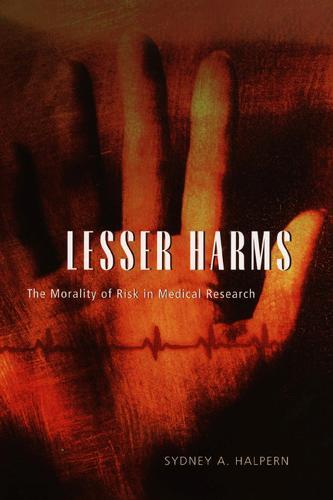
Full Product Details
Author: Sydney A. Halpern
Publisher: The University of Chicago Press
Imprint: University of Chicago Press
Edition: Annotated edition
Dimensions:
Width: 1.50cm
, Height: 0.20cm
, Length: 2.30cm
Weight: 0.482kg
ISBN: 9780226314518
ISBN 10: 0226314510
Pages: 246
Publication Date: 15 November 2004
Audience:
Professional and scholarly
,
Professional & Vocational
Format: Hardback
Publisher's Status: Active
Availability: Out of stock

The supplier is temporarily out of stock of this item. It will be ordered for you on backorder and shipped when it becomes available.
Reviews
Halpern explores the genesis of risk assessment in biomedical research. She argues persuasively that contemporary institutions' failings in managing research with human participants are rooted in a logic that predates by decades the bioethics codes of the guidelines of the 1960s and 1970s. This logic of lesser harms' . . . holds that a potentially hazardous experimental treatment is used only when the dangers associated with the medical intervention are outweighed the risks of the disease itself. . . . The task Halpern takes on is a tricky one: her analysis encompasses incomplete historical records as well as material on the sociology of modern research ethics. Yet she rises to this challenge and presents an extraordinary annotated bibliography that will be of use to scholars and regulators at the local and national level.
In Lesser Harms Sydney Halpern traces the evolution of moral codes for conducting medical research right back to the 18th century, from the informal pressures exerted by professional networks during the testing of live polio vaccines through to the strict formal rules laid down by bodies like the FDA for gene therapy trials. She shows how far we''ve come in protecting the people who volunteer for clinical trials, and demonstrates why it''s still not far enough. . . . Medical ethicists, researchers, policy makers and historians should read it. Volunteers in future clinical trials will thank them. -- New Scientist The story told in Lesser Harms should . . . inspire researchers and regulators to renew discussions of why risk minimization is of paramount importance. -- Adrienne Martic Health Affairs In Lesser Harms Sydney Halpern traces the evolution of moral codes for conducting medical research right back to the 18th century, from the informal pressures exerted by professional networks during the testing of live polio vaccines through to the strict formal rules laid down by bodies like the FDA for gene therapy trials. She shows how far we''ve come in protecting the people who volunteer for clinical trials, and demonstrates why it''s still not far enough. . . . Medical ethicists, researchers, policy makers and historians should read it. Volunteers in future clinical trials will thank them. -New Scientist Halpern explores the genesis of risk assessment in biomedical research. She argues persuasively that contemporary institutions' failings in managing research with human participants are rooted in a logic that predates by decades the bioethics codes of the guidelines of the 1960s and 1970s. This logic of lesser harms' . . . holds that a potentially hazardous experimental treatment is used only when the dangers associated with the medical intervention are outweighed the risks of the disease itself. . . . The task Halpern takes on is a tricky one: her analysis encompasses incomplete historical records as well as material on the sociology of modern research ethics. Yet she rises to this challenge and presents an extraordinary annotated bibliography that will be of use to scholars and regulators at the local and national level. In this concise and extremely well-written volume, Dr. Halpern . . . examines the moral traditions that govern the introduction of new medical interventions before and after the advent of federal regulation. To trace this evolution and illustrate her assertions, she uses innovations in the field of vaccine research in the United States during the 19th and 20th centuries. . . . Lesser Harms , while most certainly a scholarly work, provides a perspective on medical science that would also be appreciated by a broad audience. It would most certainly be of interest to physicians, both clinical and laboratory scientists, and those who design and participate in any aspoect of human subjects research. --Samuel C. Blackman Journal of the American Medical Association (08/03/2005) This is a fascinating and timely book that deserves the attention of anyone interested in the complex questions accompanying the ethics of medical research. --Jeffrey P. Baker New England Journal of Medicine (12/22/2005) The text offers insightful observations and detailed historical research into the development of risk management in human experiments, which sheds light on the social dynamics surrounding the conduct of medical research. This contribution would be of interest to researchers and academics working in the field of medical sociology, ethics and moral traditions in medical research. --Katie Ward Sociology (06/01/2006) A careful, clear, and well organized study of the indigenous morality of a medical research community and the limitations of formal risk management structures. . . . Those interested in prominent figures and institutions in the history of early to mid-twentieth century American medical research . . . . will find much of interest here. But the final chapters--which relate the history of risk morality to the corporatization of biomedical research and the increasingly elaborate, yet potentially inadequate and misguided ethics review protocols of the present day will be of interest to any researcher. --Emma Whelan Canadian Journal of Sociology In this concise and extremely well-written volume, Dr. Halpern . . . examines the moral traditions that govern the introduction of new medical interventions before and after the advent of federal regulation. To trace this evolution and illustrate her assertions, she uses innovations in the field of vaccine research in the United States during the 19th and 20th centuries. . . . Lesser Harms, while most certainly a scholarly work, provides a perspective on medical science that would also be appreciated by a broad audience. It would most certainly be of interest to physicians, both clinical and laboratory scientists, and those who design and participate in any aspoect of human subjects research. --Samuel C. Blackman Journal of the American Medical Association (08/03/2005) The story told in Lesser Harms should . . . inspire researchers and regulators to renew discussions of why risk minimization is of paramount importance. --Adrienne Martic Health Affairs
"""Halpern explores the genesis of risk assessment in biomedical research. She argues persuasively that contemporary institutions' failings in managing research with human participants are rooted in a logic that predates by decades the bioethics codes of the guidelines of the 1960s and 1970s. This 'logic of lesser harms' . . . holds that a potentially hazardous experimental treatment is used only when the dangers associated with the medical intervention are outweighed the risks of the disease itself. . . . The task Halpern takes on is a tricky one: her analysis encompasses incomplete historical records as well as material on the sociology of modern research ethics. Yet she rises to this challenge and presents an extraordinary annotated bibliography that will be of use to scholars and regulators at the local and national level.""-- ""Lancet"" (1/28/2006 12:00:00 AM) A careful, clear, and well organized study of the indigenous morality of a medical research community and the limitations of formal risk management structures. . . . Those interested in prominent figures and institutions in the history of early to mid-twentieth century American medical research . . . . will find much of interest here. But the final chapters--which relate the history of risk morality to the corporatization of biomedical research and the increasingly elaborate, yet potentially inadequate and misguided ethics review protocols of the present day-- will be of interest to any researcher.--Emma Whelan ""Canadian Journal of Sociology"" The text offers insightful observations and detailed historical research into the development of risk management in human experiments, which sheds light on the social dynamics surrounding the conduct of medical research. This contribution would be of interest to researchers and academics working in the field of medical sociology, ethics and moral traditions in medical research.--Katie Ward ""Sociology"" (6/1/2006 12:00:00 AM) This is a fascinating and timely book that deserves the attention of anyone interested in the complex questions accompanying the ethics of medical research.--Jeffrey P. Baker ""New England Journal of Medicine"" (12/22/2005 12:00:00 AM) ""In LesserHarms Sydney Halpern traces the evolution of moral codes for conducting medical research right back to the 18th century, from the informal pressures exerted by professional networks during the testing of live polio vaccines through to the strict formal rules laid down by bodies like the FDA for gene therapy trials. She shows how far we've come in protecting the people who volunteer for clinical trials, and demonstrates why it's still not far enough. . . . Medical ethicists, researchers, policy makers and historians should read it. Volunteers in future clinical trials will thank them.""-- ""New Scientist"" The story told in Lesser Harms should . . . inspire researchers and regulators to renew discussions of why risk minimization is of paramount importance. --Adrienne Martic ""Health Affairs"" ""In this concise and extremely well-written volume, Dr. Halpern . . . examines the moral traditions that govern the introduction of new medical interventions before and after the advent of federal regulation. To trace this evolution and illustrate her assertions, she uses innovations in the field of vaccine research in the United States during the 19th and 20th centuries. . . . Lesser Harms, while most certainly a scholarly work, provides a perspective on medical science that would also be appreciated by a broad audience. It would most certainly be of interest to physicians, both clinical and laboratory scientists, and those who design and participate in any aspoect of human subjects research.""--Samuel C. Blackman ""Journal of the American Medical Association"" (8/3/2005 12:00:00 AM)"
In this concise and extremely well-written volume, Dr. Halpern . . . examines the moral traditions that govern the introduction of new medical interventions before and after the advent of federal regulation. To trace this evolution and illustrate her assertions, she uses innovations in the field of vaccine research in the United States during the 19th and 20th centuries. . . . Lesser Harms, while most certainly a scholarly work, provides a perspective on medical science that would also be appreciated by a broad audience. It would most certainly be of interest to physicians, both clinical and laboratory scientists, and those who design and participate in any aspoect of human subjects research. --Samuel C. Blackman Journal of the American Medical Association (08/03/2005)
Author Information
Sydney A. Halpern is professor of sociology and medical humanities at the University of Illinois at Chicago. She is the author of American Pediatrics: The Social Dynamics of Professionalism, 1880-1920.