Overview
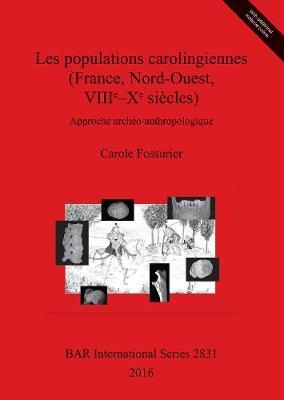
Les populations des VIIIe-Xe siecles du nord-ouest de la France peuvent etre analysees grace a l'etude de leurs ossements. Pour ceci, la mise en pratique de l'anthropologie biologique (sexe, age, sante, activite) necessite une methodologie rigoureuse et des criteres nettement definis detailles ici. La mise au point de nouvelles methodes permettant des analyses specifiques aux informations recherchees est proposee. Les sites archeologiques du corpus correspondent a des situations variees du point de vue de l'environnement et la topographie religieuse. La determination de leur recrutement mais aussi l'etude de leur etat sanitaire et de leur niveau d'activite donne la possibilite de les caracteriser et de proposer des hypotheses sur leur nature. Ces donnees, confrontees aux etudes menees d'apres les sources ecrites et archeologiques, donnent alors une image precise des populations carolingiennes, permettent de comparer les divers ensembles funeraires et illustrent ainsi la grande variete mais aussi la hierarchisation partielle des groupes populationnels carolingiens. The 8th to 10th century populations of the north-west of France can be better understood through the analysis of human remains. If biological anthropology is to be used for this purpose (to determine sex, age, health and activity level), it needs a rigorous methodology and clearly defined standards. The development of new methods of analysis specific to the research data is proposed in this volume. The archaeological sites of the corpus correspond to a variety of environmental, topographical and cultural contexts. Analysis of the selection (or acceptance) of individuals for burial at these sites and the study of their state of health and level of activity makes it possible to characterise the populations, and to suggest hypotheses about their origins. These methods, in comparison with studies of archaeological and written sources, can thus grant us a clear picture of Carolingian populations. The data allow us to compare various burial situations and thus to illustrate the large variety, but also the partially hierarchical organisation, of Carolingian population groups.
Full Product Details
Author: Carole Fossurier
Publisher: BAR Publishing
Imprint: BAR Publishing
Dimensions:
Width: 21.00cm
, Height: 1.00cm
, Length: 29.70cm
Weight: 0.758kg
ISBN: 9781407315751
ISBN 10: 1407315757
Pages: 240
Publication Date: 01 November 2016
Audience:
Professional and scholarly
,
Professional & Vocational
Format: Mixed media product
Publisher's Status: Active
Availability: Available To Order

We have confirmation that this item is in stock with the supplier. It will be ordered in for you and dispatched immediately.
Language: French
Reviews
<p class=MsoNormal style='line-height:105%;mso-layout-grid-align:none; text-autospace:none'><span style='mso-ascii-font-family:Calibri;mso-hansi-font-family: Calibri;mso-bidi-font-family:Calibri'>'This work's <span lang=EN-US style='mso-ascii-font-family:Calibri;mso-hansi-font-family:Calibri;mso-bidi-font-family: Calibri;mso-ansi-language:EN-US'>contribution to our knowledge of the Carolingian society is undeniable. . Fossurier has laid the foundations of a study protocol which will certainly be used as a model for future studies.<span style='mso-ascii-font-family:Calibri;mso-hansi-font-family:Calibri;mso-bidi-font-family: Calibri'>' Anonymous reviewer <p class=MsoNormal style='line-height:105%;mso-layout-grid-align:none; text-autospace:none'><span style='mso-ascii-font-family:Calibri;mso-hansi-font-family: Calibri;mso-bidi-font-family:Calibri'>'This work is innovative in its palaeopathological approach and has the advantage of being a successful synthesis that will serve as reference for the contemporary or future study of burial sites in the North West of France and beyond.'<span style='mso-spacerun:yes'> Dr <span lang=FR style='mso-ascii-font-family: Calibri;mso-hansi-font-family:Calibri;mso-bidi-font-family:Calibri;mso-ansi-language: FR'>Aminte Thomann, Institut National de Recherches Archeologiques Preventives <p class=MsoNormal style='line-height:105%;mso-layout-grid-align:none; text-autospace:none'><span lang=FR style='mso-ascii-font-family:Calibri; mso-hansi-font-family:Calibri;mso-bidi-font-family:Calibri;mso-ansi-language: FR'>'<span style='mso-ascii-font-family:Calibri;mso-hansi-font-family: Calibri;mso-bidi-font-family:Calibri'>This work is, at present, the first synthesis about the quality of life of the Carolingian people in North-Western Gaul, and the palaeopathological approach, still undeveloped in a lot of anthropological studies, is clearly a new and important approach to develop for the understanding of ancient populations and excavated burial sites.<span lang=FR style='mso-ascii-font-family:Calibri;mso-hansi-font-family:Calibri; mso-bidi-font-family:Calibri;mso-ansi-language:FR'>'<span style='mso-ascii-font-family:Calibri;mso-hansi-font-family:Calibri;mso-bidi-font-family: Calibri'> Dr <span lang=FR style='mso-ascii-font-family:Calibri;mso-hansi-font-family:Calibri;mso-bidi-font-family: Calibri;mso-ansi-language:FR'>Aminte Thomann, Institut National de Recherches Archeologiques Preventives <p class=MsoNormal style='line-height:105%;mso-layout-grid-align:none; text-autospace:none'><span lang=FR style='mso-ascii-font-family:Calibri; mso-hansi-font-family:Calibri;mso-bidi-font-family:Calibri;mso-ansi-language: FR'>'[Fossurier's work] <span style='mso-ascii-font-family:Calibri; mso-hansi-font-family:Calibri;mso-bidi-font-family:Calibri'>is an innovative synthesis in its palaeopathological approach and very useful for many researchers to better apprehend early medieval populations, largely unknown.<span lang=FR style='mso-ascii-font-family:Calibri;mso-hansi-font-family:Calibri; mso-bidi-font-family:Calibri;mso-ansi-language:FR'>'<span style='mso-ascii-font-family:Calibri;mso-hansi-font-family:Calibri;mso-bidi-font-family: Calibri'> Dr <span lang=FR style='mso-ascii-font-family:Calibri;mso-hansi-font-family:Calibri;mso-bidi-font-family: Calibri;mso-ansi-language:FR'>Aminte Thomann, Institut National de Recherches Archeologiques Preventives5pt;line-height:105%; font-family: Verdana ,sans-serif;mso-bidi-font-family:Verdana'>
'This work's contribution to our knowledge of the Carolingian society is undeniable. . Fossurier has laid the foundations of a study protocol which will certainly be used as a model for future studies.' Anonymous reviewer 'This work is innovative in its palaeopathological approach and has the advantage of being a successful synthesis that will serve as reference for the contemporary or future study of burial sites in the North West of France and beyond.' Dr Aminte Thomann, Institut National de Recherches Archeologiques Preventives 'This work is, at present, the first synthesis about the quality of life of the Carolingian people in North-Western Gaul, and the palaeopathological approach, still undeveloped in a lot of anthropological studies, is clearly a new and important approach to develop for the understanding of ancient populations and excavated burial sites.' Dr Aminte Thomann, Institut National de Recherches Archeologiques Preventives '[Fossurier's work] is an innovative synthesis in its palaeopathological approach and very useful for many researchers to better apprehend early medieval populations, largely unknown.' Dr Aminte Thomann, Institut National de Recherches Archeologiques Preventives
Author Information
Carole Fossurier a soutenu sa these en civilisation medievale a l'universite de Poitiers. Elle a ecrit plusieurs articles essentiellement sur les pratiques funeraires en France. Elle travaille actuellement a l'Inrap (Institut National de Recherches Archeologiques Preventives) au centre archeologique de Dijon (France, Bourgogne) en tant qu'archeo-anthropologue et est chercheur associe a l'UMR 7268 AMU, CNRS, EFS. Carole Fossurier defended a doctorate in medieval civilisation at the University of Poitiers. She has written several articles, mainly on funeral practices in France. She works at Inrap (Institut National de Recherches Archeologiques Preventives) at the archaeological centre of Dijon (Burgundy, France) as 'archaeo-anthropologist' and is an associate researcher at UMR 7268 AMU, CNRS, EFS.