Overview
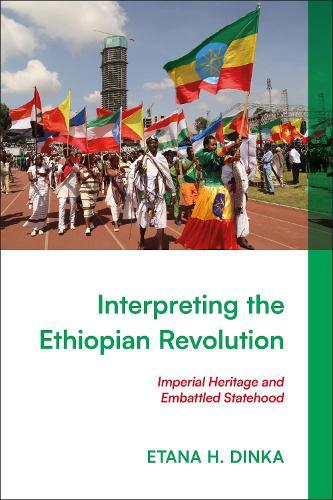
Fifty years after the 1974 Ethiopian revolution, Etana H. Dinka brings together a who’s-who of modern Ethiopian studies in order to offer this long-overdue analysis of the revolution and its legacies. With contributions both from seasoned academics—many of whom wrote about the revolution as it developed—and from representatives of a younger generation, this six-part collection offers new insights not only into the revolution itself, but also into issues such as the Red Terror, the EPRDF revolution of 1991, and Abiy Ahmed’s repositioning of Ethiopia after 2018. Such wide-ranging analyses cumulatively cast Ethiopia’s three successive post-revolution regimes not as separate entities, but rather as successive attempts to fulfil the promise of the revolution surrounding issues such as ethnicity, the nationalities question, economic development, and the land tenure question. In developing this model, the collection captures the defining developments and issues in Ethiopia, the Horn, and the Red Sea region over the past fifty years, and it speaks directly to a global body of knowledge about revolutions; state-making projects and empires; and warfare and military interventions in politics. A unique collection that expands the historical revolutionary analyses of Ethiopian politics and society to the present in order to suggest new ways of ensuring social, economic, and environmental justice for all, this book is a must-read for researchers and upper-level students interested in Ethiopia, the Horn of Africa, African Studies, and revolutionary politics and land economics in general.
Full Product Details
Author: Etana H. Dinka (James Madison University, USA)
Publisher: Bloomsbury Publishing PLC
Imprint: Zed Books Ltd
Dimensions:
Width: 15.40cm
, Height: 2.20cm
, Length: 23.60cm
Weight: 0.640kg
ISBN: 9781350434974
ISBN 10: 1350434973
Pages: 328
Publication Date: 13 November 2025
Audience:
Professional and scholarly
,
Professional & Vocational
Format: Hardback
Publisher's Status: Active
Availability: Manufactured on demand 
We will order this item for you from a manufactured on demand supplier.
Table of Contents
PART I. Broad Historical Context and Ideological Underpinnings 1. Revolutionary Rupture: The Ethiopian and African Experience in History Richard Reid 2. Marx in Ethiopia: Past and Future John Markakis 3. The Transformation of the Ethiopian Empire in the Wake of the 1974 Revolution: A Comparative Perspective Marina Ottaway 4. Ethiopia and the Revolution in the Revolution John Young Part II. The Road to the Revolution and Enduring Impacts 5. Ethiopia’s Road to the 1974 Revolution Randi Rønning Balsvik 6. Struggling for Liberation: Revolutionary Iconographies, Local Nationalisms, and Evolving Practices of Resistance Sarah Vaughan 7. The Structurality of Technology through the Lens of Ethiopia’s 1974 Revolution and Its Lasting Impacts Kebene Wodajo PART III. Landholding System 8. Land, People, and State: Land Tenure and Social-Environmental Justice in Ethiopia, 1974-2023 Gutu Wayessa 9. The Ethiopian Revolution of 1974: Land, Political Power, and the State Mekuria Bulcha 10. Ethiopia’s Unanswered Land Questions: Claims of Access, Ownership, and Governance Asebe Regassa PART IV. Religious Dynamics, Revolution, and the State 11. The Ethiopian Revolution and Religious Dynamics in a 50-years Perspective Jörg Haustein and Terje Østebø 12. The Ethiopian Revolution, Protestant Christianity and the Formation of Modern Oromo Nationalism: A Study of Agency and Transformation Ezekiel Gebissa 13. Revolution, Religion, and the State in Ethiopia: Islam and Muslims in Arsii and Jimmaa since 1974 Ketebo Ensene PART V. Revolution, Nationalism, and State Reorganization 14. The Woyane: Ethiopia’s Enduring Revolution Kjetil Tronvoll 15. Oromo Nationalism and the 1974 Revolution: How Supporters became Mortal Obstructionists Getahun Benti 16. Assessing the 1974 Ethiopian Revolution in the Context of the Oromo Question Asafa Jalata 17. The Afar Nation and the Ethiopian Revolution: Negotiated Autonomy and Liberation Struggles Éloi Ficquet and Aramis Houmed Soulé 18. The Ethiopian Revolution, Oromo Nationalism and Environmental Challenges in Oromia Tesema Ta’a and Deressa Debu 19. Imperial Heritage, Revolution and State Reconfiguration: A Five-Decade View of Legacies of the 1974 Ethiopian Revolution Etana H. Dinka
Reviews
Social revolutions—those great upheavals that transform not only who controls the state but also what class dominates the economy—produce especially long-lasting reverberations. This important collection examines the ways in which the 1974 Ethiopian revolution continues into the present. Required reading for specialists and the general public. * Donald L. Donham, distinguished research professor, University of California, Davis, USA * More than a half-century after the Ethiopian Revolution, scholars continue to debate its nature and lasting impact. In Legacies, Etana Dinka has assembled a rich and provocative interdisciplinary collection. With diverse contributions addressing local, regional, national, and international and diasporic iterations of ideology, nationality, ethnicity, land tenure, religion, and political violence, this important book re-instantiates why Abyssinia and Ethiopia occupy a venerable space in African studies scholarship. * Benjamin N. Lawrance, University of Arizona, USA *
Author Information
Etana H. Dinka is Assistant Professor of History at the University of Miami, where he teaches undergraduate and graduate courses in African history. His research focuses on the late nineteenth and twentieth-century political and environmental history of Ethiopia and the Horn of Africa region. Dr Dinka’s latest research articles and reviews were published in peer-reviewed journals, including the Journal of African History, African Studies Review, Northeast African Studies, Georgetown Journal of International Affairs, and the Journal of Oromo Studies. He is the editor of Shadows of History: Nationalism, Violence and State Crisis in Ethiopia (Red Sea Press, 2025), and is a co-editor and co-translator (along with A. Triulzi and T. Ta’a) of Negotiating Power in Imperial Ethiopia, Wallagga, 1890s–1930s: A History in Documents (Naples, IT: Unior Press, 2025).
Tab Content 6
Author Website:
Countries Available
All regions
|