Overview
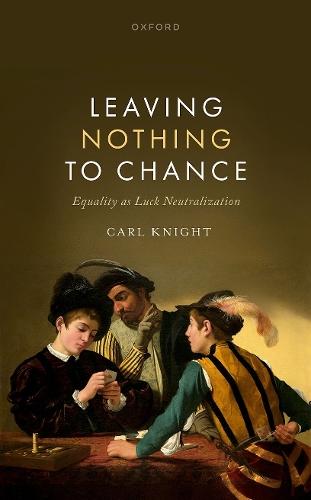
The most influential theory of distributive equality to have emerged since John Rawls' justice as fairness is luck egalitarianism, which aims to neutralize the distributive effects of luck. The standard form, brute-luck egalitarianism, advanced by Richard Arneson, G. A. Cohen, and Ronald Dworkin, allows the unequal consequences of option luck (the results of deliberate gambles) to stand while neutralizing the unequal consequences of brute luck (the results of unchosen risk). Critics of luck egalitarianism, including relational egalitarians such as Elizabeth Anderson, have claimed that the view requires the abandonment of those with bad option luck, and that this harsh treatment is contrary to egalitarian goals. Luck egalitarians have responded by moderating their view, and even in some cases by accepting the core of relational egalitarianism, which is now in the ascendency.Leaving Nothing to Chance reverses this retreat from luck egalitarianism, presenting a bold new theory of equality that overcomes criticism of luck egalitarianism by reinterpreting and strengthening its core commitment to equalizing the effects of luck. It offers the first major statement of all-luck egalitarianism, which unlike brute-luck egalitarianism neutralizes the unequal consequences of option luck as well as brute luck. The book further pursues the goal of luck neutralization by opening or 'greying' the black box of responsibility, rejecting personal identity in favour of a thin account of what matters for prudence and responsibility, and defending a moral rather than prudential account of the value of choice. While most recent egalitarian philosophers conclude that equality requires luck neutralization to be curbed or abandoned altogether, Leaving Nothing to Chance shows that the problems of brute-luck egalitarianism's partial luck neutralization can instead be overcome by fully neutralizing luck.
Full Product Details
Author: Carl Knight (Reader in Political Theory, School of Social and Political Sciences, University of Glasgow)
Publisher: Oxford University Press
Imprint: Oxford University Press
Dimensions:
Width: 14.00cm
, Height: 21.60cm
, Length: 1.40cm
Weight: 0.403kg
ISBN: 9780198945673
ISBN 10: 0198945671
Pages: 230
Publication Date: 23 April 2025
Audience:
Professional and scholarly
,
Professional & Vocational
Format: Hardback
Publisher's Status: Active
Availability: To order

Stock availability from the supplier is unknown. We will order it for you and ship this item to you once it is received by us.
Author Information
Carl Knight is Reader in Political Theory at the University of Glasgow. He works on theories of distributive justice as well as bioethics, climate ethics, and discrimination.