Overview
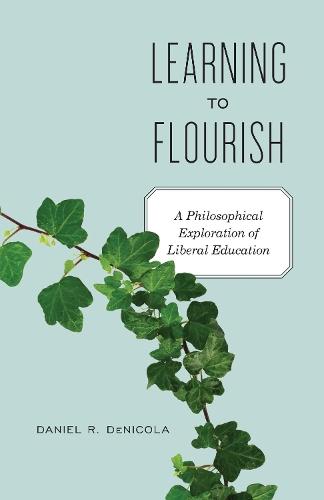
What is a liberal arts education? How does it differ from other forms of learning? What are we to make of the debates that surround it? What are its place, its value, and its prospects in the contemporary world? These are questions that trouble students and their parents, educators, critics, and policy-makers, and philosophers of education--among others. Learning to Flourish offers a lucid, penetrating, philosophical exploration of liberal learning: a still-evolving tradition of theory and practice that has dominated and sustained intellectual life and learning in much of the globe for two millennia. This study will be of interest to anyone seeking to understand liberal arts education, as well as to educators and philosophers of education. Daniel R. DeNicola weighs the views of both advocates and critics of the liberal arts, and interprets liberal education as a vital tradition aimed supremely at understanding and living a flourishing life. He elaborates the tradition as expressed in five competing but complementary paradigms that transcend theories of curriculum and pedagogy and are manifested in particular social contexts. He examines the transformative power of liberal education and its relation to such values as freedom, autonomy, and democracy, reflecting on the importance of intrinsic value and moral understanding. Finally, DeNicola considers age-old obstacles and current threats to liberal education, ultimately asserting its value for and urgent need in a global, pluralistic, technologically advanced society. The result is a bold, yet nuanced theory, alert to both historical and contemporary discussions, and a significant contribution to the discourse on liberal education.
Full Product Details
Author: Professor of Philosophy Daniel R. DeNicola
Publisher: Bloomsbury Publishing Plc
Imprint: Bloomsbury Continuum
Dimensions:
Width: 13.80cm
, Height: 2.30cm
, Length: 21.60cm
Weight: 0.331kg
ISBN: 9781441111630
ISBN 10: 1441111638
Pages: 240
Publication Date: 04 October 2012
Audience:
College/higher education
,
Undergraduate
,
Postgraduate, Research & Scholarly
Format: Paperback
Publisher's Status: Active
Availability: Manufactured on demand

We will order this item for you from a manufactured on demand supplier.
Language: English
Reviews
Learning to Flourish is highly relevant to today's debates over the nature and value of liberal education. It addresses fundamental issues underpinning any defensible concept of liberal education and speaks compellingly to contemporary challenges. Education Review For persons concerned for the fate of liberal education - it does appear to be in jeopardy2 - and engaged with the debates swirling around and within it, Learning to Flourish is a useful resource, even if one is not persuaded by all the arguments. Although I am not familiar with all the writers to whom he refers, I think DeNicola does well, for the most part, to identify salient issues and take readers through alternatives and challenges to his claims. Wiley Online Library
For persons concerned for the fate of liberal education — it does appear to be in jeopardy2 — and engaged with the debates swirling around and within it, Learning to Flourish is a useful resource, even if one is not persuaded by all the arguments. Although I am not familiar with all the writers to whom he refers, I think DeNicola does well, for the most part, to identify salient issues and take readers through alternatives and challenges to his claims. -- Karl D. Hostetler * Wiley Online Library * Learning to Flourish is highly relevant to today’s debates over the nature and value of liberal education. It addresses fundamental issues underpinning any defensible concept of liberal education and speaks compellingly to contemporary challenges. -- Gabriela Martinez Sainz, University of Cambridge * Education Review *
For persons concerned for the fate of liberal education - it does appear to be in jeopardy2 - and engaged with the debates swirling around and within it, Learning to Flourish is a useful resource, even if one is not persuaded by all the arguments. Although I am not familiar with all the writers to whom he refers, I think DeNicola does well, for the most part, to identify salient issues and take readers through alternatives and challenges to his claims. -- Karl D. Hostetler * Wiley Online Library * Learning to Flourish is highly relevant to today's debates over the nature and value of liberal education. It addresses fundamental issues underpinning any defensible concept of liberal education and speaks compellingly to contemporary challenges. -- Gabriela Martinez Sainz, University of Cambridge * Education Review *
Author Information
Author Website: denicola1@comcast.net
Daniel R. DeNicola is Professor of Philosophy at Gettysburg College, USA, where he was Provost for over a decade. Previously, he held similar titles for parallel periods at Rollins College. An award-winning teacher, he earned his doctorate in Philosophy of Education from Harvard University, where he has served as a Visiting Scholar.