Overview
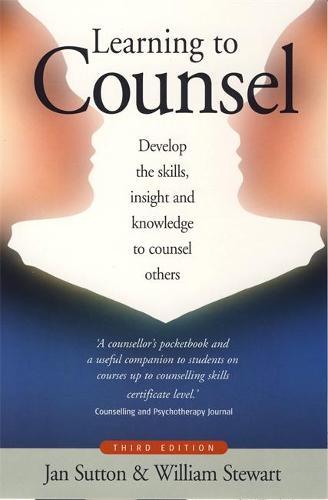
The new edition of this popular and user-friendly book has been thoughtfully revised, updated and expanded. Fresh information has been added to keep pace with the rapidly advancing field of counselling and psychotherapy. Learning to Counsel, Third Edition, contains an abundance of illustrative graphics, case studies, examples of skills in practice, practical exercises, and sample letters, forms and checklists designed to stimulate learning. Its predecessor appears on the recommended reading list of several counselling certificate courses.This new revised edition is an ideal text for those contemplating embarking on a counselling course, trainee counsellors, counselling tutors to use in training, professionals working in the area of health care, management, and education, and counsellors working in the voluntary sector. Contents: Illustrations, table, sample forms and letters; Foreword; Preface; 1. Exploring Counselling; 2. Exploring Essential Counsellor Qualities; 3. Developing Self-Awareness; 4. Helping the Client Feel Safe; 5. Helping the Client Explore the Problem (Part 1); 6. Helping the Client Explore the Problem (Part 2); 7. Helping the Client Understand the Problem; 8. Helping the Client Resolve the Problem; 9. Terminating the Counselling Relationship; 10. Counsellor Self-Care; Appendix 1 Sample Forms and Letters; Appendix 2 Suggested Responses to Exercises; Appendix 3 Important People in the Development of Counselling; Glossary; Useful Websites; Further Reading; Index.
Full Product Details
Author: Jan Sutton ,
William Stewart
Publisher: Little, Brown Book Group
Imprint: Robinson
Edition: 3rd Revised edition
Dimensions:
Width: 23.40cm
, Height: 1.70cm
, Length: 15.50cm
Weight: 0.466kg
ISBN: 9781845283254
ISBN 10: 1845283252
Pages: 264
Publication Date: 19 August 2008
Audience:
College/higher education
,
Tertiary & Higher Education
Format: Paperback
Publisher's Status: Out of Print
Availability: Out of stock

Reviews
'A counsellor's pocketbook and a useful companion to students on courses up to counselling skills certificate level.' Counselling and Psychotherapy Journal'I believe this book is a must for every counsellor's library. It illustrates clearly the techniques, process and goals of counselling, and is spiced with interesting and entertaining case studies. Supervisors and teachers will find it useful to guide their students and experienced counsellors will be reminded of the basics in this excellent book.' Dr John Gunzburg, Melbourne, Australia.
Author Information
Drawing on their numerous years experience as counsellors, tutors, and writers, Jan Sutton and William Stewart introduce readers to the basic principles that underpin counselling practice; provide insight into various counseling approaches; clarify the nature of counseling and the role of the counsellor, and assist readers to develop a repertoire of key counselling skills and qualities, such as active listening, genuineness, unconditional positive regard, empathy, goal-setting, etc. They also address the important issues of ongoing supervision to enhance counselling practice, and counsellor self-care to reduce the risk of burnout. Jan Sutton is also author of Healing the Hurt Within and William Stewart is author of An A-Z of Counselling Theory and Practice.