|
|
|||
|
||||
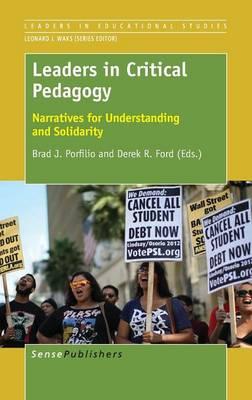
OverviewCritical pedagogy has variously inspired, mobilized, troubled, and frustrated teachers, activists, and educational scholars for several decades now. Since its inception the field has been animated by internal antagonism and conflict, and this reality has simultaneously spread the influence of the field in and out of education and seriously challenged its status as an integral body of work. Full Product DetailsAuthor: Brad Porfilio , Derek R. FordPublisher: Brill Imprint: Brill Volume: 8 Dimensions: Width: 15.60cm , Height: 1.60cm , Length: 23.40cm Weight: 0.537kg ISBN: 9789463001656ISBN 10: 9463001654 Pages: 272 Publication Date: 01 January 2015 Audience: Professional and scholarly , Professional & Vocational Format: Hardback Publisher's Status: Active Availability: Temporarily unavailable The supplier advises that this item is temporarily unavailable. It will be ordered for you and placed on backorder. Once it does come back in stock, we will ship it out to you. Table of ContentsReviewsMartin Heidegger once said that Aristotle's life could be summarized in one, short sentence `He was born, he thought, he died.' Porfilio and Ford's brilliantly curated compilation of autobiographical sketches of leaders in critical pedagogy resolutely rejects Heidegger's reductive thesis, reminding us all that theory is grounded in the historical specificities and material contradictions of life. For those well acquainted with critical pedagogy, these theoretical memoirs grant us a unique and sometimes surprisingly intimate glimpse into the lives behind the words we know so well. But most importantly, the format of the book is an educational intervention into how critical pedagogy can be taught. While it is often the case that students find critical pedagogy dense, inaccessible, and seemingly detached from the everyday concerns of teachers, Porfilio and Ford's edited volume-like Marx's Capital-approaches theory through the memories, struggles, hopes, and dreams of those who live within yet against the nightmare of neoliberal capitalism. -Tyson E. Lewis, Full Professor, Department of Art Education and Art History, University of North Texas Author InformationTab Content 6Author Website:Countries AvailableAll regions |
||||