|
|
|||
|
||||
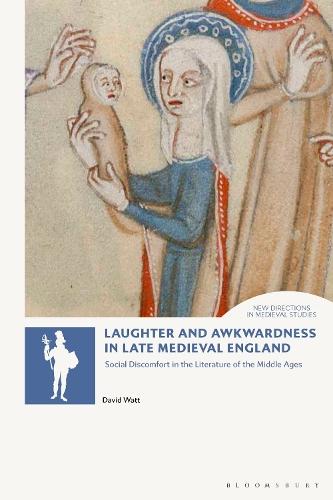
Overview'We live,’ according to Adam Kotsko, ‘in an awkward age.’ While this condition may present some challenges, it may also help us to be more attuned to awkwardness in other ages. This book pairs medieval texts with twenty-first century films or television programmes to explore what the resonance between them can tell us about living together in an awkward age. In this nuanced and engaging study, David Watt focuses especially, but not exclusively, on the 15th century, which seems to intervene awkwardly in the literary trajectory between Chaucer and the Renaissance. This book’s hypothesis is that the social discomfort depicted and engendered by writers as diverse as Thomas Hoccleve, Margery Kempe, and Sir Thomas Malory is a feature rather than a flaw. Laughter and Awkwardness in Late Medieval England explains that these authors have a great deal in common with other fifteenth-century authors, who generated embodied experiences of social discomfort in a range of genres by adopting and adapting literary techniques used by their predecessors and successors in slightly different ways. Like the twenty-first century texts with which they are paired, the late-medieval texts that feature in this book use the relationship between laughter and awkwardness to ask what it means to live with each other and how we can learn to live with ourselves. Full Product DetailsAuthor: David Watt (University of Manitoba, Canada) , Andrew B R Elliott , Adrienne Merritt (University of Colorado Boulder USA) , Helen Young (Deakin University Australia)Publisher: Bloomsbury Publishing PLC Imprint: Bloomsbury Academic Dimensions: Width: 15.00cm , Height: 1.30cm , Length: 22.90cm Weight: 0.280kg ISBN: 9781350375024ISBN 10: 1350375020 Pages: 208 Publication Date: 20 March 2025 Audience: Professional and scholarly , College/higher education , Professional & Vocational , Postgraduate, Research & Scholarly Format: Paperback Publisher's Status: Active Availability: Manufactured on demand We will order this item for you from a manufactured on demand supplier. Table of ContentsReviews[David] Watt does an excellent job of demonstrating how productive the concept of awkwardness is in both medieval and modern works. -- Mary C. Flanner * The Times Literary Supplement * """[David] Watt does an excellent job of demonstrating how productive the concept of awkwardness is in both medieval and modern works."" --Mary C. Flanner, The Times Literary Supplement" Author InformationDavid Watt is Professor in the Department of English, Theatre, Film & Media, at the University of Manitoba, Canada, where he also serves as head of his department. Tab Content 6Author Website:Countries AvailableAll regions |
||||