Overview
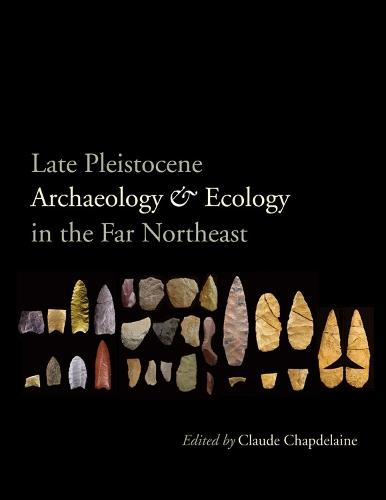
The Far Northeast, a peninsula incorporating the six New England states, New York east of the Hudson, Quebec south of the St. Lawrence River and Gulf of St. Lawrence, and the Maritime Provinces, provided the setting for a distinct chapter in the peopling of North America. Late Pleistocene Archaeology and Ecology in the Far Northeast focuses on the Clovis pioneers and their eastward migration into this region, inhospitable before 13,500 years ago, especially in its northern latitudes. Bringing together the last decade or so of research on the Paleoindian presence in the area, Claude Chapdelaine and the contributors to this volume discuss, among other topics, the style variations in the fluted points left behind by these migrating peoples, a broader disparity than previously thought. This book offers not only an opportunity to review new data and interpretations in most areas of the Far Northeast, including a first glimpse at the Cliche-Rancourt Site, the only known fluted point site in Quebec, but also permits these new findings to shape revised interpretations of old sites. The accumulation of research findings in the Far Northeast has been steady, and this timely book presents some of the most interesting results, offering fresh perspectives on the prehistory of this important region.
Full Product Details
Author: Claude Chapdelaine ,
Richard A. Boisvert
Publisher: Texas A & M University Press
Imprint: Texas A & M University Press
Dimensions:
Width: 22.30cm
, Height: 2.20cm
, Length: 28.40cm
Weight: 1.200kg
ISBN: 9781603447904
ISBN 10: 1603447903
Pages: 352
Publication Date: 30 September 2012
Audience:
General/trade
,
General
Format: Hardback
Publisher's Status: Active
Availability: Manufactured on demand

We will order this item for you from a manufactured on demand supplier.
Reviews
The region Chapdelaine calls the Far Northeast was still cloaked with glacial ice when early bands of humans were already well established elsewhere on the North American continent. How they subsequently expanded northward and adapted to this bleak landscape once the ice melted is the subject of this fascinating volume. Leading scholars in the region have made the most of the latest finds to understand human adaptation in this corner of a long lost world. It is archaeological science at its best. --Dean R. Snow, professor, Pennsylvania State University<br><br>
The region Chapdelaine calls the Far Northeast was still cloaked with glacial ice when early bands of humans were already well established elsewhere on the North American continent. How they subsequently expanded northward and adapted to this bleak landscape once the ice melted is the subject of this fascinating volume. Leading scholars in the region have made the most of the latest finds to understand human adaptation in this corner of a long lost world. It is archaeological science at its best. --Dean R. Snow, Professor, The Pennsylvania State University<br><br>
Author Information
CLAUDE CHAPDELAINE, a professor of archaeology at the Université de Montréal, specializes in the prehistory of North America.