Overview
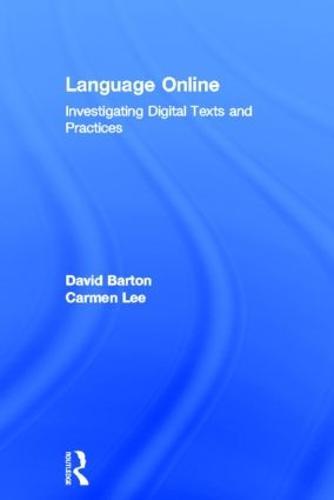
In Language Online, David Barton and Carmen Lee investigate the impact of the online world on the study of language. The effects of language use in the digital world can be seen in every aspect of language study, and new ways of researching the field are needed. In this book the authors look at language online from a variety of perspectives, providing a solid theoretical grounding, an outline of key concepts, and practical guidance on doing research. Chapters cover topical issues including the relation between online language and multilingualism, identity, education and multimodality, then conclude by looking at how to carry out research into online language use. Throughout the book many examples are given, from a variety of digital platforms, and a number of different languages, including Chinese and English. Written in a clear and accessible style, this is a vital read for anyone new to studying online language and an essential textbook for undergraduates and postgraduates working in the areas of new media, literacy and multimodality within language and linguistics courses.
Full Product Details
Author: David Barton ,
Carmen Lee
Publisher: Taylor & Francis Ltd
Imprint: Routledge
Dimensions:
Width: 15.60cm
, Height: 3.30cm
, Length: 23.40cm
Weight: 0.570kg
ISBN: 9780415524940
ISBN 10: 0415524946
Pages: 218
Publication Date: 18 April 2013
Audience:
College/higher education
,
Tertiary & Higher Education
,
Undergraduate
Replaced By: 9781032207964
Format: Hardback
Publisher's Status: Active
Availability: In Print

This item will be ordered in for you from one of our suppliers. Upon receipt, we will promptly dispatch it out to you. For in store availability, please contact us.
Reviews
Language Online introduces the reader to key concepts and themes in the study of digital language and discourse: multilingualism and linguistic diversity, self-presentation and stance-taking, language ideologies and learning. The authors offer clear definitions, a rich set of examples, valuable suggestions on research methodology and innovative insights into their own interpretations. Language Online achieves a remarkably good balance between cutting-edge research and reader-friendliness. - Jannis Androutsopoulos, University of Hamburg, Germany Using a methodology grounded in both linguistics and digital literacies, Barton and Lee provide a valuable introduction to studying language online. They also carefully define terms and concepts that are used in both of these fields and are central to the study of language online--text and practices, among others...This volume will interest those who want to understand how language is changing as a result of new technologies and those pursuing their own research into language use online. - A. M Laflen, Marist College, USA in CHOICE
"""Language Online introduces the reader to key concepts and themes in the study of digital language and discourse: multilingualism and linguistic diversity, self-presentation and stance-taking, language ideologies and learning. The authors offer clear definitions, a rich set of examples, valuable suggestions on research methodology and innovative insights into their own interpretations. Language Online achieves a remarkably good balance between cutting-edge research and reader-friendliness."" - Jannis Androutsopoulos, University of Hamburg, Germany ""Using a methodology grounded in both linguistics and digital literacies, Barton and Lee provide a valuable introduction to studying language online. They also carefully define terms and concepts that are used in both of these fields and are central to the study of language online--text and practices, among others...This volume will interest those who want to understand how language is changing as a result of new technologies and those pursuing their own research into language use online."" - A. M Laflen, Marist College, USA in CHOICE"
Language Online introduces the reader to key concepts and themes in the study of digital language and discourse: multilingualism and linguistic diversity, self-presentation and stance-taking, language ideologies and learning. The authors offer clear definitions, a rich set of examples, valuable suggestions on research methodology and innovative insights into their own interpretations. Language Online achieves a remarkably good balance between cutting-edge research and reader-friendliness. - Jannis Androutsopoulos, University of Hamburg, Germany Using a methodology grounded in both linguistics and digital literacies, Barton and Lee provide a valuable introduction to studying language online. They also carefully define terms and concepts that are used in both of these fields and are central to the study of language online--text and practices, among others...This volume will interest those who want to understand how language is changing as a result of new technologies and those pursuing their own research into language use online. - A. M Laflen, Marist College, USA in CHOICE
Language Online introduces the reader to key concepts and themes in the study of digital language and discourse: multilingualism and linguistic diversity, self-presentation and stance-taking, language ideologies and learning. The authors offer clear definitions, a rich set of examples, valuable suggestions on research methodology and innovative insights into their own interpretations. Language Online achieves a remarkably good balance between cutting-edge research and reader-friendliness. - Jannis Androutsopoulos, University of Hamburg, Germany Using a methodology grounded in both linguistics and digital literacies, Barton and Lee provide a valuable introduction to studying language online. They also carefully define terms and concepts that are used in both of these fields and are central to the study of language online--text and practices, among others...This volume will interest those who want to understand how language is changing as a result of new technologies and those pursuing their own research into language use online. A. M Laflen, Marist College, USA
Author Information
David Barton is Professor of Language and Literacy in the Department of Linguistics at Lancaster University and Director of the Lancaster Literacy Research Centre. Carmen Lee is Assistant Professor in the Department of English at Chinese University of Hong Kong.