Overview
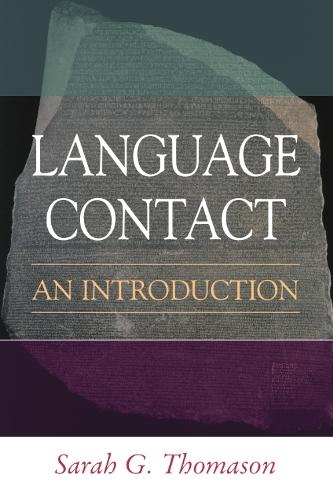
Language contact is everywhere: many nations have more than one official language, and quite possibly most people in the world speak two or more languages. What happens to different peoples and to their languages when they come into contact? In this survey of the social, political and linguistic consequences of language contact, Sarah G. Thomason focuses on what happens to the languages themselves - sometimes nothing, sometimes new words enter a language, sometimes new sounds and sentence structures will spread across many languages in a large geographical region; more rarely, entirely new languages arise in a contact situation. Conversely, one of the languages in contact may vanish entirely, and issues of language endangerment and death are explored here, together with chapters on multilingualism, pidgins and creoles, mechanisms of interference and the origins and results of contact-induced language change.Accessibly written by a leading expert in the field, this book is an ideal introduction for beginning students at all levels, and a useful resource for postgraduates, teachers and academic linguists.Key Features* Accessibly written by a leading figure in the field* Sources and further reading provided for each chapter* World map showing the location of the languages discussed
Full Product Details
Author: Sarah G. Thomason (Professor of Linguistics, University of Michigan)
Publisher: Edinburgh University Press
Imprint: Edinburgh University Press
Dimensions:
Width: 15.60cm
, Height: 2.30cm
, Length: 23.40cm
Weight: 0.486kg
ISBN: 9780748607198
ISBN 10: 0748607196
Pages: 320
Publication Date: 15 April 2001
Audience:
College/higher education
,
Professional and scholarly
,
Undergraduate
,
Postgraduate, Research & Scholarly
Format: Paperback
Publisher's Status: Active
Availability: Temporarily unavailable

The supplier advises that this item is temporarily unavailable. It will be ordered for you and placed on backorder. Once it does come back in stock, we will ship it out to you.
Reviews
A eulogy to the richness of expression in language ! This is a very exciting book for readers who take delight in the diversity of the world's languages as well as for those readers who have made it their task to theorize about language on the basis of speech behaviour. Written with a common sense attitude and a sense of humor, with examples often drawn from the author's own research or personal experience. It is to be recommended both to students and to interested individuals not just as a textbook, but as an exciting reading material in general. A eulogy to the richness of expression in language ! This is a very exciting book for readers who take delight in the diversity of the world's languages as well as for those readers who have made it their task to theorize about language on the basis of speech behaviour. Written with a common sense attitude and a sense of humor, with examples often drawn from the author's own research or personal experience. It is to be recommended both to students and to interested individuals not just as a textbook, but as an exciting reading material in general.
Author Information
Sarah G. Thomason is Professor of Linguistics at University of Michigan.