Overview
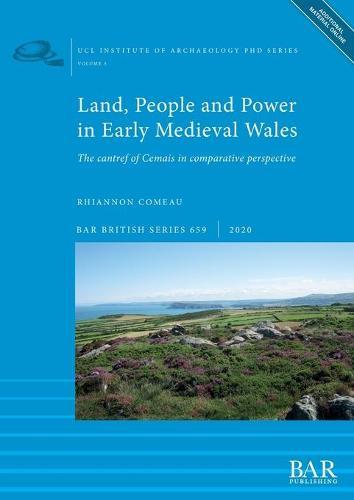
This is a study of the seasonal activity cycles of a pre-urban society, examined through the lens of an early medieval Welsh case study. It considers the patterns of power and habitual activity that defined spaces and structured lives. Key areas of early medieval life - agriculture, tribute-payment, legal processes and hunting - are shown to share a longstanding seasonal patterning that is preserved in medieval Welsh law, church and well dedications, and fair dates. Focussing on a cantref ('hundred') land unit in south-west Wales, it uses an innovative GIS-based multidisciplinary, comparative analysis to circumnavigate a restricted archaeological record and limited written sources. The study presents the first systematic survey of assembly site evidence in Wales, and reassesses widely-used interpretative models of the early medieval landscape. Digital resources include databases of geolocated pre-1700 place-names and of sixteenth-century demesne and Welsh-law landholdings.
Full Product Details
Author: Rhiannon Comeau
Publisher: BAR Publishing
Imprint: BAR Publishing
Weight: 1.531kg
ISBN: 9781407357126
ISBN 10: 1407357123
Pages: 214
Publication Date: 26 November 2020
Audience:
Professional and scholarly
,
Professional & Vocational
Format: Mixed media product
Publisher's Status: Active
Availability: Available To Order 
We have confirmation that this item is in stock with the supplier. It will be ordered in for you and dispatched immediately.
Table of Contents
List of Figures List of Tables List of Abbreviations Abstract 1. Introduction 2. Review of Related Literature Local Literature: Cemais Regional Literature: Wales Settlement Irish and Viking Impact Landscape Agriculture Transhumant Practice Summary: Key Problems of Local and Regional Scholarship Relevant Areas of Research Theme 1: Structures of Power in the Landscape - the Multiple Estate Model Theme 2: Economic Power - Early Medieval Trade and Exchange Theme 3: Places of Power - Assemblies Assemblies in Wales Theme 4: Markers of Power - Early Medieval Inscribed Stones Summing Up 3. Theory and Methodology Priority 1: An Ordering Framework - Possible Theoretical Approaches Ranked Societies Change, Agency and Practice The Problem of Evidence Practice, Processes and Time Evenements, Conjonctures and the Longue Duree The Question of Scale Priority 2: Comparative Analysis - Considerations of Methodology Case Study Areas Method of Data Collection and Analysis Methodological Issues Place-Name Evidence Written Evidence and Oral Traditions Retrogressive Analysis and the Question of Continuity Methodology and Theory: Summing Up 4. Patterns of Evidence Across the Whole Study Area Archaeological Evidence Written Sources Early Medieval Written Sources Territorial Evidence for Pre-Conquest Cemais Evidence for the Commote Post-Conquest/High Medieval Period Later Medieval/Sixteenth Century Discussion: Major Territorial Divisions Commotes The Maenor Discussion: Lands that Directly Supported the Pre-Conquest Prince Demesne Areas and Services Discussion: Territorial/Tribute-producing Units within the Commote/Cantref Evidence for the Welsh Community, Thirteenth-Fourteenth Century Evidence for the Welsh Community, Sixteenth Century Grants to the Church, 1130 Onwards Landholdings of Anglo-Norman Knights Summing up 5. Living Off the Land: Pre-Conquest Agriculture and Settlement Seasonal Patterns: Welsh Law and Historical Evidence The Land: Environmental Evidence Pollen Sampling Crop Processing Evidence Descriptions of Local Agricultural Methods Crops and Ploughing Transhumance Seasonal Pasture in Cemais A Central Shared Pasture Resource in the Pre-Conquest Period? Settlement Evidence Across the Cantref Case Study Detailed Example 1, North of the Preselis: Bayvil, Crugie Quarter and Moylgrove Case Study Detailed example 2, North of the Preselis: Dinas Case Study Detailed Example 3, South of the Preselis: Puncheston, Little Newcastle, Morvil and Castlebythe Case Study Detailed Example 4, an Upland Seasonal Site: Carn Goedog Agriculture and Settlement Patterns in Context Bond Settlements: Tir Cyfrif Bond Settlements: Tir Corddlan Freeholders, Bondsmen and Girdle Patterns Food rents, Services and Seasons Summary and Discussion: Assessing and Modelling the Interrelated Patterns of Bond Settlement, Agriculture and Trade/Exchange 6. Power in the Land: Spatial and Seasonal Patterning of Focal Zones Identifying Focal Zones Spatial Indicators Assembly Sites Assembly: Records Assembly-Attesting Place-Names Battle Sites Assemblies: Site Patterning Indications Monumental Stones Early Medieval Inscribed and Carved Stones Group I Stones with Ogham and Roman-Letter Inscriptions Freestanding Crosses, Cross Slabs and Pillars Unmarked Monumental Stones Sacral Sites: Multiperiod Ritual Complexes and Barrow Cemeteries Christian Cult Sites and Pre-Conquest Clas Churches Pre-Conquest Clas Churches and Areas of Sanctuary (Noddfa) Royal or Aristocratic Residences: Llys Sites and Earlier Manifestations Royal Centres in Cemais - Archaeological and Written Evidence Llys Place-Names Significant Functions, Cult, Juridicial, Political, Administrative Seasonal Indicators Fairs and Other Popular Gatherings Documented Medieval Fairs Market Activity Other Seasonal Gatherings - Cnapan (Hurling) Games, pre-1600, and Gwyl Awst Saints Festivals Hunting Discussion: Summing Up the Polyfocal Evidence Assembly Sites Royal or High Status Sites Early Medieval Assemblies, Ecclesiastical, Royal and Prehistoric Sites: Focal Clusters Microlevel Patterning Strategic Locations Focal Zones - Final Thoughts 7. Synthesis and Conclusion: Spatial and Seasonal Patterning in Context Spatial Patterning of the Early Medieval Landscape Maenorau Seasonal Patterning Activities that Structured Lives and Supported Processes of Power Seasonal Patterning and the Longue Duree Trading Processes Relationship of Cemais Evidence to Models of the Early Medieval Landscape Redefining a Landscape Paradigm Summing Up Recommendations for Further Research Concluding Thoughts Glossary of Terms Bibliography Published Sources and Reports Manuscript Sources for Main Text Appendix 1: The Seasonal Patterns of Welsh Law Appendix 2: Pre-Conquest Landholding Units Appendix 3: Food Renders and Circuit Dues Appendix 4: Key Focal Zone Elements Appendix 5: Key Cemais Charters Appendix 6: Ecclesiastical Land Transfers - Cemais and Borders Appendix 7: Cemais and Environs: Timeline of Documented Events Appendix 8: Demesne Areas of the Medieval Lord of Cemais Appendix 9: Cemais Commotes and Possible Freeholder Maenorau - Speculative Analysis Appendix 10: Landholding Patterns in Medieval and Sixteenth-Century Welsh Cemais: Reassessing the Observations of Howells (1956) on Freeholders Appendix 11: Evidence for Seasonally-Used Pasture in Cemais Index Appendices 12-18 are available for download from barpublishing.com/additional-downloads.html. Appendix 12: Place-Names Appendix 13: Tabulated Analysis of Focal Zone Elements Appendix 14: Bayvil - Evidence of Focal Zone Indicators Appendix 15: HER and RCAHMW Records Appendix 16: 16th Century Landholdings Appendix 17: Medieval Landholdings of Descendants of the Pre-Conquest Maer Appendix 18: Digitised Tithe Maps and Schedules for Case Study Area Parishes
Reviews
{\rtf1\ansi\ansicpg1252\deff0\deflang2057{\fonttbl{\f0\fswiss\fprq2\fcharset0 Calibri;}{\f1\fnil\fcharset0 Verdana;}} \viewkind4\uc1\pard\f0\fs22\lquote Rhiannon Comeau has drawn together a remarkably wide variety of information including landscape, archaeology, place names and written sources to throw light on the medieval period of this region of western Wales. In doing so, she has shown how to investigate rural areas where individual sources are lacking. This is a truly multidisciplinary and excellently readable book and is highly recommended.\rquote Dr Kris Lockyear, UCL\par \par \f1\fs17\par }
Author Information
Rhiannon Comeau completed her AHRC-funded PhD at the Institute of Archaeology, UCL in 2019. She specialises in the landscape archaeology of early medieval Wales, having published previously on its agricultural systems and focal places. A latecomer, via Continuing Education, to archaeology, she is a Trustee of the Cambrian Archaeological Association.
Tab Content 6
Author Website:
Countries Available
All regions
|