Overview
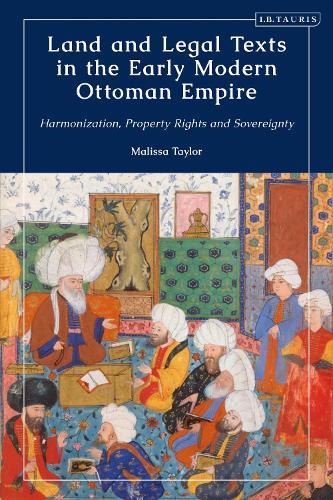
Using Arabic and Ottoman Turkish sources drawn from three genres of legal text, this book is the first full-length study in decades to investigate the evolution of Ottoman land law from its “classical” articulation in the sixteenth century to its reformulation in the 1858 Land Code. The book demonstrates that well before the nineteenth century the tradition of Ottoman land tenure law had developed an indigenous form of property right that would remain intact in the Land Code. In addition, the rising consensus of the jurists that the sultan was the source of the land law paved the way for the wider legislative authority that the Ottoman state would increasingly assert in the Tanzimat period of reform. Demonstrating the profound and ongoing adaptation of a legal tradition that was at once both Ottoman and Islamic, it revises our understanding of the relationship between the modern Islamic world and its early modern past, and what kind of intervention was represented by reform in the 19th century.
Full Product Details
Author: Malissa Taylor (University of Massachusetts Amherst, USA)
Publisher: Bloomsbury Publishing PLC
Imprint: I.B. Tauris
Dimensions:
Width: 16.20cm
, Height: 1.80cm
, Length: 23.80cm
Weight: 0.400kg
ISBN: 9780755647682
ISBN 10: 0755647688
Pages: 216
Publication Date: 19 October 2023
Audience:
Professional and scholarly
,
College/higher education
,
Professional & Vocational
,
Tertiary & Higher Education
Format: Hardback
Publisher's Status: Active
Availability: Manufactured on demand

We will order this item for you from a manufactured on demand supplier.
Reviews
A mind-blowing and innovative study of the supposedly dry subject of Ottoman land law, gracefully written and designed to overturn all your stereotypes of Islamic law, sultanic power, and Ottoman decline. Taylor is to be congratulated on her deeply original take on obscure but vitally important aspects of imperial legal modernization. * Linda T. Darling, Professor, University of Arizona, USA *
In Land and Legal Texts, the reader finds a sophisticated example of next-generation research in Ottoman legal history on a well-defined topic. * Journal of Islamic Studies * A mind-blowing and innovative study of the supposedly dry subject of Ottoman land law, gracefully written and designed to overturn all your stereotypes of Islamic law, sultanic power, and Ottoman decline. Taylor is to be congratulated on her deeply original take on obscure but vitally important aspects of imperial legal modernization. * Linda T. Darling, Professor, University of Arizona, USA * This book shows how three centuries of legislation and legal interpretation, instead of a European model, underlay the Ottoman land code of 1858. Deeply researched and cogently argued, it upends much that we thought we knew about Ottoman history from the age of Süleyman to the Tanzimat era. * Kenneth M. Cuno, Professor, University of Illinois, USA * Taylor boldly reinterprets the foundational relationship among land/property rights, law/legal authorities and sovereignty in the Ottoman Empire. This ambitious, lucid and compact study recasts peasant cultivators as holding a “bundle of property rights” that slowly “trickled up” to model property rights among the highest-ranking property holders in the empire by the eighteenth century, enduring through land law reforms in the nineteenth. Whether accepted or challenged, Taylor’s reconceptualization of the Ottoman agrarian state and society offers a fulcrum for rethinking the entire history of the empire. _____________________________ * Amy Singer, Professor, Brandeis University, USA *
A mind-blowing and innovative study of the supposedly dry subject of Ottoman land law, gracefully written and designed to overturn all your stereotypes of Islamic law, sultanic power, and Ottoman decline. Taylor is to be congratulated on her deeply original take on obscure but vitally important aspects of imperial legal modernization. * Linda T. Darling, Professor, University of Arizona, USA * This book shows how three centuries of legislation and legal interpretation, instead of a European model, underlay the Ottoman land code of 1858. Deeply researched and cogently argued, it upends much that we thought we knew about Ottoman history from the age of Süleyman to the Tanzimat era. * Kenneth M. Cuno, Professor, University of Illinois, USA *
Author Information
Malissa Taylor is Assistant Professor of Middle Eastern Studies at University of Massachusetts Amherst, USA. Her published articles have appeared in Journal of the Economic and Social History of the Orient and The Journal of Ottoman Studies.