Overview
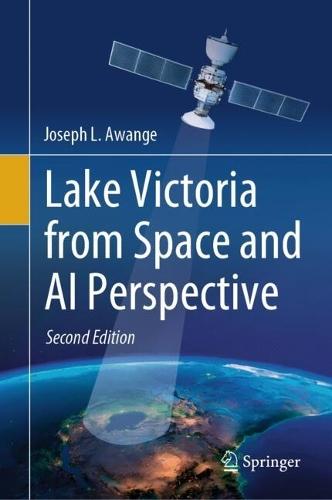
This second edition showcases groundbreaking Artificial Intelligence (AI) applications that transform over 20 years of satellite observations from the GRACE and GRACE-FO missions into a comprehensive 50-year hydrological dataset for Africa’s Lake Victoria Basin (LVB). This innovative approach will unlock unprecedented understanding of critical water challenges that have bedevilled the lake basin due to data scarcity. The book unravels the mysterious 2018–2019 surge in lake water levels, the disruptive floating islands affecting hydropower and livelihoods, and the complex groundwater dynamics beneath the surface. By combining cutting-edge AI with remote sensing and socio-economic analysis, this interdisciplinary study will reveal how natural climate variability and human activities jointly influence water security, flood-drought cycles, agriculture, and regional economies. It offers actionable insights for climate scientists, water resource managers, engineers, and policymakers dedicated to Africa’s sustainable development. Praised by Professor C.K. Shum of The Ohio State University as “a transformative interdisciplinary study that redefines our understanding of Africa’s largest lake system,” this edition is essential for anyone seeking to harness technology for impactful environmental management and unlock the future of water resource management—where AI meets real-world solutions.
Full Product Details
Author: Joseph L. Awange
Publisher: Springer International Publishing AG
Imprint: Springer International Publishing AG
Edition: Second Edition 2026
ISBN: 9783031847356
ISBN 10: 3031847350
Pages: 414
Publication Date: 16 January 2026
Audience:
Professional and scholarly
,
Professional & Vocational
Format: Hardback
Publisher's Status: Forthcoming
Availability: Not yet available

This item is yet to be released. You can pre-order this item and we will dispatch it to you upon its release.
Author Information
Consistently ranked among the world's top 2% most-cited scientists since 2020 (Stanford), Joseph AWANGE is a Professor of Environmental Geoinformatics at The Hong Kong Polytechnic University's LSGI Department, having previously worked at Curtin University, Australia. Prof. AWANGE began his academic journey with BSc and MSc degrees in Surveying from the University of Nairobi, Kenya. His exceptional promise was recognized through a DAAD merit scholarship, enabling him to earn a second MSc and a PhD in Geodesy at Stuttgart University, Germany, under the supervision of the late, world-renowned Prof. Erik W. Grafarend. His postdoctoral training was completed at Kyoto University (Japan) under the prestigious Japanese Society for the Promotion of Science (JSPS) Fellowship. His distinguished research career has been honoured with several international awards, including multiple Alexander von Humboldt Fellowships, a 2015 JSPS Fellowship, and recognition from the Brazil Frontier of Science. Beyond his research, Prof. AWANGE holds a Postgraduate Diploma in Environmental Impact Assessment from Murdoch University, Australia. He actively contributes to the global scientific community as the Acquisition Manager for Earth Sciences, Geography, and Environment at Springer Nature, and as an Associate Editor for the top-ranked journal Remote Sensing of Environment and Science of Remote Sensing. His scholarly output includes more than 26 books and over 260 high-impact journal articles, and he has cultivated the next generation of scientists by mentoring more than 50 BSc (Honours), MSc, PhD, and postdoctoral researchers globally.