|
|
|||
|
||||
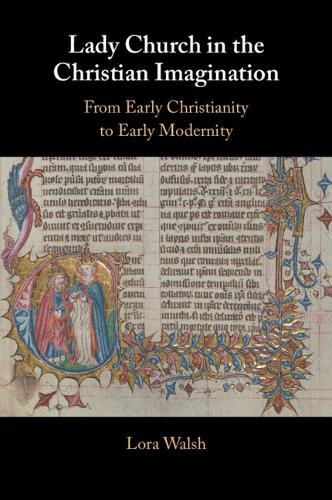
OverviewHow did Lady Church become a theological person and literary figure in patristic, medieval, and early modern texts? In this study, Lora Walsh recovers a feminine figure whose historical prominence has been overlooked. She traces the development of Lady Church in medieval and early modern England, providing new information and interpretations of works by well-known authors, including John Wyclif, William Langland, John Foxe, and John Donne, among others. She also identifies significant changes and previously unrecognized continuities in religious culture from the medieval era into early modernity. Walsh incorporates literary texts into the field of historical theology, exploring their theological background and identifying the unique contributions of literature to ecclesiological thought. She demonstrates that the feminine image of the Church was not simply a rhetorical convention. Rather, it forms part of a rich tradition that many authors conceptually refined and vividly reimagined over more than a millenium of religious history. Full Product DetailsAuthor: Lora Walsh (University of Arkansas)Publisher: Cambridge University Press Imprint: Cambridge University Press Weight: 0.250kg ISBN: 9781009766289ISBN 10: 1009766287 Pages: 350 Publication Date: 19 March 2026 Audience: College/higher education , Postgraduate, Research & Scholarly Format: Paperback Publisher's Status: Forthcoming Availability: Not yet available, will be POD This item is yet to be released. You can pre-order this item and we will dispatch it to you upon it's release. This is a print on demand item which is still yet to be released. Table of ContentsIntroduction; 1. Christ's consort: ecclesiological types in the Matthean genealogy of Jesus; 2. Christ's coregent: the preexistent and incarnate Church in high medieval exegesis; 3. Wyclif's mother: mater ecclesia among father, son, and Holy Spirit; 4. Wyclif's other mother: mater ecclesia and mater scriptura; 5. Wyclif's lady, Dymmok's queen: the feminine church in partisan form; 6. Langland's dame: holy church as romance heroine; 7. The lanterne of Liȝt's virgin: distinctive consolations of the true church; 8. Foxe's Hera: performing ecclesia in exile; 9. Her mother's daughter: lady church catholic and reformed; 10. Donne's whore: the church laid open; Conclusion: lady church as Christian goddess; Bibliography; Index.ReviewsAuthor InformationLora Walsh is Assistant Professor of English at the University of Arkansas. Her essays on religion and literature have appeared in Journal of Feminist Studies in Religion, Journal of Early Christian Studies, Studies in the Age of Chaucer, Anglican and Episcopal History, Yearbook of Langland Studies, and Harvard Theological Review. Tab Content 6Author Website:Countries AvailableAll regions |
||||