Overview
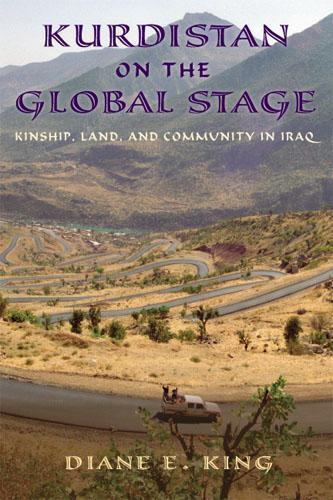
Anthropologist Diane E. King has written about everyday life in the Kurdistan Region of Iraq, which covers much of the area long known as Iraqi Kurdistan. Following the overthrow of Saddam Hussein's Ba'thist Iraqi government by the United States and its allies in 2003, Kurdistan became a recognized part of the federal Iraqi system. The Region is now integrated through technology, media, and migration to the rest of the world. Focusing on household life in Kurdistan's towns and villages, King explores the ways that residents connect socially, particularly through patron-client relationships and as people belonging to gendered categories. She emphasizes that patrilineages (male ancestral lines) seem well adapted to the Middle Eastern modern stage and viceversa. The idea of patrilineal descent influences the meaning of refuge-seeking and migration as well as how identity and place are understood, how women and men interact, and how ""politicking"" is conducted. In the new Kurdistan, old values may be maintained, reformulated, or questioned. King offers a sensitive interpretation of the challenges resulting from the intersection of tradition with modernity. Honor killings still occur when males believe their female relatives have dishonored their families, and female genital cutting endures. Yet, this is a region where modern technology has spread and seemingly everyone has a mobile phone. Households may have a startling combination of illiterate older women and educated young women. New ideas about citizenship coexist with older forms of patronage. King is one of the very few scholars who conducted research in Iraq under extremely difficult conditions during the Saddam Hussein regime. How she was able to work in the midst of danger and in the wake of genocide is woven throughout the stories she tells. Kurdistan on the Global Stage serves as a lesson in field research as well as a valuable ethnography.
Full Product Details
Author: Diane E. King
Publisher: Rutgers University Press
Imprint: Rutgers University Press
Dimensions:
Width: 15.20cm
, Height: 1.80cm
, Length: 22.90cm
Weight: 0.399kg
ISBN: 9780813563527
ISBN 10: 0813563526
Pages: 256
Publication Date: 31 December 2013
Recommended Age: From 16 to 99 years
Audience:
General/trade
,
College/higher education
,
Professional and scholarly
,
General
,
Tertiary & Higher Education
Format: Paperback
Publisher's Status: Active
Availability: Manufactured on demand

We will order this item for you from a manufactured on demand supplier.
Reviews
A rare account by an anthropologist of uncommon courage, this unique analysis of the rapid transformation of Iraqi Kurdistan is a must-read for students and scholars of the Middle East. --Marcia C. Inhorn Yale University (07/24/2013)
Anthropologist Diane King guides the reader through Kurdistan using a radically different lens in an effort to understand social and political change in an unrecognized state. [This] study offers valuable insights into Iraqi Kurdistan's past and present. --Andrea Fischer-Tahir Bustan: The Middle East Book Review
King...began her ethnographic research...under difficult and often dangerous conditions resulting from the brutal, even genocidal, war undertaken by Saddam Hussein to suppress a Kurdish nationalist movement. Her book focuses on kinship organization and household management, with primary emphasis on how patrilineal or male descent works to maintain Kurdish identity and social cohesion. Recommended. --Choice This is a very readable, insightful anthropological study that will be welcomed by all those interested in the Kurds and how Kurdish political actors affect regional and even international politics. I highly recommend King's worthy contribution to the literature and encourage her to continue her valuable work. --Kurdish Studies Anthropologist Diane King guides the reader through Kurdistan using a radically different lens in an effort to understand social and political change in an unrecognized state. [This] study offers valuable insights into Iraqi Kurdistan's past and present. --Bustan: The Middle East Book Review A rare account by an anthropologist of uncommon courage, this unique analysis of the rapid transformation of Iraqi Kurdistan is a must-read for students and scholars of the Middle East. --Marcia C. Inhorn Yale University Kurdistan on the Global Stage is an important contribution to ethnographic studies of Iraqi Kurdistan and cannot be missed by anthropologists and others with an interest in the global connections of Kurdistand and the larger Middle East. --American Anthropologist King analyses how Kurdish symbols and social relations are sustained, reformulated, and questioned in the age of globalization. King's book is a valuable addition to the anthropology of Iraq and Iraqi Kurdistan. Its attention to diachronic changes in Kurdish society makes it particularly useful. --Middle East Journal
Author Information
DIANE E. KING is an assistant professor of anthropology at the University of Kentucky. She edited Middle Eastern Belongings and has conducted ethnographic fieldwork in the Kurdistan region since 1995.