Overview
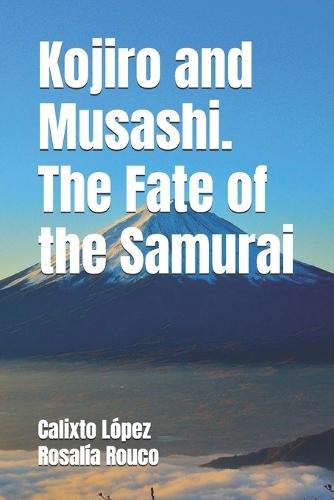
The Fate of the Samurai. In 1643, shortly before his death and thirty years after defeating the fearsome swordsman Sasaki Kojiro in a mortal duel on the island of Ganryu-jima, the samurai warrior Miyamoto Musashi began to reveal and write down the main secrets that allowed him to emerge victorious in his individual confrontations with his own swords. He also learned the martial arts of his two-sword fighting style, or Niten Ichi Ryu, accompanied by a cold, rational algorithm, devoid of the emotional charge that accompanies these types of combats and which can ultimately determine the outcome of the challenge. It is as if, before dying, the famous samurai wished to leave as a legacy for posterity the knowledge acquired throughout his life of fighting, and how to confront any adversary or embarrassing situation, always accompanied by the determination to win at all costs and employing all means at his disposal, as long as these did not violate the ethical and moral principles of the time. Miyamoto Musashi's life was always characterized by the struggle for his life and survival in different scenarios, some of which reached extreme levels of bloodshed. This was how things were in those difficult times of the Tokugawa dynasty in medieval Japan. However, now, in the context of today's society, the events may be less dramatic. However, a man's life is still spent in a constant struggle for survival in an environment that can sometimes be hostile, and in which we must be very attentive to any movement that occurs in the social and work environments in which we develop, because if we make mistakes, they can turn against us and lead us to uncomfortable situations, something like being immersed in the eye of a hurricane. Not in vain, in today's Japan, executives and businesspeople consult and apply the principles written centuries earlier by Miyamoto Musashi as a code or strategic manual of conduct to confront the fierce competition of the current socio-productive system, thus finding solutions that allow them to emerge victorious and move forward in the fulfillment of their goals. In his writings, Miyamoto Musashi frequently focuses his attention on individual or collective confrontations (wars) and the norms, procedures, and guidelines for achieving victory in any possible scenario. These can be translated to the conditions under which the dramatic encounter with Sasaki Kojiro took place on April 13, 1612, at Ganryu-jima.
Full Product Details
Author: Rosalía Rouco ,
Calixto López
Publisher: Independently Published
Imprint: Independently Published
Dimensions:
Width: 15.20cm
, Height: 0.70cm
, Length: 22.90cm
Weight: 0.159kg
ISBN: 9798270015473
Pages: 112
Publication Date: 16 October 2025
Audience:
General/trade
,
General
Format: Paperback
Publisher's Status: Active
Availability: Available To Order

We have confirmation that this item is in stock with the supplier. It will be ordered in for you and dispatched immediately.