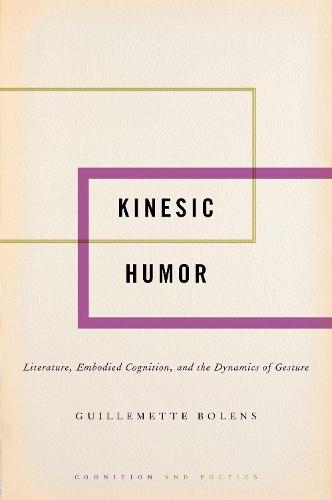
Full Product Details
Author: Guillemette Bolens (Professor of Medieval and Comparative Literature, Professor of Medieval and Comparative Literature, University of Geneva)
Publisher: Oxford University Press Inc
Imprint: Oxford University Press Inc
Dimensions:
Width: 23.60cm
, Height: 2.30cm
, Length: 16.30cm
Weight: 0.544kg
ISBN: 9780190930066
ISBN 10: 0190930063
Pages: 216
Publication Date: 24 September 2021
Audience:
Professional and scholarly
,
Professional & Vocational
Format: Hardback
Publisher's Status: Active
Availability: To order

Stock availability from the supplier is unknown. We will order it for you and ship this item to you once it is received by us.
Reviews
Guillemette Bolens's new book takes her powerful theory of kinesic analysis into the rich and complex territory of humor, showing that the sensory and motor resources of human cognition permeate every level of literary culture, including gestural and linguistic play. What she proposes is nothing less than a comprehensive new model of the way humor works, and she demonstrates it through a broad spectrum of brilliantly precise textual analyses. This is comparative cognitive criticism at its very best. -- Terence Cave, Emeritus Professor of French Literature, Oxford University Kinesic humorDLtriggered by surprising shifts in the rhythm of gesturesDLis an important aspect of human sociality; but it takes a scholar of Bolens's brilliance and interdisciplinary expertise to demonstrate that literature can create textual contexts for such humor in the most unexpected places. Embodied cognition is at the heart of the game that literature plays with the reader, and that game, Bolens shows us, is both poignant and funny. -- Lisa Zunshine, author of Getting Inside Your Head: What Cognitive Science Tell Us about Popular Culture
Guillemette Bolens's new book takes her powerful theory of kinesic analysis into the rich and complex territory of humor, showing that the sensory and motor resources of human cognition permeate every level of literary culture, including gestural and linguistic play. What she proposes is nothing less than a comprehensive new model of the way humor works, and she demonstrates it through a broad spectrum of brilliantly precise textual analyses. This is comparative cognitive criticism at its very best. * Terence Cave, Emeritus Professor of French Literature, Oxford University * Kinesic humor-triggered by surprising shifts in the rhythm of gestures-is an important aspect of human sociality; but it takes a scholar of Bolens's brilliance and interdisciplinary expertise to demonstrate that literature can create textual contexts for such humor in the most unexpected places. Embodied cognition is at the heart of the game that literature plays with the reader, and that game, Bolens shows us, is both poignant and funny. * Lisa Zunshine, author of Getting Inside Your Head: What Cognitive Science Tell Us about Popular Culture *
Author Information
Guillemette Bolens is Professor of Medieval and Comparative Literature at the University of Geneva, Switzerland. Her research interests are in the history of the body, kinesic intelligence, gestures, and embodied cognition in visual and verbal arts. She is the author of La Logique du corps articulaire: les articulations du corps humain dans la littérature occidentale (2000/2007), for which she was awarded the Latsis Prize and the Hélène and Victor Barbour Prize for Literary Criticism; The Style of Gestures: Embodiment and Cognition in Literary Narrative (2012; first published in French in 2008), and L'Humour et le savoir des corps: Don Quichotte, Tristram Shandy et le rire du lecteur (2016).