Overview
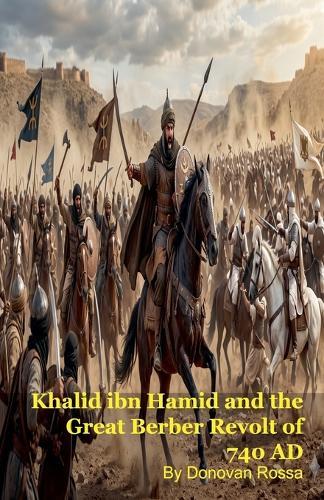
Khalid ibn Hamid and the Great Berber Revolt of 740 AD In 740 AD, a Zenata Berber chieftain named Khalid ibn Hamid al-Zanati led a coalition of North African tribes in one of the most consequential military campaigns of the medieval world, and then vanished from history as completely as he had entered it. The Great Berber Revolt began in Tangier, where decades of systematic abuse by the Umayyad Caliphate had pushed the Berber Muslim population to the breaking point. Taxed as non-believers despite their conversion to Islam, stripped of their children as tribute, and declared a conquered people by their own governors, the Berbers rose under the banner of Sufrite Kharijite theology, a radical Islamic egalitarianism that declared any pious Muslim fit to lead, regardless of ethnic origin. What followed was a military revolution. At the Battle of the Nobles in 740 AD, Khalid destroyed the aristocratic cavalry of the Ifriqiyan province. At Bagdoura in 741 AD, using slingers who targeted horses rather than riders, stampeding wild mares, and a brilliant encirclement maneuver, he annihilated the Syrian expeditionary force sent to crush the revolt, one of the largest armies the Umayyad Caliphate had ever fielded in the west. The consequences reshaped two continents. The western Maghreb won permanent independence. Berber garrisons abandoned their Spanish frontier posts, allowing the Christian kingdom of Asturias to expand into territory that would become the heartland of medieval Castile. The political instability that followed contributed to the fall of the Umayyad dynasty itself in 750 AD and, ultimately, to the emergence of the independent Umayyad Emirate of Córdoba, one of the medieval world's most brilliant civilizations. This is the story of a man who changed the world and then disappeared, and of the people whose centuries of resistance, cultural vitality, and fierce social solidarity made that change possible.
Full Product Details
Author: Donovan Rossa
Publisher: Silverback Books
Imprint: Silverback Books
Dimensions:
Width: 14.00cm
, Height: 1.40cm
, Length: 21.60cm
Weight: 0.295kg
ISBN: 9798233479786
Pages: 252
Publication Date: 26 April 2026
Audience:
General/trade
,
General
Format: Paperback
Publisher's Status: Active
Availability: Available To Order

We have confirmation that this item is in stock with the supplier. It will be ordered in for you and dispatched immediately.
Author Information
Donovan Rossa is an independent historian and postgraduate researcher whose work focuses on the intersection of slavery, political economy, and institutional violence in the medieval Islamic world. Largely self-educated in the classical and orientalist traditions before pursuing formal postgraduate study, Rossa brings to historical writing an outsider's instinct for the questions that credentialed scholarship sometimes forgets to ask - chief among them, whose experience is absent from the archive, and why. His approach combines rigorous engagement with primary sources in Arabic translation and the secondary literature of Islamic studies with the comparative frameworks of African diaspora scholarship, environmental history, and the sociology of revolution. He is particularly interested in the mechanisms by which historical memory is organized and suppressed, and in recovering the political and institutional achievements of people the dominant tradition preferred to forget. The Republic That History Forgot is his first book. He is currently researching a comparative study of frontier violence and colonial memory in the early modern period.