|
|
|||
|
||||
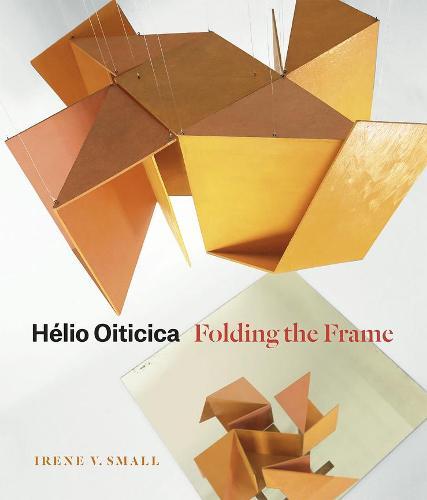
OverviewHélio Oiticica (1937–80) was one of the most brilliant Brazilian artists of the 1960s and 1970s. He was a forerunner of participatory art, and his melding of geometric abstraction and bodily engagement has influenced contemporary artists from Cildo Meireles and Ricardo Basbaum to Gabriel Orozco, Dominique Gonzalez-Foerster, and Olafur Eliasson. This book examines Oiticica’s impressive works against the backdrop of Brazil’s dramatic postwar push for modernization. From Oiticica’s late 1950s experiments with painting and color to his mid-1960s wearable Parangolés, Small traces a series of artistic procedures that foreground the activation of the spectator. Analyzing works, propositions, and a wealth of archival material, she shows how Oiticica’s practice recast—in a sense “folded”—Brazil’s utopian vision of progress as well as the legacy of European constructive art. Ultimately, the book argues that the effectiveness of Oiticica’s participatory works stems not from a renunciation of art, but rather from their ability to produce epistemological models that reimagine the traditional boundaries between art and life. Full Product DetailsAuthor: Irene V. Small , A01Publisher: The University of Chicago Press Imprint: University of Chicago Press Dimensions: Width: 2.20cm , Height: 0.30cm , Length: 2.60cm Weight: 1.361kg ISBN: 9780226260167ISBN 10: 022626016 Pages: 304 Publication Date: 03 February 2016 Audience: College/higher education , Postgraduate, Research & Scholarly Format: Hardback Publisher's Status: Active Availability: Out of stock The supplier is temporarily out of stock of this item. It will be ordered for you on backorder and shipped when it becomes available. Table of ContentsReviewsThis impressive text on Oiticica is the most profound investigation of his work to date. I have rarely come across such a compelling and exhaustive account of a Brazilian artist from this period. Small s book proves that Oiticica s folding the frame was much more than a simple experimental turn: it was, single-handedly, the ultimate folding of modern abstraction into its many unexpected, antithetical, and promising alter-forms. --Luis Perez-Oramas, Latin American Art Curator, The Museum of Modern Art Irene V. Small is assistant professor in the Department of Art and Archaeology at Princeton University, where she is also an affiliated faculty member in the Latin American studies program and the media and modernity program. Author InformationIrene V. Small is assistant professor in the Department of Art and Archaeology at Princeton University, where she is also an affiliated faculty member in the Latin American studies program and the media and modernity program. Tab Content 6Author Website:Countries AvailableAll regions |
||||