Overview
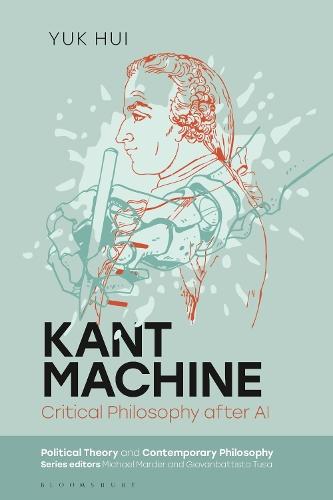
Rethinking the philosophy of Immanuel Kant in the age of artificial intelligence. What could be called an intelligent machine? Are machines capable of being moral? Does an algorithm for perpetual peace exist? In this groundbreaking new work, Yuk Hui considers how current debates on artificial intelligence echo historical philosophical discussions about the workings of the mind, with the philosophy of Immanuel Kant emerging as a lens through which to consider the ethical and political implications of AI and robotics in a new light. Addressing fundamental questions around machine intelligence and morality, transcendental idealism and learning, and the metaphysics of machines, the history of AI and Kantian ideas are expertly woven together alongside an array of figures in the histories of technology and philosophy: from Gottfried Wilhelm Leibniz and Alan Turing to Hubert Dreyfus and Jacques de Vaucanson. In asking how we can understand AI in light of the challenges Kant posed to both rationalism and empiricism, and how revisiting Kant can help us better comprehend the nature and limitations of contemporary technologies, Kant Machine is an essential critical contribution both to Kant studies and to the philosophy of digital technology.
Full Product Details
Author: Yuk Hui (Yuk Hui is a philosopher and Professor of Philosophy at Erasmus University Rotterdam, the Netherlands)
Publisher: Bloomsbury Publishing PLC
Imprint: Bloomsbury Academic
ISBN: 9781350563209
ISBN 10: 135056320
Pages: 144
Publication Date: 22 January 2026
Audience:
College/higher education
,
Postgraduate, Research & Scholarly
Format: Hardback
Publisher's Status: Forthcoming
Availability: Not yet available

This item is yet to be released. You can pre-order this item and we will dispatch it to you upon its release.
Reviews
The growing debates around machines, intelligence, machine-intelligence and the future of the human provoked by AI show that public demand for philosophy is reaching unprecedented levels of urgency. Yuk Hui's Kant Machine goes far in meeting these demands, offering an eloquent and reasoned reflection on the origins and futures of AI. More than this, and given the surprising influence of Kant on many of the key protagonists in the development of AI, Hui offers a sharply critical assessment of the Kant Machine, charting a course between the utopias and dystopias of AI. This book offers a timely challenge to the assumptions informing the current debate and invites a new and more sophisticated approach to the understanding and critique of AI. * Howard Caygill, Professor of Modern European Philosophy, Kingston University, UK, and author of books including On Resistance (Bloomsbury, 2015) and Force and Understanding (Bloomsbury, 2022) * In this sweeping exposition of Kant’s thought, Hui makes an urgent case for reorienting ourselves towards critical philosophy in the age of generative AI. * Bryan Norton, Visiting Assistant Professor, Haverford College, USA, and Author of Simondon and Novalis: Notes for a Romantic Mechanology (2024) *
The growing debates around machines, intelligence, machine-intelligence and the future of the human provoked by AI show that public demand for philosophy is reaching unprecedented levels of urgency. Yuk Hui's Kant Machine goes far in meeting these demands, offering an eloquent and reasoned reflection on the origins and futures of AI. More than this, and given the surprising influence of Kant on many of the key protagonists in the development of AI, Hui offers a sharply critical assessment of the Kant Machine, charting a course between the utopias and dystopias of AI. This book offers a timely challenge to the assumptions informing the current debate and invites a new and more sophisticated approach to the understanding and critique of AI. * Howard Caygill, Professor of Modern European Philosophy, Kingston University, UK, and author of books including On Resistance (Bloomsbury, 2015) and Force and Understanding (Bloomsbury, 2022) *
Author Information
Yuk Hui is Professor of Philosophy at Erasmus University Rotterdam, the Netherlands, where he holds the Chair of Human Conditions. Hui studied computer engineering at the University of Hong Kong and philosophy at Goldsmiths College in London, where he wrote his doctoral thesis under the French philosopher Bernard Stiegler (1952-2020). He obtained his Habilitation (venia legendi in philosophy of technology) from the Leuphana University Lüneburg. Hui is a juror of the Berggruen Prize for Philosophy and Culture since 2020, and convenor of the Research Network for Philosophy and Technology since 2014. His books include Post-Europe (2024), Machine and Sovereignty (2024), Art and Cosmotechnics (2021), and Recursivity and Contingency (2019).