Overview
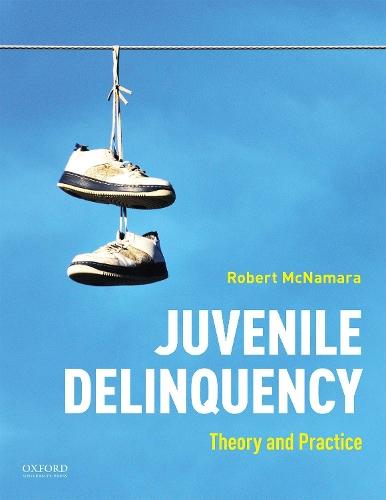
Focusing on today's students, this comprehensive juvenile delinquency text debunks myths, engages students to learn key theories, and provides compelling applications that students will find relevant and useful. Preface: The study of juvenile delinquency has a long and fascinating history. From the early days of treating juveniles like miniature adults to the Child Savers Movement, where advocates attempted to address issues stemming from the neglect and abuse of children. In the 1980s, the rise of violent juvenile gangs became a part of the larger narrative on delinquency, in part due to the discovery of crack cocaine and the turf battles that emerged over the distribution of the drug. In the 1990s, concerns about the violence and an increase in dangerous delinquents led to the prediction of a super predator of delinquent. Concerns about this group, along with the perception that the juvenile justice system was inadequate in addressing violent offenders, resulted in greater use of juvenile waivers, where the youthful offender is waived from juvenile court jurisdiction to adult court. Despite these concerns and perceptions about the dangerousness of juvenile offenders, in recent years, there has been a considerable decline in delinquency arrests along with decreases in the use of detention/incarceration in the past two decades. Generally speaking, the juvenile justice system has done an adequate job of diverting offenders before they become a part of the system and rehabilitating them when they become involved in it. However, it is important that we not to lose sight of how significant social issues shape our understanding of crime and delinquency. For instance, as the United States and other countries grapple with the enormous impact of COVID-19, including stay-at-home orders, the closing of schools, massive unemployment for millions of workers, and numerous risks for patients and health care workers, there are implications for juvenile offenders. While we are continuing to learn more about the COVID-19 disease, one of the more troubling trends is the high percentage of minorities who are affected by it. As troubling as a pandemic is for this country, in 2020 we have also seen a number of high-profile cases in which an African American was killed by a police officer or while they were in police custody. This trend is certainly not a new one-the disproportionality of African Americans in the justice system has a long and storied past. The social and political backlash to the recent events involving George Floyd's death have resulted in peaceful protests by citizens wanting meaningful change, violent demonstrations and looting by others, as well as demonstrators dismantling many statues of historical figures due to their involvement in or support of the slave trade. These protests, along with some political leaders stoking the fires of division, have damaged the social fabric of the United States. At the base of the protests and debates, such as whether Black Lives Matter or All Lives Matter, or whether or not to defund police departments, have, at their root, a history of exploitation of African Americans in the criminal justice system. The fascinating thing about the disproportionality of African Americans (and Hispanics/Latinos) in the system is that they are not confined to adults; the juvenile justice system struggles with the same type of disproportionality as its adult counterpart. Perhaps the most intriguing dimension of these findings is that there is little debate about them-unlike most social issues, when it comes to the challenges minorities face in the justice system, there are few if any debates about whether such a trend exists. The controversy stems from why these trends are occurring, but no one disputes whether the trends are real ones-in either the adult or the juvenile justice system. For our purposes, these protests, debates, and controversies are extraordinary reminders that ...
Full Product Details
Author: Robert McNamara
Publisher: Oxford University Press
Imprint: Oxford University Press
Dimensions:
Width: 21.60cm
, Height: 2.30cm
, Length: 27.70cm
Weight: 1.043kg
ISBN: 9780190078744
ISBN 10: 019007874
Pages: 496
Publication Date: 25 November 2020
Audience:
General/trade
,
General
Format: Paperback
Publisher's Status: Active
Availability: Available To Order

We have confirmation that this item is in stock with the supplier. It will be ordered in for you and dispatched immediately.
Reviews
Students are going to find this text interesting and user-friendly. It uses real world scenarios to help them understand the information.--Jennifer Perry, Central Carolina Technical College This text provides an excellent overview of juvenile delinquency in general. It is well written and up-to-date.--Lisa Lamb Weber, Texas State University Comprehensive, current, and user-friendly, this text will engage students and keep them engaged. The pedagogical structure is outstanding! The components of case study, theory and practice, 'You Make the Call, ' and community assignments are exactly the way the field of study is moving. The use of short videos is excellent.--Dorinda Dowis, Columbus State University The coverage is balanced and complete, and the use of outside media is fun and interactive for students; I would use this feature for online discussions.--Pamela Newell, University of North Georgia
"""Students are going to find this text interesting and user-friendly. It uses real-world scenarios to help them understand the information.""--Jennifer Perry, Central Carolina Technical College ""This text provides an excellent overview of juvenile delinquency in general. It is well written and up-to-date.""--Lisa Lamb Weber, Texas State University ""Comprehensive, current, and user-friendly, this text will engage students and keep them engaged. The pedagogical structure is outstanding! The components of case study, theory and practice, 'You Make the Call, ' and community assignments are exactly the way the field of study is moving. The use of short videos is excellent.""--Dorinda Dowis, Columbus State University ""The coverage is balanced and complete, and the use of outside media is fun and interactive for students; I would use this feature for online discussions.""--Pamela Newell, University of North Georgia"
Students are going to find this text interesting and user-friendly. It uses real world scenarios to help them understand the information. --Jennifer Perry, Central Carolina Technical College This text provides an excellent overview of juvenile delinquency in general. It is well written and up-to-date. --Lisa Lamb Weber, Texas State University Comprehensive, current, and user-friendly, this text will engage students and keep them engaged. The pedagogical structure is outstanding! The components of case study, theory and practice, 'You Make the Call, ' and community assignments are exactly the way the field of study is moving. The use of short videos is excellent. --Dorinda Dowis, Columbus State University The coverage is balanced and complete, and the use of outside media is fun and interactive for students; I would use this feature for online discussions. --Pamela Newell, University of North Georgia
Author Information
Robert McNamara is Professor of Criminal Justice at the Citadel. He is the author or coauthor of thirty books, including Multiculturalism, Crime, and the Criminal Justice System, Second Edition (OUP, 2020). Dr. McNamara has served as a senior research fellow for the National Strategy Information Center, the Policy Lab, the Police Executive Research Forum, in Washington, DC, and the Pacific Institute for Research and Evaluation in Baltimore, Maryland.