|
|
|||
|
||||
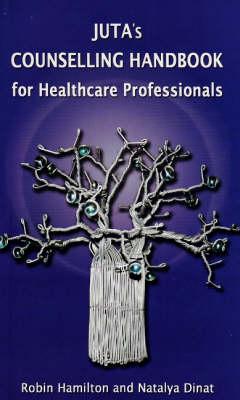
OverviewThis handbook will help professionals to apply practical counselling principles to healthcare situations in a South African context. Given the shortage of qualified counsellors and other health professionals in South Africa, healthcare workers without specialist knowledge are often called upon to counsel clients. There is no one-size-fits-all solution for many of the issues discussed. However, this handbook will sensitize readers, so that they can design an appropriate counselling intervention that is helpful to clients and their families. The handbook comprises three sections. Section one outlines essential principles of communication useful in most interactions between the health professional and the client. Section two describes basic generic principles of counselling.The focus falls on the development and practice of skills. Section three describes the application of counselling skills to specific situations in a medical setting, such as talking about treatment options, delivering bad news, and helping with adherence to antiretroviral treatment. The emphasis throughout is on the practical application of theory. The features include: tips which describe briefly how to deal with the issue under discussion; and common pitfalls to avoid which highlight the most frequent errors made in dealing with the issue in question. Full Product DetailsAuthor: Robyn Hamilton , Natalya DinatPublisher: Juta & Company Ltd Imprint: Juta Legal and Academic Publishers Dimensions: Width: 14.80cm , Height: 1.00cm , Length: 21.00cm Weight: 0.136kg ISBN: 9780702172755ISBN 10: 0702172758 Pages: 144 Publication Date: 03 January 2007 Audience: College/higher education , Professional and scholarly , Undergraduate , Professional & Vocational Format: Paperback Publisher's Status: Active Availability: Out of stock The supplier is temporarily out of stock of this item. It will be ordered for you on backorder and shipped when it becomes available. Table of ContentsCore communication skills: Overview of good communication skills; information giving; theory of behaviour change; using an interpreter effectively; power dynamics in medical settings; errors in communication. Core counselling skills: Counselling and psychotherapy; ethics of counselling; developing self-awareness; a generic counselling model; contracting; listening and attending; reflection; clarifying; probing; summarising; appropriate challenging; partialising and problem-solving; reviewing, referring and terminating; support and supervision. Counselling skills for specific situations: Obtaining informed consent; stopping smoking; communicating bad news; avoiding collusion; talking about sexuality; communicating effectively with children; talking to cognitively impaired patients; counselling for HIV testing; counselling on living positively with HIV; risk reduction counselling for HIV/AIDS; counselling on taking antiretroviral medication; example of an antiretroviral treatment (ART) adherence counselling session, with different responses; containing traumatised patients; recognising the risk of suicide; counselling patients on treatment options; genetic counselling; loss and grieving.ReviewsAuthor InformationRobin Hamilton is a psychologist who has been involved in HIV/AIDS training on counselling and treatment issues for more than 10 years. He currently works for the Aurum Institute for Health Research in Johannesburg. Natalya Dinat is an obstetrician-gynaecologist and palliative care specialist who teaches communication skills and palliative care at the Faculty of Health Sciences, University of the Witwatersrand. Tab Content 6Author Website:Countries AvailableAll regions |
||||