Overview
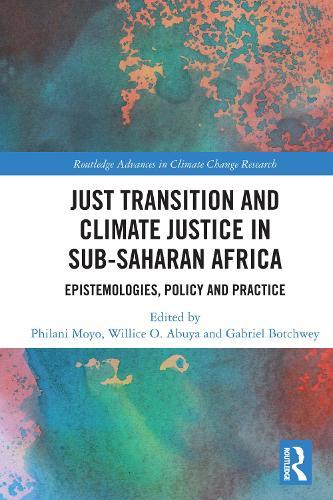
Just transition offers a way for fossil fuel-dependent economies to meet climate goals while ensuring that society as a whole – communities, workers, young people and marginalised groups – remains in the forefront of the conversation. This book explores the political economy of just transition in East, West and Southern Africa in order to shine a light on contested epistemologies, policy configurations and case studies of practice at various scales. In the African context, just transition is particularly significant due to the continent’s rich natural resources, including oil, gas and minerals, which have historically been exploited without adequate consideration for environmental sustainability and local communities’ socio-economic rights. This book analyses how a just transition, in practice, should aim to rectify these historical injustices by promoting inclusive decision-making processes that involve the affected groups, workers and communities. Bringing together leading scholars in the field, who apply a climate justice analytical lens and just transition concepts, the chapters question the extent to which pathways towards net-zero carbon emissions by 2050 are achievable in Africa and whether this can be attained without undermining economic growth, jobs, livelihoods and lives. Just Transition and Climate Justice in Sub-Saharan Africa will be an important read for policymakers and researchers in the fields of climate justice, environmental law, African and environmental studies.
Full Product Details
Author: Philani Moyo ,
Willice 0. Abuya ,
Gabriel Botchwey
Publisher: Taylor & Francis Ltd
Imprint: Routledge
ISBN: 9781041134022
ISBN 10: 1041134029
Pages: 222
Publication Date: 16 April 2026
Audience:
College/higher education
,
Professional and scholarly
,
Postgraduate, Research & Scholarly
,
Professional & Vocational
Format: Hardback
Publisher's Status: Forthcoming
Availability: Not yet available

This item is yet to be released. You can pre-order this item and we will dispatch it to you upon its release.
Author Information
Philani Moyo is Professor of Sociology at the University of Fort Hare in South Africa. He holds a DPhil and an MA from the University of Leeds, UK. His primary research interests are in climate justice, just transition, adaptation and resilience building, climate-resilient food systems and food justice. One of his recent books is Climate Action in Southern Africa: Implications for Climate Justice and Just Transition (editor) (Routledge, 2024). Philani sits on the Board of Directors for the Association for Applied and Clinical Sociology (USA) and is a member of the Development Studies Association of the UK and of the South African Sociological Association and the co-lead of the Future Earth Africa Hub Leadership Centre’s Sustainability Science Cluster on ‘Degrowth and Climate Justice in Africa’. Willice O. Abuya is Senior Lecturer in the Department of Sociology, Moi University, Kenya, specialising in environmental sociology. His most recent publication is ‘Identity and Moralities’ in African Values and Development: Rethinking Agenda 2063 (Routledge, 2025). His current international research partnership is with the University of Geneva’s ‘Violence Against Environmental Defenders in Mining’ project. He is also the co-lead of the Future Earth Africa Hub Leadership Centre’s Sustainability Science Cluster, focusing on ‘Degrowth and Climate Justice’. Willice is also an associate editor for the journal Extractive Industry and Society. Gabriel Botchwey is Associate Professor of Political Science at the University of Education, Winneba, Ghana. He holds a PhD in politics and international studies (Leeds), an MA in development studies (the Netherlands) and a Master of Laws (Ghana). Some of his recent publications include Small-scale Mining, Environmental Destruction and Democracy Capture: The Government of Ghana’s Failed War on Galamsey; Small-Scale Mining, Environment and Livelihoods: Perspectives from Mining Communities in Ghana; and Working with Legal Small-Scale Miners: Implications for Development. Gabriel is also the co-lead of the Future Earth Africa Hub Leadership Centre’s Sustainability Science Cluster, focusing on ‘Degrowth and Climate Justice’.