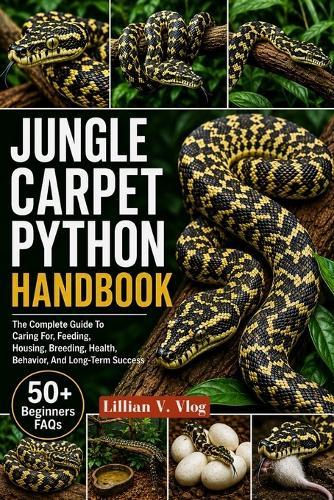
Overview
INTRODUCTION TO JUNGLE CARPET PYTHONS The Jungle Carpet Python is one of the most visually striking and behaviorally interesting reptiles kept in captivity today. Known scientifically as a member of the carpet python complex, it is admired for its bold patterning, impressive size, and relatively adaptable temperament when properly cared for. For reptile enthusiasts, breeders, and exotic pet keepers, the Jungle Carpet Python represents both a rewarding challenge and a fascinating window into the world of Australian and New Guinean snakes. Understanding this species requires more than just recognizing its beauty. It involves exploring its natural origins, evolutionary adaptations, ecological role, and the reasons it has become such a popular captive reptile around the world. This chapter provides a comprehensive introduction to the Jungle Carpet Python, offering a foundation for deeper study in later sections of this handbook. Understanding the Jungle Carpet Python The Jungle Carpet Python is a non-venomous constrictor snake belonging to the carpet python group. These snakes are part of the larger python family, which includes some of the largest snakes in the world. Unlike venomous snakes that rely on toxins to subdue prey, Jungle Carpet Pythons use muscular constriction to overpower and immobilize their meals. What makes the Jungle Carpet Python particularly special is its striking appearance. It typically displays a high-contrast pattern of black or dark brown markings over a golden, yellow, or cream-colored background. This bold coloration gives it a ""wild jungle"" aesthetic, which is one of the reasons it is so highly valued in the exotic pet trade. These snakes are medium to large in size, with adults commonly reaching lengths between 6 to 9 feet, although some individuals may grow slightly larger depending on genetics, diet, and environment. Males are often slightly smaller and more slender than females, a common sexual dimorphism seen in many python species. Taxonomy and Classification The Jungle Carpet Python belongs to the species group commonly referred to as carpet pythons. While scientific classification has evolved over time, they are generally recognized under the genus Morelia. This genus includes several other carpet python variants, each adapted to different environments across Australia and surrounding regions. The Jungle Carpet Python is not a separate species in itself but rather a regional form of the carpet python complex. It is closely related to other well-known carpet python types, including coastal carpet pythons and inland carpet pythons. However, the Jungle Carpet Python stands out due to its unique coloration and rainforest-adapted traits. This classification is important for understanding both its care requirements and its behavior. Different carpet python localities can have subtle differences in temperament, size, and environmental preferences. The Jungle Carpet Python, for example, tends to originate from more humid rainforest regions compared to its drier inland relatives. Natural History and Geographic Range The Jungle Carpet Python is native primarily to the northeastern regions of Australia, particularly Queensland, as well as parts of Papua New Guinea. These areas are characterized by warm, humid climates with dense vegetation, including tropical rainforests, woodlands, and forest edges. In the wild, Jungle Carpet Pythons are highly adaptable and can be found in a variety of microhabitats. They are often seen in trees, shrubs, and rocky outcrops, but they are also capable ground hunters. Their semi-arboreal nature means they spend a significant amount of time both on the ground and in elevated positions. This flexibility allows them to exploit a wide range of prey species and avoid competition with other predators.
Full Product Details
Author: Lillian V Vlog
Publisher: Independently Published
Imprint: Independently Published
Dimensions:
Width: 15.20cm
, Height: 1.20cm
, Length: 22.90cm
Weight: 0.308kg
ISBN: 9798197667670
Pages: 226
Publication Date: 19 May 2026
Audience:
General/trade
,
General
Format: Paperback
Publisher's Status: Active
Availability: Available To Order

We have confirmation that this item is in stock with the supplier. It will be ordered in for you and dispatched immediately.