|
|
|||
|
||||
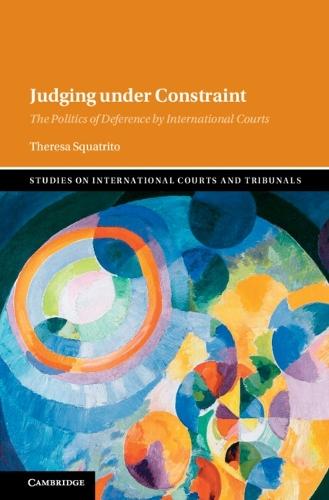
OverviewAs international courts have risen in prominence, policymakers, practitioners and scholars observe variation in judicial deference. Sometimes international courts defer, whereby they accept a state's exercise of authority, and other times not. Differences can be seen in case outcomes, legal interpretation and reasoning, and remedial orders. How can we explain variation in deference? This book examines deference by international courts, offering a novel theoretical account. It argues that deference is explained by a court's strategic space, which is structured by formal independence, seen as a dimension of institutional design, and state preferences. An empirical analysis built on original data of the East African Court of Justice, Caribbean Court of Justice, and African Court of Human and Peoples' Rights demonstrates that robust safeguards to independence and politically fragmented memberships lend legitimacy to courts and make collective state resistance infeasible, combining to minimize deference. Persuasive argumentation and public legitimation also enable nondeference. Full Product DetailsAuthor: Theresa Squatrito (London School of Economics and Political Science)Publisher: Cambridge University Press Imprint: Cambridge University Press Weight: 0.718kg ISBN: 9781009607612ISBN 10: 1009607618 Pages: 376 Publication Date: 13 November 2025 Audience: General/trade , General Format: Hardback Publisher's Status: Active Availability: Manufactured on demand We will order this item for you from a manufactured on demand supplier. Table of ContentsReviewsAuthor InformationTheresa Squatrito is an Associate Professor in International Relations at the London School of Economics and Political Science. She is a co-author of The Opening Up of International Organizations (Cambridge University Press, 2013) and a co-editor of The Performance of International Courts and Tribunals (Cambridge University Press, 2018). Tab Content 6Author Website:Countries AvailableAll regions |
||||