Awards
- Nominated for Award for Excellence in the Study of Religion 2002
Overview
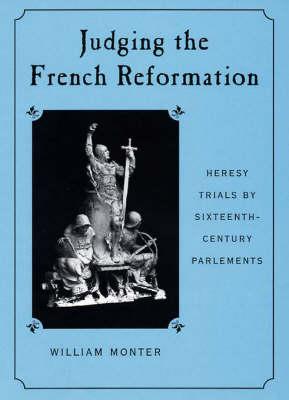
This original look at the French Reformation pits immovable object--the French appellate courts or parlements--against irresistible force--the most dynamic forms of the Protestant Reformation. Without the slightest hesitation, the high courts of Renaissance France opposed these religious innovators. By 1540, the French monarchy had largely removed the prosecution of heresy from ecclesiastical courts and handed it to the parlements. Heresy trials and executions escalated dramatically. But within twenty years, the irresistible force had overcome the immovable object: the prosecution of Protestant heresy, by then unworkable, was abandoned by French appellate courts. Until now no one has investigated systematically the judicial history of the French Reformation. William Monter has examined the myriad encounters between Protestants and judges in French parlements, extracting information from abundant but unindexed registers of official criminal decisions both in Paris and in provincial capitals, and identifying more than 425 prisoners condemned to death for heresy by French courts between 1523 and 1560. He notes the ways in which Protestants resisted the French judicial system even before the religious wars, and sets their story within the context of heresy prosecutions elsewhere in Reformation Europe, and within the long-term history of French criminal justice.
Full Product Details
Author: William Monter
Publisher: Harvard University Press
Imprint: Harvard University Press
Dimensions:
Width: 15.60cm
, Height: 2.70cm
, Length: 23.50cm
Weight: 0.617kg
ISBN: 9780674488601
ISBN 10: 0674488601
Pages: 336
Publication Date: 10 September 1999
Audience:
College/higher education
,
Professional and scholarly
,
Undergraduate
,
Postgraduate, Research & Scholarly
Format: Hardback
Publisher's Status: Active
Availability: Out of stock

The supplier is temporarily out of stock of this item. It will be ordered for you on backorder and shipped when it becomes available.
Reviews
William Monter's Judging the French Reformation thoroughly revises our understanding of the persecution of Protestants in sixteenth-century France...The task, he was told, was impossible. The eight to ten Parlements operating in this period had left too many records, and they were too poorly organized and too poorly catalogued for a single scholar to work through in a single lifetime. Happily, Monter proved the naysayers wrong. With his usual diligence, a gift for getting quickly to the heart of the matter, and a real talent for synthesis, he dove into the archives, recovered the relevant cases, and reemerged with a powerfully convincing story - a story that turns the traditional view on its head. -- Barbra B. Diefendorf The Catholic Historical Review
William Monter's Judging the French Reformation thoroughly revises our understanding of the persecution of Protestants in sixteenth-century France...The task, he was told, was impossible. The eight to ten Parlements operating in this period had left too many records, and they were too poorly organized and too poorly catalogued for a single scholar to work through in a single lifetime. Happily, Monter proved the naysayers wrong. With his usual diligence, a gift for getting quickly to the heart of the matter, and a real talent for synthesis, he dove into the archives, recovered the relevant cases, and reemerged with a powerfully convincing story - a story that turns the traditional view on its head.--Barbra B. Diefendorf The Catholic Historical Review
Author Information
William Monter is Professor of History, Northwestern University. He is the author of numerous works on Calvin’s Geneva, witchcraft, and the Spanish Inquisition, including Frontiers of Heresy: The Spanish Inquisition from the Basque Lands to Sicily.