Overview
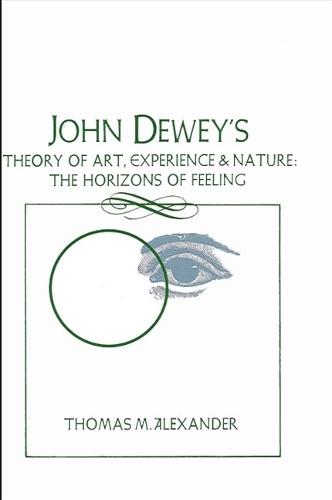
Thomas Alexander shows that the primary, guiding concern of Dewey's philosophy is his theory of aesthetic experience. He directly challenges those critics, most notably Stephen Pepper and Benedetto Croce, who argued that this area is the least consistent part of Dewey's thought. The author demonstrates that the fundamental concept in Dewey's system is that of ""experience"" and that paradigmatic treatment of experience is to be found in Dewey's analysis of aesthetics and art. The confusions resulting from the neglect of this orientation have led to prolonged misunderstandings, eventual neglect, and unwarranted popularity for ideas at odds with the genuine thrust of Dewey's philosophical concerns. By exposing the underlying aesthetic foundations of Dewey's philosophy, Alexander aims to rectify many of these errors, generating a fruitful new interest in Dewey.
Full Product Details
Author: Thomas M. Alexander
Publisher: State University of New York Press
Imprint: State University of New York Press
Dimensions:
Width: 15.20cm
, Height: 2.50cm
, Length: 22.90cm
Weight: 0.481kg
ISBN: 9780887064265
ISBN 10: 0887064264
Pages: 354
Publication Date: 01 July 1987
Audience:
Professional and scholarly
,
Professional and scholarly
,
Professional & Vocational
,
Postgraduate, Research & Scholarly
Format: Paperback
Publisher's Status: Active
Availability: Out of print, replaced by POD

We will order this item for you from a manufatured on demand supplier.
Reviews
"""This book puts Dewey's aesthetics and his general philosophical position in a refreshing perspective. It sustains a sensitive account of Dewey's conception of meaning and shows how some critics of the relation of aesthetics to the whole of his philosophy have overlooked the way aesthetic meaning was central to Dewey's thought before and after he distanced himself from idealism. The author knows his way inside Dewey's philosophy, and he has done an excellent job of explaining Dewey."" - Carl R. Hausman ""This is a highly detailed, sophisticated monograph on Dewey's aesthetics. More specifically it aims to investigate the criticism against Dewey levelled by Pepper and Croce that Dewey's aesthetic theory was idealistic and therefore in contradiction with his naturalistic metaphysics of pragmatism. Alexander defends Dewey against the charge, and in the process provides an extraordinarily subtle and thorough analysis of Dewey's development from idealism to pragmatism."" - Robert Cummings Neville"
""This book puts Dewey's aesthetics and his general philosophical position in a refreshing perspective. It sustains a sensitive account of Dewey's conception of meaning and shows how some critics of the relation of aesthetics to the whole of his philosophy have overlooked the way aesthetic meaning was central to Dewey's thought before and after he distanced himself from idealism. The author knows his way inside Dewey's philosophy, and he has done an excellent job of explaining Dewey."" - Carl R. Hausman ""This is a highly detailed, sophisticated monograph on Dewey's aesthetics. More specifically it aims to investigate the criticism against Dewey levelled by Pepper and Croce that Dewey's aesthetic theory was idealistic and therefore in contradiction with his naturalistic metaphysics of pragmatism. Alexander defends Dewey against the charge, and in the process provides an extraordinarily subtle and thorough analysis of Dewey's development from idealism to pragmatism."" - Robert Cummings Neville
This book puts Dewey's aesthetics and his general philosophical position in a refreshing perspective. It sustains a sensitive account of Dewey's conception of meaning and shows how some critics of the relation of aesthetics to the whole of his philosophy have overlooked the way aesthetic meaning was central to Dewey's thought before and after he distanced himself from idealism. The author knows his way inside Dewey's philosophy, and he has done an excellent job of explaining Dewey. - Carl R. Hausman This is a highly detailed, sophisticated monograph on Dewey's aesthetics. More specifically it aims to investigate the criticism against Dewey levelled by Pepper and Croce that Dewey's aesthetic theory was idealistic and therefore in contradiction with his naturalistic metaphysics of pragmatism. Alexander defends Dewey against the charge, and in the process provides an extraordinarily subtle and thorough analysis of Dewey's development from idealism to pragmatism. - Robert Cummings Neville
Author Information
Thomas M. Alexander is Assistant Professor of Philosophy at Southern Illinois University at Carbondale.