Overview
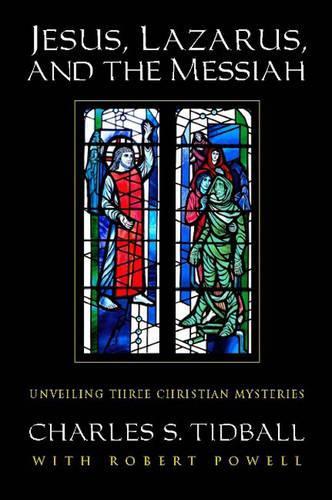
""Humanity as a whole produced evangelists as mediators, who provided revelations that can be understood only gradually. These scriptures will be understood more and more as humanity progresses."" --Rudolf Steiner, 1911At the heart of the mystery of Christianity, we encounter the divinity of Jesus Christ--the revelation of the descent of God from the spiritual world into the material world for the sake of humanity. To unveil the meaning of this cosmic event, authors Charles Tidball and Robert Powell (in two chapters) draw on four very different sources: the Gospels themselves, medieval and Renaissance tradition and art, the visions of Anne Catherine Emmerich, and the spiritual science, or Anthroposophy, of Rudolf Steiner. Viewing the former in the light of the latter, the authors unravel three key riddles: the nature of Jesus, the identity of Lazarus and the meaning of his initiatory ""raising from the dead,"" and the Messianic mystery of the incarnation of the Christ. In the process, much is learned of the actual dating of the Gospel events, as well the repercussions of these events in history. This is a book for all those who want a deeper understanding of the New Testament Gospels and, especially, for those interested in the ""Jesus mysteries."" Contents: * Foreword by Christopher Bamford * Introduction: The Interrelations Part One: Developing an Understanding * Frames of Reference * Primary Sources * Significant Methodology Part Two: The Mystery of the Two Jesus Children * Biblical Evidence * Artistic Evidence * Preparation for the Incarnation * Alternative Viewpoints Part Three: The Mystery of the Beloved Disciple * Three Different Views on Lazarus * From the Scholarship of Dr. Konig * From the Visions of Sister Emmerich * The John Mystery (by Robert Powell) * The Johannine Tradition (by Robert Powell) Part Four: The Mystery of the Incarnation of the Christ Being * Further Understandings from ""Chronicle of Christ's Ministry"" Further Material: * Afterword * Appendix: * Biographical Material * Authenticity of Sister Emmerich's Visions * The Bare-Bones Story (21 BCE-CE 44) * Selected Entries from ""Chronicle of Christ's Ministry"" * Three Excerpts from Irene Johanson's Book The Three Disciples Called John * Glossary * Index
Full Product Details
Author: Charles S. Tidball (Professor Emeritus of Computer Medicine, George Washington University, USA) , Robert Powell
Publisher: Anthroposophic Press Inc
Imprint: SteinerBooks, Inc
Dimensions:
Width: 16.10cm
, Height: 2.30cm
, Length: 23.50cm
Weight: 0.449kg
ISBN: 9780880105583
ISBN 10: 0880105585
Pages: 320
Publication Date: 15 May 2005
Audience:
General/trade
,
General
Format: Paperback
Publisher's Status: Out of Print
Availability: Out of stock 
Table of Contents
Reviews
<b>By the Rev. Canon Michael Wyatt</b> Dr. Charles Tidball, principal collator and interpreter of the iconography of Washington National Cathedral, has completed a remarkable study of open-ended dimensions of the story of Jesus in the four Gospels. His explorations move in realms that will not be familiar to many readers, and are all the more challenging and interesting for that very reason. In many ways, this is a peculiarity of Christianity. For religions dedicated to realization or enlightenment, the probing of subtle meanings is considered essential for full religious expression. These further spiritual insights, when taken in a flat literal (and therefore false) sense, appear to contradict the religion s teachings. But such distress is only conceivable under certain rational viewpoints which insist that only one articulation can be accurate. In a sense, the contradiction itself signifies that more than mundane factual claims are involved here, that the figure in question far transcends the categories in which we hope to confine him. No one who has ever paused over the incomprehensible claim that Jesus is fully human and fully divine, and who has studied the Church s writhing attempts to explicate that claim, should be surprised that the transcendent appears to contradict the evident. Tidball s book moves beyond orthodox paradoxes to lay out a complex interpretation of the person of Jesus that strives to reconcile textual contradictions (such as distinct genealogies in Matthew and Luke), and to explicate his cosmic significance using sources outside the mainstream of the tradition. The principal task of this book is to weave together these extra-biblical accounts of the life of Jesus in order to examine certain questions that Tidball posits. Some of Tidball s potentially startling material falls within the questioning of standard biblical scholarship. Was the beloved disciple, for example, Lazarus raised from the dead? It is an attractive suggestion, since the Gospel of John is the only Gospel that mentions this beloved disciple, and it does so only after the raising of Lazarus, who (the evangelist repeatedly asserts) was beloved by Jesus. Other material, though already known and respected within the Roman Catholic Church, will be unfamiliar to other readers. How, for example, might we receive and incorporate the visions of devout people? Are they private consolations or gifts to the Church? The testimonies of Anne Catherine Emmerich, whose detailed visionary witnessing of the last days of Jesus provided in detail the narrative for Mel Gibson s film on the Passion, are received by Tidball as credible and reliable; he incorporates them into his reflections. Some of what is here may baffle and even offend; is it possible that there was more than one Jesus, representing different lineages (Solomon and Nathan), and that this very multiplicity is carrying out the purpose of god to fill all things? Rudolf Steiner, the principal explicator of anthroposophy in the last century, is used as the authority for those claims, by which an extraordinary vision of cosmic spiritual evolution is laid out, in which Jesus Christ is expressly at the highest levels of the spiritual world. Tidball and his co-author Robert Powell offer a remarkable opportunity to consider the inexhaustible meaning of the Christ, particularly seen as the confluence of cosmic intentions for the divinization of humanity an expectation for us clearly articulated in the great theologian Arthanasius. Not the least of what amazes here is Tidball s commitment and the consistency of his achieved synthesis. If nothing else, this book opens doors for us to look in and witness a rapt devotion to Jesus that reaches far beyond the claims of the Nicene Creed. I myself can never fail to be interested in what others say about the Lord I follow and in whose hands I have placed my life, so that I might compare those claims with what I would claim, informed by the more familiar use of Scripture, tradition, and reason. <i><b>Cathedral Age, </b></i> summer 2005 <b>The Rev. Canon Michael Wyatt</b> is a Canon Theologian and Director of Education at the Cathedral College, Washington National Cathedral and a highly regarded teacher and preacher with particular expertise in religious education to both the churched and the un-churched. He serves the Washington National Cathedral as Canon Theologian, focusing particularly on Biblical scholarship and interfaith initiatives.
By the Rev. Canon Michael Wyatt Dr. Charles Tidball, principal collator and interpreter of the iconography of Washington National Cathedral, has completed a remarkable study of open-ended dimensions of the story of Jesus in the four Gospels. His explorations move in realms that will not be familiar to many readers, and are all the more challenging and interesting for that very reason. In many ways, this is a peculiarity of Christianity. For religions dedicated to realization or enlightenment, the probing of subtle meanings is considered essential for full religious expression. These further spiritual insights, when taken in a flat literal (and therefore false) sense, appear to contradict the religion s teachings. But such distress is only conceivable under certain rational viewpoints which insist that only one articulation can be accurate. In a sense, the contradiction itself signifies that more than mundane factual claims are involved here, that the figure in question far transcends the categories in which we hope to confine him. No one who has ever paused over the incomprehensible claim that Jesus is fully human and fully divine, and who has studied the Church s writhing attempts to explicate that claim, should be surprised that the transcendent appears to contradict the evident. Tidball s book moves beyond orthodox paradoxes to lay out a complex interpretation of the person of Jesus that strives to reconcile textual contradictions (such as distinct genealogies in Matthew and Luke), and to explicate his cosmic significance using sources outside the mainstream of the tradition. The principal task of this book is to weave together these extra-biblical accounts of the life of Jesus in order to examine certain questions that Tidball posits. Some of Tidball s potentially startling material falls within the questioning of standard biblical scholarship. Was the beloved disciple, for example, Lazarus raised from the dead? It is an attractive suggestion, since the Gospel of John is the only Gospel that mentions this beloved disciple, and it does so only after the raising of Lazarus, who (the evangelist repeatedly asserts) was beloved by Jesus. Other material, though already known and respected within the Roman Catholic Church, will be unfamiliar to other readers. How, for example, might we receive and incorporate the visions of devout people? Are they private consolations or gifts to the Church? The testimonies of Anne Catherine Emmerich, whose detailed visionary witnessing of the last days of Jesus provided in detail the narrative for Mel Gibson s film on the Passion, are received by Tidball as credible and reliable; he incorporates them into his reflections. Some of what is here may baffle and even offend; is it possible that there was more than one Jesus, representing different lineages (Solomon and Nathan), and that this very multiplicity is carrying out the purpose of god to fill all things? Rudolf Steiner, the principal explicator of anthroposophy in the last century, is used as the authority for those claims, by which an extraordinary vision of cosmic spiritual evolution is laid out, in which Jesus Christ is expressly at the highest levels of the spiritual world. Tidball and his co-author Robert Powell offer a remarkable opportunity to consider the inexhaustible meaning of the Christ, particularly seen as the confluence of cosmic intentions for the divinization of humanity an expectation for us clearly articulated in the great theologian Arthanasius. Not the least of what amazes here is Tidball s commitment and the consistency of his achieved synthesis. If nothing else, this book opens doors for us to look in and witness a rapt devotion to Jesus that reaches far beyond the claims of the Nicene Creed. I myself can never fail to be interested in what others say about the Lord I follow and in whose hands I have placed my life, so that I might compare those claims with what I would claim, informed by the more familiar use of Scripture, tradition, and reason. Cathedral Age, summer 2005 The Rev. Canon Michael Wyatt is a Canon Theologian and Director of Education at the Cathedral College, Washington National Cathedral and a highly regarded teacher and preacher with particular expertise in religious education to both the churched and the un-churched. He serves the Washington National Cathedral as Canon Theologian, focusing particularly on Biblical scholarship and interfaith initiatives.
Author Information
Charles S. Tidball (1928-2018) was born in Geneva, Switzerland. A scientist and a doctor, he earned multiple degrees: an M.S. in Pharmacology, a Ph.D in Physiology, and an M.D. For many years Dr. Tidball was Professor and Chair of the Department of Physiology at George Washington University, which in 1992 designated him professor emeritus of computer medicine and neurological surgery. He was also a pioneer in computer-based instructional and information-retrieval systems. After retirement, he served at the Washington National Cathedral and dedicated his considerable energies to writing, including a book written with his wife and two colleagues, Taking Women Seriously: Lessons and Legacies for Educating the Majority. Dr. Tidball became a student of Rudolf Steiner's spiritual science (Anthroposophy) in 1948. His books include Jesus, Lazarus, and the Messiah (2005) and Holy Visions, Sacred Stories (2012). Robert A. Powell, PhD, is an internationally known lecturer, author, eurythmist, and movement therapist. He is founder of the Choreocosmos School of Cosmic and Sacred Dance, and cofounder of the Sophia Foundation of North America. He received his doctorate for his thesis The History of the Zodiac, available as a book from Sophia Academic Press. He is the author and coauthor of numerous work, including The Sophia Teachings (a six-tape series), as well as numerous books on star wisdom (Astrosophy), the divine feminine (Sophia), the Christian Mysteries, and sacred movement. He has also been a contributing editor of the annual journal Star Wisdom. He translated the spiritual classic Meditations on the Tarot and co-translated Valentin Tomberg's Lazarus, Come Forth! Robert teaches a gentle form of healing movement: the sacred dance of eurythmy, as well as the Cosmic Dances of the Planets and signs of the zodiac. Through the Sophia Grail Circle, Robert facilitates sacred celebrations dedicated to the Divine Feminine. He has also offered numerous workshops in Europe and Australia, and with Karen Rivers, cofounder of the Sophia Foundation, and has led pilgrimages to the world's sacred sites since 1996. Robert A. Powell, PhD, is an internationally known lecturer, author, eurythmist, and movement therapist. He is founder of the Choreocosmos School of Cosmic and Sacred Dance, and cofounder of the Sophia Foundation of North America. He received his doctorate for his thesis The History of the Zodiac, available as a book from Sophia Academic Press. He is the author and coauthor of numerous work, including The Sophia Teachings (a six-tape series), as well as numerous books on star wisdom (Astrosophy), the divine feminine (Sophia), the Christian Mysteries, and sacred movement. He has also been a contributing editor of the annual journal Star Wisdom. He translated the spiritual classic Meditations on the Tarot and co-translated Valentin Tomberg's Lazarus, Come Forth! Robert teaches a gentle form of healing movement: the sacred dance of eurythmy, as well as the Cosmic Dances of the Planets and signs of the zodiac. Through the Sophia Grail Circle, Robert facilitates sacred celebrations dedicated to the Divine Feminine. He has also offered numerous workshops in Europe and Australia, and with Karen Rivers, cofounder of the Sophia Foundation, and has led pilgrimages to the world's sacred sites since 1996. Christopher Bamford (1943-2022) was born in Cardiff, South Wales, and lived for a while in Hungary and then in Scotland. He studied as an undergraduate at Trinity University in Dublin and earned his master's degree at the Annenberg School for Communication, University of Pennsylvania. For nearly thirty years, he was Editor in Chief at SteinerBooks (Anthroposophic Press) and its imprints. A Fellow of the Lindisfarne Association, he lectured, taught, and wrote widely on Western spiritual and esoteric traditions. His books include a selection of his numerous introductions, Encountering Rudolf Steiner: Introductions to Essential Works (2022); Healing Madonnas: Exploring the Sequence of Madonna Images Created by Rudolf Steiner and Felix Peipers for Use in Therapy and Meditation (2017); An Endless Trace: The Passionate Pursuit of Wisdom in the West (2003); and The Voice of the Eagle: The Heart of Celtic Christianity (1990). He also translated and edited numerous books, including Homage to Pythagoras: Rediscovering Sacred Science (2001); The Noble Traveller: The Life and Writings of O. V. de L. Milosz (1984); and Celtic Christianity: Ecology and Holiness (1982). Essays by Mr. Bamford are included in The Best Spiritual Writing 2000 (""In the Presence of Death"") and The Best American Spiritual Writing 2005 (""The Gift of the Call""). Christopher passed over the threshold on May 13, 2022, at his Mt. Washington, Massachusetts home.
Tab Content 6
Author Website:
Countries Available
All regions
|