Overview
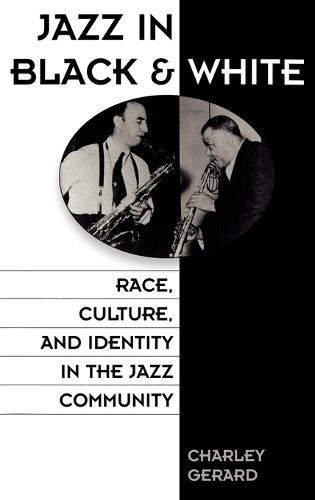
Is jazz a universal idiom or is it an African-American art form? Although whites have been playing jazz almost since it first developed, the history of jazz has been forged by a series of African-American artists whose styles caught the interest of their musical generation—masters such as Louis Armstrong, Duke Ellington, John Coltrane, and Charlie Parker. Whether or not white musicians deserve their secondary status in jazz history, one thing is clear: developments in jazz have been a result of black people's search for a meaningful identity as Americans and members of the African diaspora. Blacks are not alone in being deeply affected by these shifts in African-American racial attitudes and cultural strategies. Historically in closer contact with blacks than nearly any other group of white Americans, white jazz musicians have also felt these shifts. More importantly, their careers and musical interests have been deeply affected by them. The author, an active participant in the jazz world as composer, performer, and author of several books on jazz and Latin music, hopes that this book will encourage jazz lovers to take a rhetoric-free look at the charged issue of race as has affected the world of jazz. A work about the formulation of identity in the face of racial difference, the book considers topics such as the promotion of black Southern culture and inner-city styles like rhythm and blues and rap as a means of achieving black racial solidarity. It discusses the body of music fostered by an identification to Africa, the conversion of black jazz musicians to Islam and other Eastern religions, and the impact of a jazz community united by heroin use. White jazz musicians who identify with black culture in an unsettling form by speaking black dialect and calling themselves African-American is examined, as is the assimilation of jazz into the wider American culture.
Full Product Details
Author: Charles D. Gerard
Publisher: Bloomsbury Publishing Plc
Imprint: Praeger Publishers Inc
Dimensions:
Width: 15.60cm
, Height: 1.40cm
, Length: 23.40cm
Weight: 0.504kg
ISBN: 9780275961985
ISBN 10: 0275961982
Pages: 232
Publication Date: 30 March 1998
Recommended Age: From 7 to 17 years
Audience:
College/higher education
,
Professional and scholarly
,
Undergraduate
,
Postgraduate, Research & Scholarly
Format: Hardback
Publisher's Status: Active
Availability: Manufactured on demand

We will order this item for you from a manufactured on demand supplier.
Reviews
Gerard, a white musician whose previous books have been about how to play jazz, turns to a consideration of who is doing the playing. Is jazz a specifically African-American music? If so, what does that mean? Can white musicians play the music with any authenticity? These questions have been debated since jazz was first recognized as a musical genre, and recent histories of the music and arguments over its origins and evolution have been fraught with the tensions that racial issues in America always bring. In that respect, this volume is a refreshing change from recent polemics. It is written by a jazz musician who is openly ambivalent and by his own admission unable to decide whether jazz belongs to anyone who has the talent to play it or whether it is a black institution. Gerard's ambivalence manifests itself fruitfully in his unwillingness to accept cant and sloppy reasoning from either side of the argument. He is capable of deflating the pretensions and inaccuracies of such critics as James Lincoln Collier and Stanley Crouch with an admirable evenhandedness. The book consists of eight interlocking essays (although sometimes the connections are a bit hard to perceive) in which he considers such issues as the degree of African influence in jazz and the ways in which the jazz community constitutes itself. Although the thread of his argument is occasionally obscured by the book's structure, this is an intelligent discussion of a loaded issue. Not surprisingly, Gerard comes down in the middle of this debate, but he does so with integrity and thoughtfulness, making the middle look like the only logical place to be. (Kirkus Reviews)
Jazz in Black and White is a very fine work from which I learned a great deal about issues of 'race' and color in the jazz world. Charley Gerard's book confirms my belief that we are witnessing a remarkable transition in our understanding of 'racial' relations. The ways of thinking about this topic are beginning to be not so monolithic, and this book is a wonderfully effective contribution to that trend. -Michael Vannoy Adams, Author The Multicultural Imagination: Race, Color, and the Unconscious
[D]o only those that have lived the blues have the right to play the blues? This question lies at the heart of the black-white division in the jazz community.... Gerard decided to write his book after observing years of racial animosity between fellow jazz musicians.This excellent study of the question...rejects extreme arguments from both whites and blacks. -Booklist Gerard's study of black versus white identity in the jazz world provides a provocative...contribution to the debate over whether jazz should be seen as an exclusively African American art form. -Publishers Weekly Gerard is the first to present an evenhanded, nonjudgmental exposition of this complex and incendiary topic, including whether white artists have any legitimate claim to this African American art form at all....All collections. -Choice Gerard's time line and provocative analysis allow the reader to understand the complexity of an art form that has developed within the broader context of slavery, segregation, economic disparities, and continuing racial divisions. -MultiCultural Review Comprehensive and insightful, Jazz in Black and White is an emotional book. It provides scads of research and intelligent analysis for those interested in the arts, music and culture, but what it does best is mourn the presence of racial discord in a music as harmonious as jazz. -Philadelphia Inquirer Is jazz a specifically African-American music? If so, what does that mean? Can white musicians play the music with any authenticity?...Not surprisingly, Gerard comes down in the middle of this debate, but he does so with integrity and thoughtfulness, making the middle look like the only logical place to be. -Kirkus Reviews �D�o only those that have lived the blues have the right to play the blues? This question lies at the heart of the black-white division in the jazz community.... Gerard decided to write his book after observing years of racial animosity between fellow jazz musicians.This excellent study of the question...rejects extreme arguments from both whites and blacks. -Booklist ?Gerard's study of black versus white identity in the jazz world provides a provocative...contribution to the debate over whether jazz should be seen as an exclusively African American art form.?-Publishers Weekly ?Gerard is the first to present an evenhanded, nonjudgmental exposition of this complex and incendiary topic, including whether white artists have any legitimate claim to this African American art form at all....All collections.?-Choice ?Gerard's time line and provocative analysis allow the reader to understand the complexity of an art form that has developed within the broader context of slavery, segregation, economic disparities, and continuing racial divisions.?-MultiCultural Review ?Comprehensive and insightful, Jazz in Black and White is an emotional book. It provides scads of research and intelligent analysis for those interested in the arts, music and culture, but what it does best is mourn the presence of racial discord in a music as harmonious as jazz.?-Philadelphia Inquirer ?Is jazz a specifically African-American music? If so, what does that mean? Can white musicians play the music with any authenticity?...Not surprisingly, Gerard comes down in the middle of this debate, but he does so with integrity and thoughtfulness, making the middle look like the only logical place to be.?-Kirkus Reviews ?[D]o only those that have lived the blues have the right to play the blues? This question lies at the heart of the black-white division in the jazz community.... Gerard decided to write his book after observing years of racial animosity between fellow jazz musicians.This excellent study of the question...rejects extreme arguments from both whites and blacks.?-Booklist A vivid, heartfelt and personal meditation on the oldest taboo in jazz. -Mark Schone senior contributing writer, SPIN Magazine Jazz in Black and White is a very fine work from which I learned a great deal about issues of 'race' and color in the jazz world. Charley Gerard's book confirms my belief that we are witnessing a remarkable transition in our understanding of 'racial' relations. The ways of thinking about this topic are beginning to be not so monolithic, and this book is a wonderfully effective contribution to that trend. -Michael Vannoy Adams, Author The Multicultural Imagination: Race, Color, and the Unconscious
Author Information
CHARLEY D. GERARD is a saxophonist, composer and the author of several books on jazz and Latin music, including Salsa: The Rhythm of Latin Music (1989) and Improvising Jazz Sax (1979). He transcribed and edited Thelonious Monk: Originals and Standards (1991), Sonny Rollins (1981), Hard Bop Piano: Jazz Compositions of the 50s and 60s (1992) and Straight Ahead Jazz Fakebook (1993).