Overview
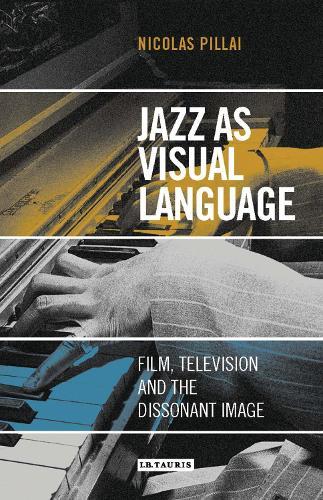
This book provides a timely analysis of the relationship between jazz and recording and broadcast technologies in the early twentieth century. Jazz histories have traditionally privileged qualities such as authenticity, naturalness and spontaneity, but to do so overlooks jazz's status as a modernist, mechanised art form that evolved alongside the moving image and visual cultures. Jazz as Visual Language shows that the moving image is crucial to our understanding of what the materiality of jazz really is. Focusing on Len Lye's direct animation, Gjon Mili's experimental footage of musicians performing and the BBC's Jazz 625 series, this book places emphasis on film and television that conveys the 'sound of surprise' through formal innovation, rather than narrative structure. Nicolas Pillai seeks to refine a critical vocabulary of jazz and visual culture whilst arguing that jazz was never just a new sound; it was also a new way of seeing the world.
Full Product Details
Author: Nicolas Pillai (Birmingham City University, UK)
Publisher: Bloomsbury Publishing PLC
Imprint: I.B. Tauris
Dimensions:
Width: 14.40cm
, Height: 2.00cm
, Length: 21.80cm
Weight: 0.360kg
ISBN: 9781784533441
ISBN 10: 1784533440
Pages: 192
Publication Date: 15 November 2016
Audience:
College/higher education
,
Postgraduate, Research & Scholarly
Format: Hardback
Publisher's Status: Active
Availability: Manufactured on demand

We will order this item for you from a manufactured on demand supplier.
Reviews
Jazz as Visual Language: Film, Television and the Dissonant Image [is] an especially pertinent and timely intervention into jazz scholarship and film theory simultaneously. [...] Pillai's written account of jazz and visual media proves transformative in its own right, contributing much to the study of jazz, television and film music studies. * Alphaville Journal of Film and Screen Media *
'This thoroughly researched and elegantly written study demonstrates a deep understanding of film, television and jazz. Telling some great stories along the way and challenging the myths that have always defined the music, it comes highly recommended!' - Krin Gabbard, Columbia University and Stony Brook University, USA, and author of Jammin' at the Margins: Jazz and the American Cinema, 'Through in-depth examinations of visual materials that jazz scholars have commonly given short shrift, Pillai expands our understanding of music and the musical experience. His sophisticated, multi-layered, film scholar's interpretations of sound, image and meaning are rare in the study of jazz creativity.' - Tom Perchard, Goldsmiths, University of London, 'Pillai's thoughtful text's prime achievement is the knowledgeable and insightful intertwining of film theory and the 'new jazz studies'. Packed with detail, his case studies serve to identify and define ways of presenting the jazz aesthetic through filmic devices.' - Katherine Williams, University of Plymouth, UK, 'A careful reappraisal of jazz seen through the moving image, this book wrests Lye's jazz films from art world exceptionalism and reconnects them with popular culture. It duly challenges old assumptions about jazz music's reception and meaning.' - Paul Brobbel, Curator, Govett-Brewster Art Gallery / Len Lye Centre, New Zealand
This is a thought-provoking book that addresses a fascinating and still under-researched topic, and will be of great value to scholars working interested in film, television or jazz studies. More widely, though, it will be an engaging read for anybody with an interest in how jazz is represented in the broadcast media, and how this representation can influence our own definitions of jazz. * London Jazz News * A very interesting study that brings jazz studies and film studies together comfortably and in lucid language enlarges the range of both research fields. * Jive Talk * The final study on Jazz 625 is excellent ... Backed up by a full table of transmissions, and with intriguing and fascinating discussion [...] it picks a sensitive and delicate path through critical writing on the subject and explores the ground-breaking series in real depth. For this alone, the book is very valuable. * IASPM@ Journal * Jazz as Visual Language provides three strong case studies, demonstrating in a detailed and nuanced way three case-specific interactions between music on-screen and the different types of audio-visual media analysed here ... It brings together different angles and perspectives in an enriching and inspiring interdisciplinary approach. * H-Net Reviews * Jazz as Visual Language: Film, Television and the Dissonant Image [is] an especially pertinent and timely intervention into jazz scholarship and film theory simultaneously. […] Pillai’s written account of jazz and visual media proves transformative in its own right, contributing much to the study of jazz, television and film music studies. * Alphaville Journal of Film and Screen Media *
Author Information
Nicolas Pillai is a research fellow in the School of Media at Birmingham City University, UK. He is the co-editor of Brilliant Corners: Approaches to Jazz & Comics (2016) and New Jazz Conceptions: History, Theory, Practice (2017). He has contributed chapters to Gender and Identity in Jazz (2016) and The Routledge Companion to Jazz Studies (2017), as well as articles in journals such as The Soundtrack and Movie: A Journal of Film Criticism. He has also written an essay for the booklet included in the BFI dual format Blu-ray/DVD release of Paris Blues (1961).