|
|
|||
|
||||
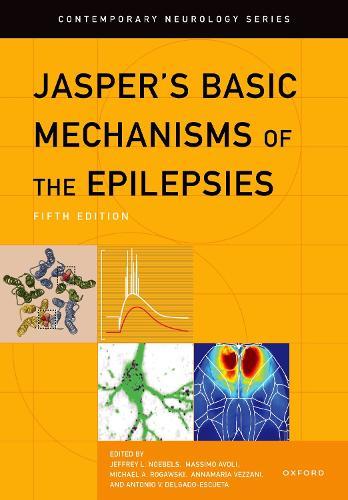
OverviewFull Product DetailsAuthor: Noebels , Massimo Avoli (McGill University) , Michael A Rogawski (University of California Davis School of Medicine) , Annamaria Vezzani (Instituto Di Ricerche Farmacologiche Mario Negri Irccs)Publisher: OUP India Imprint: OUP India Edition: 5th ed. ISBN: 9780197549469ISBN 10: 0197549462 Pages: 1712 Publication Date: 17 November 2023 Audience: General/trade , General Format: Hardback Publisher's Status: Forthcoming Availability: Not yet available This item is yet to be released. You can pre-order this item and we will dispatch it to you upon its release. Table of ContentsReviewsAuthor InformationJeffrey L. Noebels is Cullen Chair in Neurogenetics and Professor of Neurology, Neuroscience, and Molecular and Human Genetics at Baylor College of Medicine. His major research focus is to identify genes and molecular targets for the treatment of epilepsy and its comorbidities. Massimo Avoli is Professor in the Departments of Neurology & Neurosurgery and Physiology at McGill University, and a member of the Neural Circuits Research Group at the Montreal Neurological Institute-Hospital. His laboratory employs electrophysiological, pharmacological and molecular approaches to analyze the mechanisms of neuronal network excitability and seizure generation. Michael A. Rogawski is Distinguished Professor of Neurology and Pharmacology at the University of California, Davis School of Medicine. His research encompasses the cellular neurophysiology of ion channels, the mechanisms of action of antiseizure medications, and epilepsy therapy discovery and development. Annamaria Vezzani is head of the Laboratory of Experimental Neurology, Department of Neuroscience at the Istituto di Ricerche Farmacologiche Mario Negri IRCCS. Her main research focus is on mechanisms of seizures and epileptogenesis, with the aim of identifying biomarkers and developing new epilepsy treatments. Antonio V. Delgado-Escueta is Professor Emeritus in Neurology at the David Geffen School of Medicine at UCLA. He studies the mechanisms of genetic epilepsies, including Lafora progressive myoclonus epilepsy and the genetic generalized epilepsies, like Juvenile Myoclonic Epilepsies and Childhood Absence Epilepsies. Tab Content 6Author Website:Countries AvailableAll regions |
||||