|
|
|||
|
||||
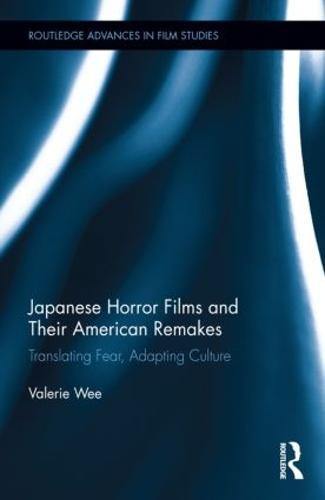
OverviewFull Product DetailsAuthor: Valerie Wee (National University of Singapore)Publisher: Taylor & Francis Ltd Imprint: Routledge Dimensions: Width: 15.20cm , Height: 2.00cm , Length: 22.90cm Weight: 0.660kg ISBN: 9780415888608ISBN 10: 0415888603 Pages: 258 Publication Date: 20 September 2013 Audience: College/higher education , Tertiary & Higher Education , Undergraduate Format: Hardback Publisher's Status: Active Availability: In Print This item will be ordered in for you from one of our suppliers. Upon receipt, we will promptly dispatch it out to you. For in store availability, please contact us. Table of Contents"Introduction: The Horror, The Horror... 1.Haunting Specters: A History of Seeing Ghosts in Japanese and American Horror Films 2. Hollywood and Japan, Comparing Supernatural Constructions: Cultural Ideologies, Social Anxieties, and Aesthetic Tendencies 3.Terrifying Images: Visual Aesthetics and Ways of Seeing in Ringu and The Ring 4.""Oh, Mother!"": Single Mothers and Abandoned Daughters in Honoguarai mizu no soko kara and Dark Water 5. ""Father Knows Best?"" Patriarchal Anxieties and Familial Dysfunction in Ju-On and The Grudge 6. The End of the World as We Know It: Apocalyptic Visions in Kairo and Pulse 7. (Post-)Modern Anxieties, Techno-Horror, and Technophobia in Chakushin Ari and One Missed Call 8. Conclusion"Reviews'The American adaptation of the sensationally popular Japanese horror film Ringu (1998)--released in English as The Ring (2002)--started a trend of Hollywood remakes of Asian horror film. Wee (National Univ. of Singapore) uses this trend to analyze cross-cultural adaptation and intercultural influence between Hollywood's and Japan's representations of horror. Wee explores how the values and ideologies expressed in Japanese horror films are altered or rejected in the American adaptation--and how these changes reflect either differing or similar value systems and cultural beliefs. In the introduction and the first two of seven chapters, the author establishes historical context and provides an analytical framework for the text. Subsequent chapters focus on specific themes--visual aesthetics of horror; single mothers and abandoned daughters; apocalyptic visions; and (post)modern anxieties--contrasting a specific J-horror film with its American remake. The result of this type of analysis, according to Wee, is broader understanding not only of social anxieties of a specific period, as reflected in horror films, but also of shifts in a sociocultural environment over time. Summing Up: Recommended. Upper-division undergraduates through faculty.' T S. Yamada, CHOICE Author InformationAssociate Professor Valerie Wee teaches film and media studies in the Department of English Language and Literature at the National University of Singapore. Tab Content 6Author Website:Countries AvailableAll regions |
||||