Full Product Details
Author: Helen Hardacre ,
Timothy S. George ,
Keigo Komamura ,
Franziska Seraphim
Publisher: Bloomsbury Publishing Plc
Imprint: Lexington Books
Dimensions:
Width: 16.20cm
, Height: 2.60cm
, Length: 22.80cm
Weight: 0.680kg
ISBN: 9781793609045
ISBN 10: 1793609047
Pages: 368
Publication Date: 01 June 2021
Audience:
Professional and scholarly
,
Professional & Vocational
Format: Hardback
Publisher's Status: Active
Availability: Manufactured on demand

We will order this item for you from a manufactured on demand supplier.
Reviews
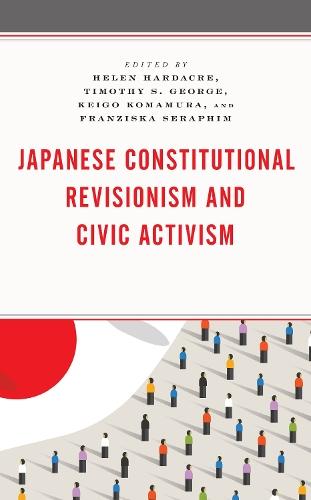
Because of its globally recognized 'no war' clause, debate over Japan's constitution is often seen only through the lens of its implications for its foreign policy. But the dynamics within Japan surrounding this unique document are far more important. In a timely and revelatory new volume focused on the civic activism surrounding Japan's postwar governing document, the benefactors of this document--Japan's citizens--are given the starring role. This exciting new volume reflects the best of scholarship in both Japan and the United States on this ongoing tension between citizens and state that is at the heart of postwar Japanese democratic practice. This rich collection of essays puts flesh on the tired bones of Japanese debates about whether to protect or revise the 1947 Constitution. Highlighting civic activism across the postwar period, the authors show the contention to be much more complicated--and politically and socially dynamic--than an either/or proposition. Comparisons with Taiwan and South Korea and attention not only to Article 9 but to human rights and environmental questions give the book an expansive character. This intelligent and informative study is a pleasure to read. This volume offers a truly comprehensive analysis of civic activism surrounding constitutional revision in Japan, drawing on the diverse expertise of an international team of scholars of law, history, politics, religion, and society. While past research has focused on the goals of established elites, the authors delve into the motivations and strategies of underexamined grassroots actors, including academics, youths, religious organizations, and ideological movements. Importantly, the studied topics extend beyond the lightning rod of Article 9 to encompass debates over human rights, gender equality, and environmentalism, painting a fuller picture of constitutional debates in Japan. By giving equal weight to historical context and contemporary movements, this volume is relevant to any scholar or observer of postwar Japan.
""This rich collection of essays puts flesh on the tired bones of Japanese debates about whether to protect or revise the 1947 Constitution. Highlighting civic activism across the postwar period, the authors show the contention to be much more complicated--and politically and socially dynamic--than an either/or proposition. Comparisons with Taiwan and South Korea and attention not only to Article 9 but to human rights and environmental questions give the book an expansive character. This intelligent and informative study is a pleasure to read."" --Carol Gluck, Columbia University ""This volume offers a truly comprehensive analysis of civic activism surrounding constitutional revision in Japan, drawing on the diverse expertise of an international team of scholars of law, history, politics, religion, and society. While past research has focused on the goals of established elites, the authors delve into the motivations and strategies of underexamined grassroots actors, including academics, youths, religious organizations, and ideological movements. Importantly, the studied topics extend beyond the lightning rod of Article 9 to encompass debates over human rights, gender equality, and environmentalism, painting a fuller picture of constitutional debates in Japan. By giving equal weight to historical context and contemporary movements, this volume is relevant to any scholar or observer of postwar Japan."" --Kenneth Mori McElwain, University of Tokyo ""Because of its globally recognized 'no war' clause, debate over Japan's constitution is often seen only through the lens of its implications for its foreign policy. But the dynamics within Japan surrounding this unique document are far more important. In a timely and revelatory new volume focused on the civic activism surrounding Japan's postwar governing document, the benefactors of this document--Japan's citizens--are given the starring role. This exciting new volume reflects the best of scholarship in both Japan and the United States on this ongoing tension between citizens and state that is at the heart of postwar Japanese democratic practice."" --Sheila A. Smith, Council on Foreign Relations
This rich collection of essays puts flesh on the tired bones of Japanese debates about whether to protect or revise the 1947 Constitution. Highlighting civic activism across the postwar period, the authors show the contention to be much more complicated--and politically and socially dynamic--than an either/or proposition. Comparisons with Taiwan and South Korea and attention not only to Article 9 but to human rights and environmental questions give the book an expansive character. This intelligent and informative study is a pleasure to read.--Carol Gluck, Columbia University This volume offers a truly comprehensive analysis of civic activism surrounding constitutional revision in Japan, drawing on the diverse expertise of an international team of scholars of law, history, politics, religion, and society. While past research has focused on the goals of established elites, the authors delve into the motivations and strategies of underexamined grassroots actors, including academics, youths, religious organizations, and ideological movements. Importantly, the studied topics extend beyond the lightning rod of Article 9 to encompass debates over human rights, gender equality, and environmentalism, painting a fuller picture of constitutional debates in Japan. By giving equal weight to historical context and contemporary movements, this volume is relevant to any scholar or observer of postwar Japan.--Kenneth Mori McElwain, University of Tokyo
Author Information
Helen Hardacre is Reischauer Institute professor of Japanese religions and society at Harvard University. Timothy S. George is professor of history at the University of Rhode Island. Keigo Komamura is vice president and professor of law at Keio University. Franziska Seraphim is associate professor at Boston College.